


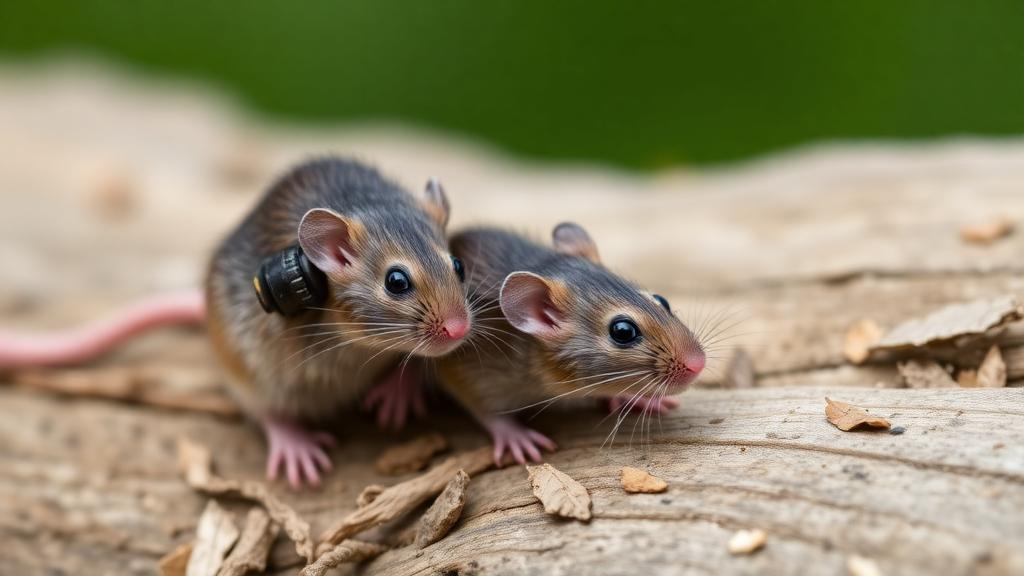
Lyme disease remains the most common vector-borne illness in the United States, and despite decades of public health messaging, acaricide spraying, and personal protection campaigns, case numbers have stubbornly refused to decline. Now a multi-year field study conducted in Connecticut offers fresh evidence that an unconventional strategy—treating the wild mice that fuel the tick life cycle with a tiny dose of an insecticide they barely notice—can dramatically cut the number of ticks parasitizing the animals most responsible for infecting them. The research, published in the journal Parasites & Vectors, tested a low-dose fipronil bait on residential properties across three consecutive field seasons and measured its impact on blacklegged ticks, the white-footed mice they feed on, and the Lyme disease bacterium itself.
The logic behind the approach rests on the peculiar ecology of Lyme disease in the northeastern United States. The blacklegged tick, Ixodes scapularis, passes the bacterium Borrelia burgdorferi sensu stricto through its life stages, but the pathogen’s persistence in a given landscape depends heavily on one particular host: the white-footed mouse, Peromyscus leucopus. These abundant rodents serve as the principal natural reservoir of the spirochete, and larval ticks that feed on infected mice are far more likely to acquire the bacterium than larvae feeding on deer, birds, or other mammals. When those larvae molt into nymphs the following year, the infected nymphs become the primary threat to humans, delivering the bite that transmits Lyme disease in the vast majority of cases.
Interrupting the cycle at the mouse-tick interface has therefore long been an attractive target for researchers. Earlier laboratory and simulated field studies had already demonstrated that a bait containing just 0.005 percent fipronil could systemically control Ixodes scapularis ticks parasitizing treated white-footed mice. Fipronil, the same active ingredient found in some companion-animal flea and tick products, works systemically: after a mouse ingests the bait, the compound and its metabolites circulate in the animal’s blood, and ticks that attach and begin feeding are killed before they can complete their blood meal. The question the Connecticut study set out to answer was whether that laboratory promise would survive contact with real backyards, real weather, and real wildlife.
Between 2022 and 2024, the research team deployed reusable rodent bait stations on residential properties during the period when blacklegged ticks are active in their nymphal and larval stages, roughly May through August. The stations dispensed the fipronil-treated bait to free-ranging mice, and the team monitored consumption, replenishing bait as needed to keep the system running through each season. On average, each property received 4.9 kilograms of bait per year, which translates to approximately 247 milligrams of fipronil—a remarkably small total quantity of active ingredient distributed across an entire property over an entire season.
To confirm that the mice were actually being exposed to the compound, the researchers captured white-footed mice during the larval season each year on both treated and untreated control properties and analyzed their blood plasma. The results were striking: fipronil sulfone, a metabolite that serves as a marker of exposure, was detectable in 100 percent of plasma samples analyzed in both 2022 and 2023, and in 83.3 percent of samples in 2024. In other words, the bait stations were doing their job, delivering the active ingredient to the target animals with high consistency even under fully natural field conditions.
The effect on the ticks themselves was even more impressive. On treated properties, the number of larvae parasitizing captured mice fell by up to 84.2 percent compared with control properties, and the number of larvae that successfully engorged—those that managed to complete a blood meal, which is the critical step for both tick survival and pathogen acquisition—dropped by up to 92.5 percent. A larval tick that fails to engorge on a mouse not only fails to acquire Borrelia from that mouse; it also faces greatly reduced odds of surviving to molt into the next life stage. The bait, in effect, turned the most important host in the Lyme disease system into a lethal trap for its parasites.
The benefits extended to the pathogen as well. Molecular assays used to detect Borrelia burgdorferi infection in the captured mice showed that infection prevalence in white-footed mice on treated properties was significantly reduced by up to 34.1 percent relative to controls. That reduction matters because fewer infected mice means fewer larval ticks acquiring the spirochete, which in principle should mean fewer infected nymphs questing for human blood the following spring. The study thus demonstrated a measurable dent in the reservoir competence of the local mouse population, achieved not by reducing mouse numbers but by breaking the tick-mouse transmission loop.
The picture was more nuanced, however, when the researchers turned to the stage of the tick life cycle that matters most for human health. Drag sampling and flagging during the nymphal seasons were used to estimate the abundance of host-seeking nymphs on the properties, and molecular testing assessed how many of those nymphs carried Borrelia. While both nymph density and nymphal infection showed reductions on treated properties, neither difference reached statistical significance compared with the control sites. The authors suggest that the bait application rate during the larval season may need to be increased to push these downstream effects over the threshold of detectability—a reminder that intervening at one link of a complex transmission chain does not automatically translate into reduced risk at every other link.
That caveat aside, the study represents one of the most thorough field evaluations to date of a systemic acaricide bait aimed at the wildlife reservoir of Lyme disease. Its design—multi-year, property-level, with matched controls, bait-consumption monitoring, pharmacokinetic confirmation, and molecular pathogen testing on both rodents and questing ticks—addresses many of the weaknesses that have plagued earlier tick-control trials. The extremely low dose of active ingredient involved also raises the prospect of an environmentally targeted intervention: rather than broadcasting insecticides across vegetation, the treatment is delivered only to the small mammals that seek out the bait stations, and only in quantities measured in hundreds of milligrams per property per year.
The researchers, based at Genesis Laboratories in Colorado and the Connecticut Agricultural Experiment Station, were supported by a contract with the United States Centers for Disease Control and Prevention, and the work benefited from molecular detection assistance from CDC scientists. They emphasize that additional field studies are needed to confirm the findings and to explore what large-scale treatment across neighborhoods or landscapes might achieve, since tick populations on untreated properties can continually seed treated areas. Still, the core result stands: a bait box, a few hundred milligrams of fipronil, and the natural foraging behavior of white-footed mice were enough to strip the vast majority of larval ticks from the animals that sustain Lyme disease in the northeastern United States. As integrated tick management strategies evolve, the humble mouse bait station may prove to be one of the most quietly powerful tools in the fight against America’s most common vector-borne disease.
Subject of Research: Field efficacy of low-dose fipronil bait for controlling blacklegged ticks on white-footed mice and reducing Lyme disease transmission
Article Title: Efficacy of a low-dose fipronil bait in controlling blacklegged tick (Ixodes scapularis) larvae parasitizing white-footed mice (Peromyscus leucopus) under field conditions in the northeastern United States
Article References: Poché, D. M., Williams, S. C., Linske, M. A., & Poché, R. M. (2026). Efficacy of a low-dose fipronil bait in controlling blacklegged tick (Ixodes scapularis) larvae parasitizing white-footed mice (Peromyscus leucopus) under field conditions in the northeastern United States. Parasites & Vectors, 19(1), Article 423. https://doi.org/10.1186/s13071-026-07676-8
Image Credits: AI Generated
DOI: 10.1186/s13071-026-07676-8
Keywords: Lyme disease, Ixodes scapularis, Peromyscus leucopus, fipronil, tick control, Borrelia burgdorferi, vector-borne disease, systemic acaricide, bait stations, integrated tick management, Connecticut, public health
Cite Scienmag News
Drew Townsend. (October 5, 2026). Low-Dose Fipronil Bait Slashes Ticks on Wild Mice in Multi-Year Lyme Disease Trial. Scienmag. https://scienmag.com/low-dose-fipronil-bait-slashes-ticks-on-wild-mice-in-multi-year-lyme-disease-trial/
Drew Townsend. "Low-Dose Fipronil Bait Slashes Ticks on Wild Mice in Multi-Year Lyme Disease Trial." Scienmag, 5 October 2026, https://scienmag.com/low-dose-fipronil-bait-slashes-ticks-on-wild-mice-in-multi-year-lyme-disease-trial/. Accessed 5 October 2026.
Drew Townsend. "Low-Dose Fipronil Bait Slashes Ticks on Wild Mice in Multi-Year Lyme Disease Trial." Scienmag. October 5, 2026. https://scienmag.com/low-dose-fipronil-bait-slashes-ticks-on-wild-mice-in-multi-year-lyme-disease-trial/


