


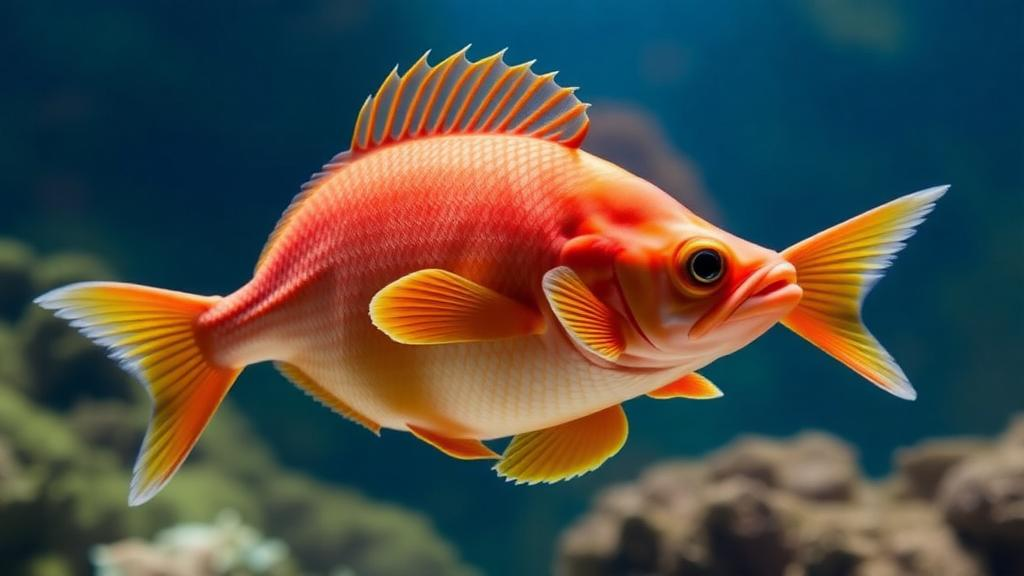
In a laboratory in Cornwall, a small freshwater fish has been playing a dating game with a twist: the contestants were digital, and the judges were the fish themselves. Researchers at the University of Exeter have shown that green swordtail fish can effectively design their own ideal partners when given the chance to choose, generation after generation, among computer-generated virtual mates. The experiment, published in the journal Royal Society Open Science and funded by the Royal Society, offers a strikingly direct window into the mechanics of sexual selection, one of the most influential yet stubbornly difficult-to-study forces in evolution.
The central problem the Exeter team set out to solve is a familiar one for behavioral biologists. When scientists want to know what an animal finds attractive in a mate, they typically present it with a handful of real or artificial options and record which one it approaches. The trouble is that such experiments can only ever sample a tiny slice of the possible variation in traits like body size, coloration, and ornament shape. The preferences an animal reveals may therefore reflect the limited menu it was offered rather than its true ideal. Kathryn Bullough, of the Centre for Ecology and Conservation at Exeter’s Penryn Campus, explained the motivation behind the new approach: studying mate choice in animals is difficult because experiments can present only a limited range of potential mates, so the team devised a way for fish to refine their preferences across many rounds of choice.
The solution borrowed a technique from computer science: the genetic algorithm. In the Exeter setup, each fish was placed in a tank with a screen at either end, each displaying a moving virtual mate rendered as a digital phenotype, a computer model whose characteristics could be varied systematically. Traits under algorithmic control included tail length, body size, body width, body color, tail color, and pattern. The fish was then free to swim for three minutes, and its position was tracked across three zones: a neutral central area and one zone near each virtual option. Time spent near a stimulus served as the measure of preference, a standard proxy in mate-choice research, since animals that favor a potential mate tend to linger close by.
From there, the evolutionary machinery took over. If a fish spent more time near one virtual mate than the other, that digital individual was declared the winner of the trial. Two new virtual fish were then generated based on the winner’s characteristics combined with those of another randomly selected winning mate from a separate trial, producing a fresh generation of candidate mates. These offspring were tested in the next round, and the process repeated. Over nine generations, the pool of virtual mates was progressively shaped by the accumulated choices of the fish, homing in on whatever combination of traits the choosers actually preferred. The method mimics sexual selection itself: traits that make an individual more likely to be chosen get passed on and amplified down the generations, exactly as attractive traits spread through real populations over evolutionary time.
The results revealed a sharp asymmetry between the sexes. Male green swordtails turned out to have simple, consistent tastes: they reliably chose larger females. The strength of this preference was visible in the data in a dramatic way. By the final generation, the virtual females favored by males were on average more than 24 percent larger than those in the first generation, a substantial shift produced in only nine rounds of selection. The researchers suggest a straightforward biological explanation: larger females can produce more offspring, so a male that prefers big females potentially sires more young, making the preference advantageous in evolutionary terms.
Female preferences proved far more complex and far more individual. Rather than converging on a single shared ideal, different females steered the algorithm in different directions. Some favored longer tails, others brighter colors, and the trajectories of their choices diverged across the generations. This individual variation is itself an interesting finding, because it suggests that female mate choice in this species is not a uniform filter but a mosaic of personal tastes, which in a wild population could help maintain the diversity of male traits rather than driving them all toward a single optimum.
One female’s choices stood out as particularly puzzling. Over successive generations, her selected mates looked increasingly like females rather than males. The reasons remain unclear, but the researchers offer a plausible hypothesis: this individual may have avoided threatening male characteristics, moving away from them and therefore, incidentally, toward more female-like traits. The case illustrates one of the strengths of the algorithmic approach, which can surface unexpected preference patterns that conventional two-option experiments would never reveal, while also highlighting that interpreting those patterns still requires careful behavioral reasoning.
The choice of species was no accident. Green swordtails, native to Central America and named for the males’ distinctive sword-like tail fin, are unusually well suited to this kind of work. Dr. Laura Kelley of the Exeter team noted that the fish respond to videos of other fish, which makes virtual stimuli effective, and that they provide no parental care for their young. That second point matters for interpretation: without the complication of assessing a partner’s future contribution to raising offspring, mate choice in this species is relatively straightforward, with fish primarily looking for good genes to pass on to their offspring. The sword-like tail, a classic textbook example of an ornament shaped by female preference, made the species an apt subject for a study of how such preferences operate in the first place.
The method also promises practical gains for the wider field. As Kelley pointed out, a comparable study using real fish would take years, because breeding and measuring generation after generation of live animals is slow and logistically demanding. The digital approach compresses that timeline dramatically, providing what the researchers describe as a powerful tool for understanding how wild animals choose their mates. Because the virtual mates are fully parameterized, the researchers know exactly which traits changed across generations and by how much, allowing preferences to be quantified trait by trait rather than inferred indirectly. The technique could in principle be adapted to other species that respond to visual stimuli, opening the door to comparative studies of how mate preferences evolve across different ecological and social settings.
Beyond its technical novelty, the study carries a pleasing conceptual symmetry. Sexual selection is usually imagined as a slow force acting over countless generations in rivers and streams, gradually sculpting the extravagant tails and vivid colors of animals like the green swordtail. Here, the same logic was run in miniature, with fish acting as the selective agents and algorithms as the hereditary machinery, and the imprint of choice emerged within weeks rather than millennia. The fish, in a very real sense, designed their perfect partners, and in doing so they showed scientists exactly what perfection looks like to them: for males, a simple rule favoring size; for females, a rich and varied set of tastes that no single experiment could have uncovered. The work, entitled Exploring male and female mate preferences using genetic algorithms and digital phenotypes, appeared in Royal Society Open Science on 29 September 2026.
Subject of Research: Mate preference evolution in green swordtail fish studied with genetic algorithms and virtual mates
Article Title: Fish choose perfect partners in dating game study
Article References: Fish choose perfect partners in dating game study. (n.d.). Original publication
Image Credits: AI Generated
DOI: Not provided
Keywords: green swordtail fish, mate choice, sexual selection, genetic algorithms, digital phenotypes, University of Exeter, Royal Society Open Science, animal behavior, evolutionary biology, virtual mates, female preference, behavioral ecology
Cite Scienmag News
Gavin Prescott. (October 5, 2026). Virtual Dating Game Reveals How Fish Design Their Perfect Mates. Scienmag. https://scienmag.com/virtual-dating-game-reveals-how-fish-design-their-perfect-mates/
Gavin Prescott. "Virtual Dating Game Reveals How Fish Design Their Perfect Mates." Scienmag, 5 October 2026, https://scienmag.com/virtual-dating-game-reveals-how-fish-design-their-perfect-mates/. Accessed 5 October 2026.
Gavin Prescott. "Virtual Dating Game Reveals How Fish Design Their Perfect Mates." Scienmag. October 5, 2026. https://scienmag.com/virtual-dating-game-reveals-how-fish-design-their-perfect-mates/


