


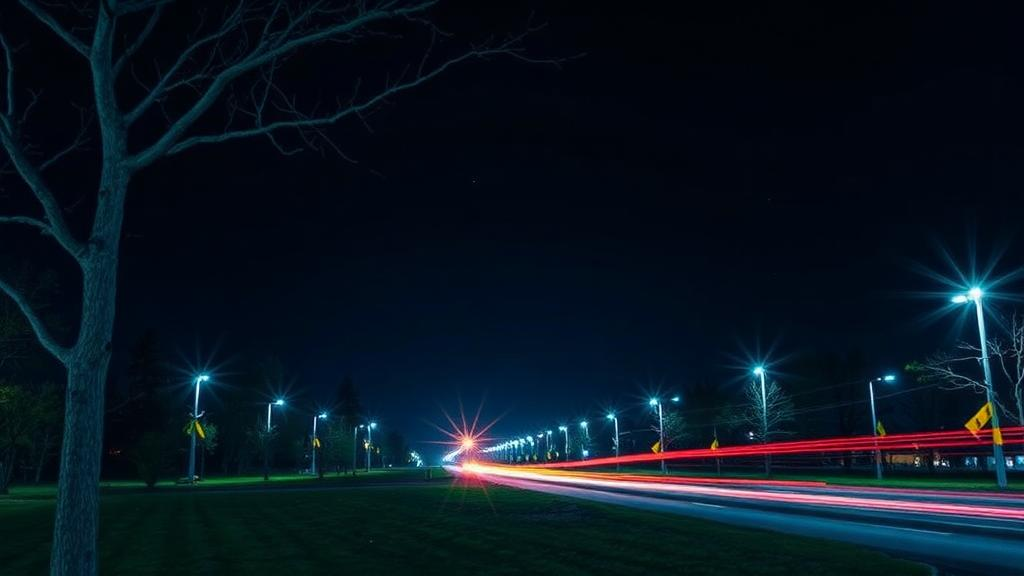
For billions of years, life on Earth has been synchronized to a set of reliable celestial clocks. Daily cycles of sunlight and darkness, the phases of the Moon, and the slow rotation of the seasons have governed nearly every physiological process in living organisms, from the timing of reproduction to the moment an animal decides to forage or rest. That ancient architecture is now being dismantled at unprecedented speed. Since the widespread adoption of electric lighting in the twentieth century, artificial light at night, known in the scientific literature as ALAN, has increased exponentially, and researchers expect its use to keep rising in step with global population growth. A new open-access editorial published in BMC Environmental Science by Ulrika Candolin of the University of Helsinki and Tommaso Filippini of the University of Modena and Reggio Emilia and the University of California, Berkeley, argues that the erosion of natural light cycles has become a genuine threat to human health and to the functioning of ecosystems worldwide.
The scale of the problem has been amplified by a technology most people consider an unambiguous improvement: the light-emitting diode. LEDs are inexpensive to run, and they deliver higher intensities with a spectrum that is closer to natural daylight than the traditional lamps they replace, such as incandescent indoor bulbs and high-pressure sodium street lights. That spectral richness, which makes LED-lit streets look cleaner and more modern, is precisely what makes them biologically potent. Many organisms, including humans, rely on blue-rich wavelengths to entrain their circadian clocks, so a lamp that mimics daylight at midnight sends a powerful and misleading signal. Because LEDs are so cheap to operate, they also encourage over-illumination, with light intensities and spread that researchers describe as over-dimensioned for the tasks they are meant to serve.
The clearest early evidence of harm in humans came from epidemiological studies of night-shift workers, populations whose internal darkness was systematically abolished. These studies indicated adverse health effects, most notably a higher ratio of cancer cases. The International Agency for Research on Cancer classified night-shift work as a probable carcinogen, and subsequent research has linked high levels of outdoor and indoor ALAN to an increased risk of breast cancer and, possibly, prostate cancer. Positive associations have also been reported for non-Hodgkin lymphoma and for colorectal, pancreatic and thyroid cancers. Systematic reviews and dose-response meta-analyses, including work co-authored by Filippini on breast cancer risk, have helped quantify these relationships, suggesting that the effect scales with exposure intensity and duration rather than being an artifact of any single study design.
Cancer is only the most dramatic entry on a growing list. Beyond night-shift work, exposure to artificial light at night has been associated with sleep disturbances, diabetes, obesity and other cardiovascular risk factors, with meta-analytic evidence linking nighttime light to cardiometabolic disease. More recent findings point to detrimental effects on mental health as well, including depression, mood disorders and cognitive impairment. A study of a Northern Italian population co-authored by Filippini found that light-at-night exposure was associated with the risk of dementia conversion in people with mild cognitive impairment. The mechanistic thread connecting these diverse outcomes is circadian disruption: many hormones, pheromones and metabolites are under circadian control, and when the light-dark signal is scrambled, the endocrine system is scrambled with it, most visibly through changes in melatonin, the hormone that signals biological night.
What makes light pollution unlike most other pollutants is its reach. Wildlife does not need to live next to a streetlight to be affected. Light radiating upward from urban areas is scattered by the atmosphere and diverted back to Earth as skyglow, illuminating regions far from the original source. This means that animals in seemingly remote habitats experience nights that are measurably brighter than any their ancestors knew. A global perspective paper by Bará and Falchi describes artificial light at night as a disruptor of the entire night-time environment, and satellite-based monitoring across Europe has documented that environmental risks from nighttime lighting are both widespread and increasing, with the fastest growth in regions that were previously dark.
The ecological consequences documented so far are strikingly varied. Insects are attracted to nocturnal lights, and that aggregation in turn attracts their predators, especially bats, whose foraging behavior and lunar chronobiology have been shown by long-term acoustic monitoring to be altered by ALAN. Migrating fish such as salmon and eels encounter illuminated bridges and urban waterways that act as barriers; navigating these gauntlets takes more time and energy, with negative consequences for reproductive success. Perhaps most poignant is the case of the glow-worm, whose females emit bioluminescent signals to attract males. Under light-polluted skies, the glow becomes harder to see, and field experiments by Candolin and colleagues have shown maladaptive responses to spatial variation in artificial light, with males similarly impaired in finding females. The result is a decline in mating success that can ripple through local populations.
These individual-level effects scale up. Changes in behavior, survival and reproductive success influence the abundance and distribution of species, and therefore biodiversity, species interactions and, ultimately, the functioning of entire ecosystems. Processes such as nutrient cycling, pollination and seed dispersal all depend on the timing and choreography of animal activity, much of it nocturnal. Because human society depends on these ecosystem services for wellbeing and quality of life, the degradation of the night is not merely a conservation concern but an economic and public-health one. Research on human disturbance in Southeast Asia has shown how disruptions to wildlife behavior alter predator-prey overlap, illustrating how a single anthropogenic pressure can restructure ecological relationships across whole communities.
Scientists studying the problem emphasize that the effects of light pollution operate through two distinct pathways. On one hand, artificial light disrupts the reception of information: the daily light cycles that organisms use as cues, the visibility of environmental features, and the detection of individual traits, as when the glow-worm’s signal is drowned out. On the other hand, light pollution changes the use of light as a resource, altering photosynthesis in plants and reshaping daily activity patterns in animals. Both pathways converge on the circadian system, which is why melatonin suppression and endocrine disruption appear as common denominators in species as different as insects, fish, birds and mammals. The multifaceted nature of these mechanisms means that no single mitigation strategy will be sufficient; the solution must be as layered as the problem.
The encouraging news, according to the editorial, is that light pollution is among the most tractable of environmental problems. Light is genuinely needed for human activity and safety, but its intensity and spread are routinely excessive. By limiting artificial light to essential purposes, times and places, for example through timers and shades, and by adjusting the spectrum and intensity of lamps, negative effects can be significantly reduced. Warm-spectrum, downward-directed, motion-triggered lighting preserves human utility while dramatically reducing the biological signal that reaches ecosystems and bedrooms alike. What is needed now, the authors argue, is more research on the effectiveness of these measures and on the technology required to implement them at scale.
The editorial accompanies a research collection designed to explore and explain the different ways ALAN influences humans and other organisms, and to discuss both the effects of light on the natural world and the possibility of mitigating them. The authors hope the collection will inspire further research and, ultimately, a wiser use of artificial light that safeguards a healthy and well-functioning planet for coming generations. In an era when the night sky over much of the industrialized world glows with scattered urban light, the message is straightforward: darkness is not the absence of a resource but a resource in itself, one that biology has depended on for millions of years and that modern society can learn to conserve without giving up the benefits that light provides.
Subject of Research: Effects of artificial light at night on human health and wildlife
Article Title: Light pollution and its impact on human health and wildlife
Article References: Candolin, U., & Filippini, T. (2025). Light pollution and its impact on human health and wildlife. BMC Environmental Science, 2(1), Article 1. https://doi.org/10.1186/s44329-025-00017-7
Image Credits: AI Generated
DOI: 10.1186/s44329-025-00017-7
Keywords: light pollution, artificial light at night, circadian rhythm, melatonin, cancer risk, night-shift work, skyglow, biodiversity, glow-worms, LED lighting, ecosystem services, mental health
Cite Scienmag News
Margaret Porter. (October 4, 2026). The Night That Never Darkens: How Artificial Light Is Rewriting Biology. Scienmag. https://scienmag.com/the-night-that-never-darkens-how-artificial-light-is-rewriting-biology/
Margaret Porter. "The Night That Never Darkens: How Artificial Light Is Rewriting Biology." Scienmag, 4 October 2026, https://scienmag.com/the-night-that-never-darkens-how-artificial-light-is-rewriting-biology/. Accessed 4 October 2026.
Margaret Porter. "The Night That Never Darkens: How Artificial Light Is Rewriting Biology." Scienmag. October 4, 2026. https://scienmag.com/the-night-that-never-darkens-how-artificial-light-is-rewriting-biology/


