


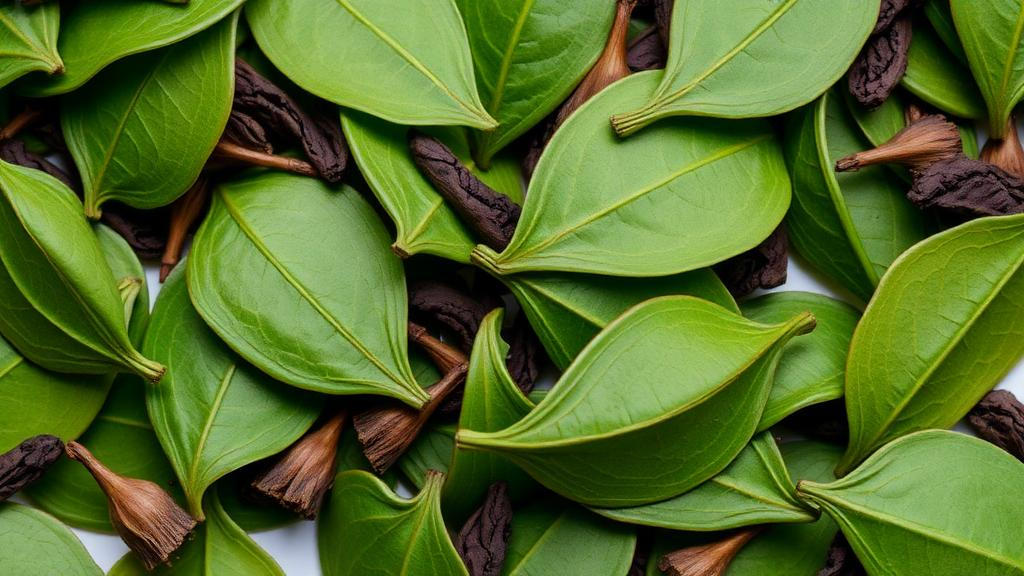
Tea has been tasted, sniffed, and graded by human experts for centuries, but a new study from China suggests that the future of tea quality control may lie in laboratory instruments rather than the palate of a master taster. Researchers set out to build an objective, multidimensional system for evaluating five celebrated teas from Guizhou Province, a mountainous region in southwestern China renowned for its premium leaves. By combining thermogravimetric analysis, amino acid profiling, and trace element fingerprinting within a single statistical framework, the team produced a ranked, data-driven portrait of each tea that goes far beyond what any single measurement could reveal.
Guizhou’s reputation for fine tea is rooted in its geography. The province sits at high altitude with a temperate climate, abundant rainfall, and fertile soils, conditions that favor the slow growth and rich chemical development of tea trees. Yet traditional quality assessment, which depends on sensory panels or isolated chemical indicators, has long been criticized as subjective, slow, and incomplete. Quality is shaped by a tangled web of factors, including cultivar, cultivation and processing techniques, geographical location, climate, and harvest time, making it difficult to capture with any one-dimensional test. The research team, publishing in Food Science & Nutrition, argued that a comprehensive, multiparameter evaluation using objective chemometric methods has become a pressing need in modern tea research.
The five teas examined were Qingyu tiny kuding tea, Guiding yunwu tribute tea, Suiyang mountain silver flower tea, Shiqian moss tea, and Pu’an black tea, all purchased from farmers’ markets in Guiyang and botanically authenticated. Each sample was dried at 85 degrees Celsius for twelve hours, ground, sieved, and tested in triplicate, with relative standard deviations held below two percent. The researchers then deployed an impressive analytical arsenal: a NETZSCH thermogravimetric analyzer to track how each tea decomposes under heat, an A300 amino acid analyzer to quantify twenty amino acids, and an ICP-OES spectrometer to measure seventeen trace elements, alongside determinations of combustion heat, fat, ash, and crude fiber content.
The thermogravimetric results were strikingly varied. Decomposition began at temperatures ranging from 39.7 degrees Celsius in Pu’an black tea to 60.3 degrees Celsius in Guiding yunwu tribute tea, and final residual masses ranged from 18.39 percent for the tribute tea to 44.35 percent for the black tea, indicating substantial differences in moisture binding, organic matrix composition, and inorganic residue. Every tea showed two major weight-loss stages, with the fastest decomposition occurring between roughly 316 and 337 degrees Celsius, and prominent exothermic peaks near 110 to 117 degrees Celsius with peak areas between 201.90 and 282.00 joules per gram. Using gray pattern recognition, the team also quantified combustion stability, finding that Suiyang mountain silver flower tea was the most thermally stable, followed by Guiding yunwu tribute tea, Shiqian moss tea, Qingyu tiny kuding tea, and finally Pu’an black tea.
The elemental analysis delivered both reassurance and surprises. Arsenic was detected in only one sample, Suiyang mountain silver flower tea, at a very low concentration of 0.0369 micrograms per gram, while mercury and scandium were absent from all five teas. Lead levels ranged from 0.89 to 2.51 micrograms per gram, with the lowest found in Pu’an black tea. On the nutritional side, manganese concentrations were remarkable, spanning from 86.2 micrograms per gram in Qingyu tiny kuding tea to nearly 700 micrograms per gram in Shiqian moss tea, while zinc peaked at 848.23 micrograms per gram in Suiyang mountain silver flower tea. Iron, magnesium, copper, and barium all varied systematically across the teas, creating elemental fingerprints that the authors attribute to differences in soil geochemistry, root uptake capacity, and agricultural practices across Guizhou’s diverse producing regions.
Amino acid profiling proved equally revealing. All five teas contained seven essential amino acids, namely threonine, valine, methionine, isoleucine, leucine, phenylalanine, and lysine, though tryptophan and methionine sulfoxide were not detected. The ratio of essential to total amino acids ranged from 9.78 to 26.20 percent, and theanine, the amino acid most responsible for tea’s savory sweetness, showed enormous variation, from just 114.45 micrograms per gram in Qingyu tiny kuding tea to a striking 18,603.86 micrograms per gram in Guiding yunwu tribute tea. Serine reached 13,527 micrograms per gram in Shiqian moss tea, while arginine dominated Qingyu tiny kuding tea at 7,492.73 micrograms per gram. The authors suggest these differences arise from complex interactions between cultivar-specific nitrogen metabolism and environmental factors such as altitude, temperature, rainfall, and light intensity.
To turn this mountain of data into a coherent ranking, the researchers applied entropy factor analysis, a technique that fuses information theory with factor analysis to distill dozens of correlated variables into a handful of independent factors. Thirty-eight variables were compressed into four entropy factors that together explained 100 percent of the variance. The first factor, weighted most heavily, captured minerals and amino acids including magnesium, manganese, serine, and phenylalanine; the second reflected combustion heat, ash, fat, and theanine; the third covered crude fiber, aluminum, and aspartic acid; and the fourth grouped combustion stability with barium, iron, and sodium. Combining the four factors with weights proportional to their eigenvalues produced a composite score for each tea, and the final ranking placed Qingyu tiny kuding tea first with a score of 0.9953, followed by Shiqian moss tea, Suiyang mountain silver flower tea, Pu’an black tea, and Guiding yunwu tribute tea at negative 0.5711.
The team then subjected the data to two independent validation approaches. Entropy factor cluster analysis grouped the five teas into three distinct clusters: Suiyang mountain silver flower tea, Shiqian moss tea, and Pu’an black tea clustered together, possibly reflecting similar fermentation processes and regional cultivation conditions, while Guiding yunwu tribute tea and Qingyu tiny kuding tea each formed their own groups, consistent with their distinctive oxidative profiles and traditional processing. Meanwhile, a supervised orthogonal projections to latent structures discriminant analysis model achieved exceptional discrimination, with R-squared values of 0.887 for the predictors and 0.998 for the responses, and a predictive Q-squared of 0.997. Permutation testing and leave-one-out cross-validation confirmed the model was not overfitting, and twenty-one variables, including proline, arginine, alanine, copper, manganese, and theanine, emerged as key differentiators with importance scores above one.
The implications extend well beyond academic curiosity. A validated, multiparameter fingerprinting system could transform tea authentication, helping regulators detect mislabeled or adulterated products, assisting producers in quality control and market positioning, and guiding consumers toward teas whose nutritional and safety profiles have been rigorously verified. Because trace element patterns reflect the mineral signature of local soils, the same framework could support geographical origin tracing, a growing concern in premium food markets worldwide. The authors note that the approach also provides a mechanistic understanding of why teas differ, linking observable quality grades to cultivar traits, soil chemistry, and processing choices.
The researchers are candid about the limitations of their work. Only five teas from a single province were examined, and the framework’s robustness will need confirmation across broader geographic regions, additional cultivars, and more diverse processing types. Future studies, they say, will expand the sample set and add parameters such as catechins, caffeine, polyphenols, aroma compounds, and sensory evaluation. Still, the study marks a meaningful step toward replacing the taster’s subjective verdict with a reproducible, multidimensional measurement, one that treats a cup of tea not as a matter of opinion but as a chemical fingerprint waiting to be read.
Subject of Research: Multidimensional chemometric quality assessment of five Guizhou teas using thermogravimetric, amino acid, and trace element analyses
Article Title: Multidimensional Quality Assessment of Guizhou Teas Integrating Thermogravimetric, Amino Acid, and Trace Element Analyses
Article References: Zhou, L., & Huang, C. (2026). Multidimensional Quality Assessment of Guizhou Teas Integrating Thermogravimetric, Amino Acid, and Trace Element Analyses. Food Science & Nutrition, 14(10), Article e72431. https://doi.org/10.1002/fsn3.72431
Image Credits: AI Generated
DOI: 10.1002/fsn3.72431
Keywords: tea quality, Guizhou, thermogravimetric analysis, amino acids, trace elements, chemometrics, entropy factor analysis, OPLS-DA, theanine, food authentication, heavy metals, combustion stability
Cite Scienmag News
Alan Morgan. (October 4, 2026). Tea Fingerprinting: Heat, Amino Acids, and Trace Elements Rank Guizhou’s Finest Leaves. Scienmag. https://scienmag.com/tea-fingerprinting-heat-amino-acids-and-trace-elements-rank-guizhous-finest-leaves/
Alan Morgan. "Tea Fingerprinting: Heat, Amino Acids, and Trace Elements Rank Guizhou’s Finest Leaves." Scienmag, 4 October 2026, https://scienmag.com/tea-fingerprinting-heat-amino-acids-and-trace-elements-rank-guizhous-finest-leaves/. Accessed 4 October 2026.
Alan Morgan. "Tea Fingerprinting: Heat, Amino Acids, and Trace Elements Rank Guizhou’s Finest Leaves." Scienmag. October 4, 2026. https://scienmag.com/tea-fingerprinting-heat-amino-acids-and-trace-elements-rank-guizhous-finest-leaves/


