


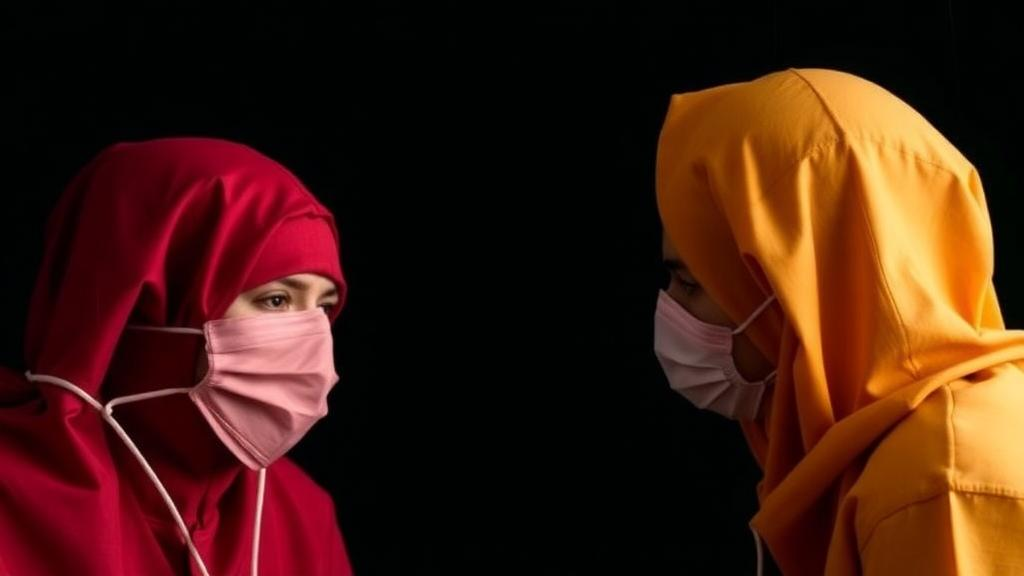
The COVID-19 pandemic was supposed to be public health’s moment to shine, the long-anticipated test of a system built over more than a century to protect communities from infectious disease. Instead, a new peer-reviewed study published in the American Journal of Public Health documents how the years since the pandemic began have subjected the people who lead that system to an extraordinary wave of hostility, intimidation and threats of physical harm. Drawing on interviews with more than one hundred public health leaders across the United States, the research paints a picture of a profession under siege, one in which the backlash has gone far beyond ordinary political disagreement and entered the territory of stalking, doxing and credible threats to kill.
The study, led by Marian Moser Jones, associate professor of health services management and policy at The Ohio State University College of Public Health, with senior author Amy Fairchild, a professor at the University of Minnesota School of Public Health, interviewed 109 leaders from 18 geographically and politically diverse states. The participants came from suburban and rural communities as well as larger jurisdictions, and included both local and state-level officials. The breadth of the sample matters, because it demonstrates that the hostility was not confined to a handful of high-profile coastal cities or particularly contentious statehouses. It reached into small towns and rural counties, places where public health work had historically been conducted with little public attention and considerable community trust.
The headline finding is stark: 76 percent of the leaders interviewed reported being threatened or harassed. The researchers categorized this level of hostility as extraordinary, distinguishing it clearly from the ordinary friction that accompanies any contested public policy. As Jones explained, the backlash being studied is different from people disagreeing about wearing masks or getting a COVID vaccine. This, she said, is true hostility, threats of violence, and the undermining of officials in ways that damage their ability to do their jobs. In other words, the problem documented here is not the healthy noise of democratic debate but a sustained campaign of intimidation aimed at the individuals charged with safeguarding community health.
The specific experiences described by study participants illustrate how menacing that campaign became. One leader recounted the FBI arrest of a person making ongoing, credible death threats, an arrest that brought home the seriousness of the danger when the official learned that the suspect’s house contained more than 100 guns. Another described a persistent stalker, a man she characterized as scary and obsessed, who sent her a picture of someone strangling a child the same age as her own child. A third described coming home from work to find a note taped to the front door threatening to kill the family dog, accompanied by a photograph of the dog taken in the family’s backyard. These are not anonymous insults on social media; they are intrusions into the private lives and homes of public servants and their families.
Beyond the direct threats, roughly half of the leaders interviewed experienced what the researchers call undermining backlash, a form of hostility that made it difficult or impossible for them to function professionally. This took the form of overwhelming their offices with burdensome data requests, repeatedly demanding revisions to pandemic guidelines, and publicly disparaging their qualifications. Undermining is subtler than a death threat, but its cumulative effect can be just as corrosive. An official who must divert staff time to answering hostile records requests, or who must repeatedly defend basic credentials in public meetings, has less capacity to inspect restaurants, track disease outbreaks, run vaccination clinics or support mothers and infants. The study suggests that this second, quieter form of backlash may be at least as damaging to the profession’s capacity as the overt threats.
The consequences for the public health workforce have been severe. Many of the leaders interviewed have retired early or left the field altogether, according to Jones. She noted that politicians expect a certain degree of hostility when they enter public life, but that before the pandemic most public health officials had never been in the spotlight and had never been targets. The experience has been hard on the profession, she said, and the exodus of experienced leaders carries real costs for communities, because institutional knowledge about outbreak response, environmental health, food safety and maternal health leaves with every early retirement and resignation.
Yet the research is not only a catalogue of damage. One of its most valuable contributions is the identification of strategies that some officials used successfully to reduce the intensity of the backlash, approaches that could inform the response to future fraught moments in public health leadership. Particularly in smaller communities, officials who had deep personal ties to the area often knew the people making threats and creating other challenges. In some cases, they had success bringing upset community members or small business owners to the table for direct conversations, or simply calling opponents and talking the situation through. Jones recounted that officials would sometimes say things like, listen, you’re threatening my kids, and that this kind of direct, personal appeal would sometimes turn the temperature down.
Those personal interventions appear to have had measurable effects. Jones said that, anecdotally, promoting civil discourse seemed to cut down on the backlash. It did not stop the hostility entirely, but it helped prevent officials from being fired or forced out of their positions. Fairchild added that some health officials who weathered the backlash involved local businesses in decision making. These officials understood, she said, that they needed to explain not only the science but also acknowledge the painful tradeoffs at stake and explain the rationales behind difficult decisions. The lesson is a technical one about crisis communication: transparency about uncertainty and tradeoffs, combined with genuine stakeholder engagement, appears to build a buffer of legitimacy that pure top-down mandates do not.
The research team, whose work with public health leaders is ongoing, has also identified potential policy approaches. One is criminalizing doxing, the act of publicly revealing private or personally identifiable information about someone online without their permission. In many of the cases documented, officials’ home addresses or phone numbers were shared online specifically to encourage organized harassment. Another proposal is requiring boards of health members to have backgrounds related to the field, a response to communities where, the researchers found, people with little or no connection to public health are calling the shots. Both measures aim at structural fixes: one to raise the cost of coordinated intimidation, the other to ensure that the people overseeing health departments have the expertise to evaluate the professionals who run them.
Outside of formal policy, the researchers point toward a longer-term strategy of relationship building. Jones suggested that health officials may build bridges outside of a pandemic by cultivating relationships with different groups in the community who hold different values and viewpoints. Bringing people who disagreed about the pandemic together around issues that matter to them, such as the ongoing opioid crisis, can be powerful, she said. She also emphasized that there is a great deal of work to do to address the vicious polarization in the country, and that for public health officials, part of that work may involve explaining more clearly why they are relevant: the full range of work they do to keep people healthy, from keeping food safe, to helping mothers and babies, to offering people help quitting smoking. The study received funding from the Commonwealth Fund, the Mellon Foundation and the National Science Foundation, and included co-authors from New York University and Syracuse University. Its central warning is that the canaries in this backlash coal mine, as the article’s title puts it, were public health officers, and that what happened to them during the pandemic foreshadows a broader political crisis that the nation has yet to resolve.
Subject of Research: Post-pandemic harassment and threats against US public health officials and strategies to reduce the backlash
Article Title: Public health leaders report widespread harassment, threats after COVID-19
Article References: Public health leaders report widespread harassment, threats after COVID-19. (n.d.). Original publication
Image Credits: AI Generated
DOI: Not provided
Keywords: public health, COVID-19, harassment, threats, backlash, health officials, American Journal of Public Health, doxing, civil discourse, polarization, workforce, policy
Cite Scienmag News
Phoebe Ingram. (October 4, 2026). Threats and Harassment Swept Public Health Leaders After COVID-19, Study Finds. Scienmag. https://scienmag.com/threats-and-harassment-swept-public-health-leaders-after-covid-19-study-finds/
Phoebe Ingram. "Threats and Harassment Swept Public Health Leaders After COVID-19, Study Finds." Scienmag, 4 October 2026, https://scienmag.com/threats-and-harassment-swept-public-health-leaders-after-covid-19-study-finds/. Accessed 4 October 2026.
Phoebe Ingram. "Threats and Harassment Swept Public Health Leaders After COVID-19, Study Finds." Scienmag. October 4, 2026. https://scienmag.com/threats-and-harassment-swept-public-health-leaders-after-covid-19-study-finds/


