


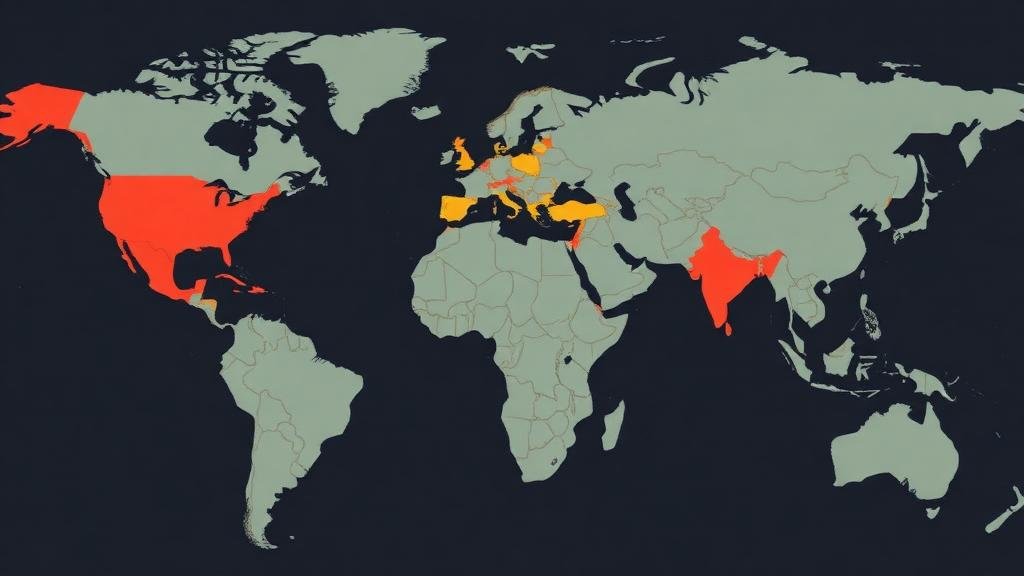
Clinical trials have gone global, and with them the ethical stakes of medical research have shifted dramatically. As of February 2026, the ClinicalTrials.gov registry listed more than 570,000 clinical studies worldwide, and a growing share of them are now conducted in low- and middle-income countries, where sponsors can access large, diverse, and treatment-naïve patient populations. A new umbrella review published in Discover Global Society has aggregated the highest tier of synthesized evidence on this phenomenon, distilling findings from 19 systematic reviews into six overarching domains of ethical concern: informed consent and participant autonomy; vulnerable populations and inclusion; community and stakeholder engagement; risks and exploitation; justice and post-trial obligations; and governance and publication ethics. The analysis, led by Kai Hong Ooi of Universiti Malaya together with Pei Boon Ooi of Sunway University and Chia Wei Phan of Universiti Malaya, offers the most comprehensive map to date of where ethical fault lines run beneath the world’s expanding clinical research enterprise.
The methodology behind the review was deliberately rigorous. The team followed the PRISMA reporting framework, searched eight electronic databases including PubMed, Web of Science, Scopus, and the Cochrane Review Library, and prospectively registered the protocol in PROSPERO. The search, finalized on 10 February 2026, retrieved 3,189 records, which were whittled down through three sequential screening stages—title and abstract review, full-text assessment, and independent panel consensus—to a final set of 19 systematic reviews. Each included review was then appraised with the AMSTAR-2 instrument, a 16-domain tool for assessing the methodological quality of systematic reviews, and the synthesized themes were mapped onto two normative anchors of international research ethics: the Council for International Organizations of Medical Sciences 2016 Guidelines and the World Medical Association’s Declaration of Helsinki.
The quality appraisal itself revealed a sobering picture of the secondary evidence base. Only four of the 19 reviews achieved a high overall confidence rating, one was rated moderate, six were categorized as low, and eight—42 percent of the sample—were judged critically low. The deficiencies were concentrated in specific critical domains: several reviews failed to perform independent duplicate study selection, seven lacked formal risk-of-bias assessment, and only two formally evaluated the impact of publication bias. The authors retained all 19 reviews for synthesis, arguing that AMSTAR-2 functions as a diagnostic tool rather than an exclusion filter, and that discarding lower-confidence studies would censor essential thematic data about marginalized populations. Instead, they interpreted findings from weaker reviews with heightened caution, framing the methodological variability itself as evidence of a systemic need for better reporting rigor in global health ethics scholarship.
Across the included reviews, certain population groups emerged repeatedly as the focus of ethical concern. Pregnant and lactating women featured prominently, particularly regarding their historical exclusion from trials and the resulting scarcity of safety and dosing data to guide maternal care. Neonates and infants were highlighted in the context of proxy consent and regulatory ambiguity, while adolescents raised tensions between parental authorization requirements and their evolving decision-making capacity, especially in HIV-related research where stigma and confidentiality compound the risks. Indigenous communities were discussed in relation to culturally appropriate engagement and governance, and additional attention fell on patients with advanced disease, healthy volunteers in first-in-human trials, and broadly defined vulnerable populations facing socioeconomic disadvantage, limited healthcare access, and heightened exposure to discrimination.
The first thematic domain—informed consent and participant autonomy—reveals a persistent gap between the theory and practice of consent. Limited participant comprehension of complex concepts such as randomization and placebo use recurred across reviews, particularly in settings with lower health literacy. Socioeconomic dependency, power imbalances, and therapeutic misconception were reported to compromise the voluntariness of consent, and in some contexts paternalistic doctor-patient dynamics produce what the literature describes as pressured authorization, where participation is perceived as obligatory rather than optional. Digital and multimedia consent tools have been explored as remedies, but the reviews caution that improved presentation does not automatically translate into meaningful understanding, and that equitable access and cultural appropriateness remain unresolved concerns.
Perhaps the most striking tension the review documents is between protecting vulnerable populations and ensuring their equitable inclusion. The traditional paradigm of protection by exclusion has left pregnant and lactating women medically underserved, and the dolutegravir dilemma illustrates the potential cost of that caution: preliminary observational data from Botswana once suggested a link between the antiretroviral drug at conception and infant neural tube defects, prompting restrictive policies for women of childbearing potential in LMICs. Subsequent long-term safety data ultimately disproved the heightened risk, exposing how protective exclusion can inflict structural therapeutic harm on the very populations it intends to shield. Modern frameworks, including CIOMS Guideline 19 and Helsinki Paragraph 20, have responded by shifting away from labeling entire groups as intrinsically vulnerable, instead demanding active inclusion with proportional safeguards—a shift that many domestic regulatory architectures in LMICs have yet to fully embrace.
Community engagement emerged as a third domain, but one whose practice varies enormously. The literature describes a continuum running from tokenistic information-sharing to genuine community-based participatory research, in which communities act as equal partners in defining research priorities. The review found that engagement is overwhelmingly reported as an antecedent activity during trial design and recruitment rather than a sustained bidirectional process, and that few reviews evaluated whether trialists planned to disseminate final findings back to participating communities. Where community-level feedback occurred, it was predominantly informal. The authors argue that failing to close this feedback loop reinforces historical patterns of extractive or helicopter research, in which communities absorb research burdens without receiving accessible knowledge or tangible outcomes, and they ground the remedy in CIOMS Guideline 23 and Helsinki Paragraph 36, which treat result dissemination as a core ethical responsibility.
Questions of risk, exploitation, and distributive justice form the review’s fourth and fifth domains. In HIV vaccine trials, descriptions of risks and benefits varied widely, with some studies emphasizing social harms such as stigma, discrimination, or false perceptions of immunity—reminders that ethical evaluation must extend beyond physical risk to psychosocial and community-level consequences. Financial compensation and access to otherwise unavailable healthcare can raise concerns about undue inducement in contexts of structural poverty, where trial participation may function less as altruism than as a survival strategy to obtain basic medical care. On the justice front, inconsistent reporting of post-trial access provisions in international randomized trials raises doubts about whether participants and host communities ultimately benefit from successful interventions. The review also notes a policy paradox: some LMIC jurisdictions have imposed rigid legal mandates requiring indefinite post-trial drug provision, which, while well-intentioned, can deter sponsors and paradoxically reduce local research into chronic diseases.
The sixth domain—governance and publication ethics—exposes asymmetries that operate far above the level of individual participants. Ethics committees in LMIC settings face heavy workloads, limited training, and resource constraints that affect the consistency of oversight, while publication bias, selective reporting, and non-reporting distort the evidence base itself. Authorship practices reveal power imbalances starkly: LMIC researchers commonly perform essential fieldwork and participant engagement yet remain stuck in the middle of author lists, while high-income country collaborators occupy the prestigious first and last positions. Research priorities are frequently donor-driven, aligned with funders’ interests rather than the growing local burden of non-communicable diseases. The authors also acknowledge the conceptual limits of income-based country classifications, noting that structurally marginalized populations in wealthy nations—such as Indigenous communities in Canada and Australia—face comparable research-related vulnerabilities.
Looking forward, the review identifies a striking structural evidence gap: despite searches extending to February 2026, almost no systematic review data exist on post-COVID-19 emergency trial governance, artificial intelligence in diagnostic trials, or decentralized and virtual trial models in LMICs. Primary studies have proliferated, but secondary synthesis has not kept pace, leaving regulators optimizing for traditional site-based models while digital research architectures remain under-regulated. The authors tie their recommendations to the Sustainable Development Goals, arguing that ethical trial conduct underpins both SDG 3 on health and SDG 10 on reduced inequalities. Their practical prescriptions include competency-based training for research ethics committees, standardized reporting of consent procedures, locally validated communication tools, equitable authorship standards, and formative community-engaged work embedded in trial design. The overarching message is a paradigm shift: from protection by exclusion toward appropriate access, and from ethics as procedural compliance toward ethics as a foundational pillar of global health justice.
Subject of Research: Ethical challenges in clinical trials conducted in low- and middle-income countries
Article Title: An umbrella review of ethical challenges in clinical trials conducted in low and middle income countries
Article References: Ooi, K. H., Ooi, P. B., & Phan, C. W. (2026). An umbrella review of ethical challenges in clinical trials conducted in low and middle income countries. Discover Global Society, 4(1), Article 220. https://doi.org/10.1007/s44282-026-00580-7
Image Credits: AI Generated
DOI: 10.1007/s44282-026-00580-7
Keywords: clinical trials, research ethics, low- and middle-income countries, informed consent, vulnerable populations, community engagement, post-trial access, Declaration of Helsinki, CIOMS guidelines, umbrella review, global health equity, publication ethics
Cite Scienmag News
Courtney Benton. (October 4, 2026). Global Review Maps Six Ethical Fault Lines in Clinical Trials Across Low- and Middle-Income Countries. Scienmag. https://scienmag.com/global-review-maps-six-ethical-fault-lines-in-clinical-trials-across-low-and-middle-income-countries/
Courtney Benton. "Global Review Maps Six Ethical Fault Lines in Clinical Trials Across Low- and Middle-Income Countries." Scienmag, 4 October 2026, https://scienmag.com/global-review-maps-six-ethical-fault-lines-in-clinical-trials-across-low-and-middle-income-countries/. Accessed 4 October 2026.
Courtney Benton. "Global Review Maps Six Ethical Fault Lines in Clinical Trials Across Low- and Middle-Income Countries." Scienmag. October 4, 2026. https://scienmag.com/global-review-maps-six-ethical-fault-lines-in-clinical-trials-across-low-and-middle-income-countries/


