


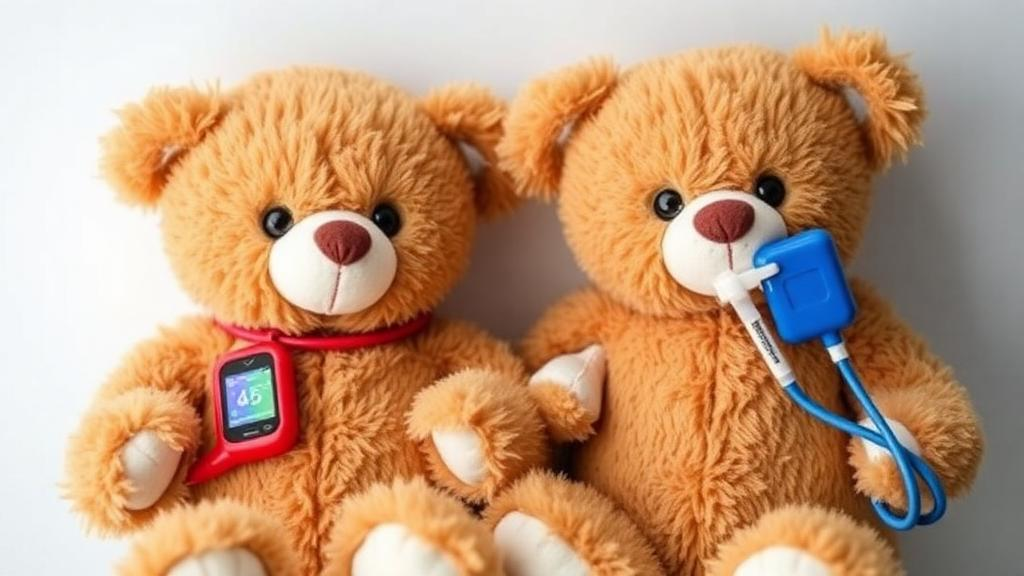
At the American Academy of Pediatrics 2026 National Conference & Exhibition, held October 2-6, 2026, at the San Diego Convention Center in San Diego, pediatric residents from the Mayo Clinic presented a deceptively simple project that has been drawing attention for its emotional reach: teddy bears fitted with real-style medical devices, given to children who carry the same devices in their own bodies. The project, outlined in an abstract titled “The Teddy Bear Clinic: A Therapeutic Play Intervention to Normalize Pediatric Medical Devices,” argues that a stuffed animal wearing a gastrostomy tube, a tracheostomy tube, or a pacemaker model can do what clinical explanation alone often cannot — make a child feel that having a medical device is ordinary, shareable, and nothing to hide.
The clinical problem the project targets is well recognized in pediatric practice. Children with implanted or long-term medical devices frequently experience anxiety, stigma, and social isolation, particularly in school and community settings where looking different from classmates can feel overwhelming. The American Academy of Pediatrics emphasizes child-centered, trauma-informed approaches that promote resilience and normalize chronic illness experiences, and therapeutic play has long been recognized as a developmentally appropriate strategy to reduce fear and improve coping among children with complex medical needs. What has been missing, the Mayo Clinic team notes, are interventions that specifically address body image and device-related self-consciousness — the part of a child’s experience tied to feeling “different” because of a medical device.
Anders Jenson, M.D., a PGY-2 pediatric resident at Mayo Clinic, explained the distinction at the heart of the project. “Therapeutic play has long been used to ease children’s medical fears, but this advocacy project specifically targets the body-image and self-consciousness piece, the part of a child’s experience tied to feeling ‘different’ because of a medical device,” Jenson said. “It’s a small, easily replicated idea with a real emotional payoff for kids with medical devices.” The bears, in other words, are not generic comfort objects; each one is deliberately outfitted with the same category of device its young recipient lives with, creating a one-to-one mirror between toy and patient.
The technical construction of the bears is a story in itself, and one that reveals how the program doubles as a training exercise. The program was resident-initiated and resident-run. Funding came through an internal Mayo Clinic grant of just $2,200, which was used to procure approximately 200 teddy bears. Pacemaker and tracheostomy models were provided generously by medical device manufacturers, keeping equipment costs low. Gastrostomy tubes, which would otherwise be expensive or difficult to source in toy-appropriate form, were simulated with inflation valves of beach balls — an everyday material that mimics the external profile of a feeding tube button. The devices were then sutured into the stuffed animals using suture materials donated by the Mayo Clinic Emergency Department.
That suturing step is where medical education enters the picture. Medical students were recruited to assist with implanting the medical devices into the bears, giving them a low-stakes environment in which to practice and refine their suturing technique. According to the authors, this additional practice helps medical students and residents become more confident in their abilities, and the work can double as a peer-education tool among trainees. The project also serves as a recruitment opportunity for the field of pediatrics: students get a hands-on, meaningful introduction to pediatric care without the pressures of a clinical environment, and they are exposed to a distinctive component of the specialty — the use of developmentally appropriate care and education for young patients.
Once completed, the stuffed animals with implants were distributed to patients with the corresponding medical device on the pediatric hospital service. The benefits, the authors report, flow in several directions at once. For the child, receiving a bear that visibly shares their own equipment fosters normalization and may reduce device-related anxiety. For families, the bears become a practical rehearsal tool: parents and children can use them to practice care steps the child needs, such as tracheostomy suctioning or gastrostomy tube feeds, before or alongside performing those steps on the child. The abstract notes that the stuffed animals can be used during teaching sessions, facilitating improved understanding of the child’s own devices and increased willingness to engage in their care.
The social reach of the intervention extends beyond the patient’s bedside. Because the bears make devices visible and approachable, they can be used to increase awareness of medical devices among a child’s peers, supporting peer education and reducing stigma by introducing the device through toys and play. For a school-age child who dreads questions or stares about a feeding tube or tracheostomy, a classroom moment built around a teddy bear offers a gentler entry point than any lecture. The bears can also serve as a hands-on recruitment tool that introduces medical students to pediatrics through what the authors describe as a low-pressure, high-impact, meaningful project.
For Jenson, the project carries a personal dimension. “As someone with a medical device myself, I remember how isolating it could feel growing up surrounded by those without one,” Jenson said. “I hope these teddy bears help children to feel more comfortable and confident with their medical devices, knowing that they are not alone in their journey.” That lived perspective shapes the program’s core premise: that the emotional burden of pediatric medical devices is not only about pain or procedure, but about identity — about a child’s sense of whether their equipment makes them strange or simply makes them themselves.
The Teddy Bear Clinic Advocacy Project is presented by its authors as a low-cost, scalable intervention that leverages therapeutic play to promote resilience, normalize implanted medical devices, and reduce stigma among children with complex medical needs. The economics are part of the argument: with roughly 200 bears procured for $2,200, donated manufacturer models, beach-ball valves standing in for feeding tubes, and suture material supplied by the emergency department, the program demonstrates that meaningful psychosocial support does not require expensive technology. By combining advocacy, education, and creative partnership with device makers, the initiative offers what the authors call a replicable model for pediatric institutions seeking to advance child-centered, trauma-informed care.
Jenson is scheduled to present the research in the poster hall at the conference on Saturday, Oct. 3, and will be among highlighted abstract authors giving brief presentations and taking questions during a “Soundbite Session” on Sunday, Oct. 4, in the conference center Press Room. The research received external funding from Kid’s Cup Rochester. Whether the model spreads to other institutions remains to be seen, but its central claim is already resonating with clinicians who treat children with complex medical needs: sometimes the most effective therapeutic technology in a pediatric hospital room is a teddy bear wearing the same device as the child holding it.
Subject of Research: A therapeutic play intervention using teddy bears fitted with medical devices to normalize pediatric medical devices and reduce device-related anxiety and stigma in children.
Article Title: Teddy bears with medical devices help normalize them for children
Article References: Teddy bears with medical devices help normalize them for children. (n.d.). Original publication
Image Credits: AI Generated
DOI: Not provided
Keywords: pediatrics, medical devices, therapeutic play, teddy bear clinic, Mayo Clinic, gastrostomy tube, tracheostomy, pacemaker, medical anxiety, stigma reduction, child health, medical education
Cite Scienmag News
Glenn Wilkins. (October 4, 2026). Teddy Bears Fitted with Pacemakers and Feeding Tubes Ease Children’s Medical Anxiety. Scienmag. https://scienmag.com/teddy-bears-fitted-with-pacemakers-and-feeding-tubes-ease-childrens-medical-anxiety/
Glenn Wilkins. "Teddy Bears Fitted with Pacemakers and Feeding Tubes Ease Children’s Medical Anxiety." Scienmag, 4 October 2026, https://scienmag.com/teddy-bears-fitted-with-pacemakers-and-feeding-tubes-ease-childrens-medical-anxiety/. Accessed 4 October 2026.
Glenn Wilkins. "Teddy Bears Fitted with Pacemakers and Feeding Tubes Ease Children’s Medical Anxiety." Scienmag. October 4, 2026. https://scienmag.com/teddy-bears-fitted-with-pacemakers-and-feeding-tubes-ease-childrens-medical-anxiety/


