


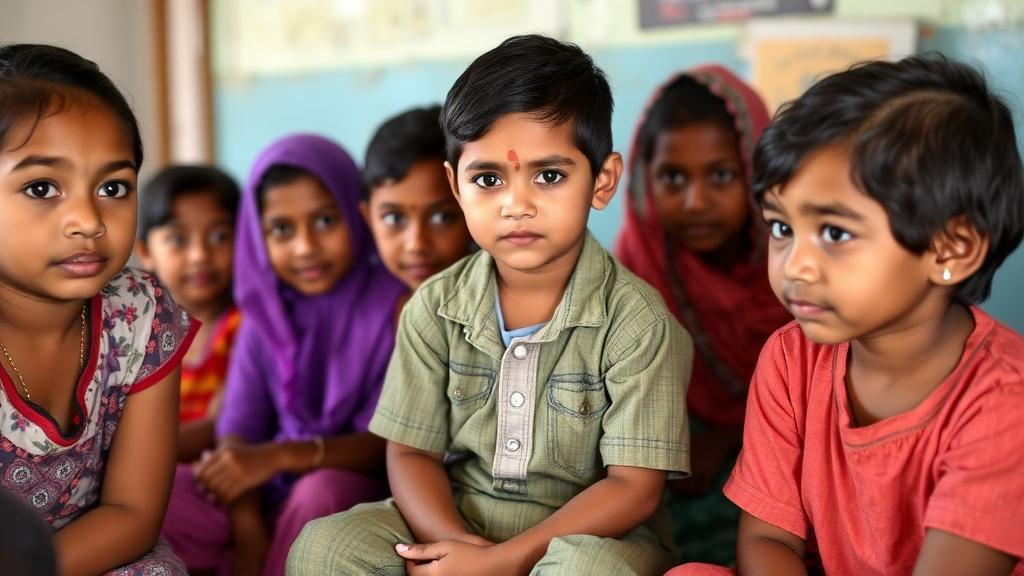
In the rural classrooms of South Africa’s Limpopo province, primary school teachers are often the first adults to notice when a child is struggling with something far heavier than homework. A new qualitative study published in Discover Social Science and Health offers one of the most detailed portraits yet of how teachers in resource-constrained rural schools respond when trauma walks through the classroom door, and it reveals a system running largely on instinct, goodwill, and improvised strategy rather than formal training. The research, conducted by Muimeleli Munyadziwa and Lufuno Makhado of the University of Venda’s Department of Public Health, examined how 26 primary school teachers in the Vhembe district identify and support learners affected by childhood trauma, and its findings carry implications far beyond the province’s borders.
Childhood trauma, whether rooted in abuse, loss, household instability, or community violence, can destabilize a child’s emotional world in ways that directly undermine learning. Educators and psychologists have long recognized that a traumatized learner may struggle to concentrate, withdraw from peers, act out in class, or show sudden drops in academic performance. Because children spend so many of their waking hours at school, teachers occupy a uniquely powerful position: they are often the first to detect behavioral changes and the only consistent adults outside the family who might intervene. That is precisely why the growing international movement toward trauma-informed education, which trains school staff to recognize the signs of adversity and respond in ways that support rather than re-traumatize children, has gained such momentum in recent years.
The Limpopo study set out to understand what that looks like on the ground in a rural South African context, where formal psychological services are scarce and schools frequently function as de facto first responders to children’s emotional crises. The researchers adopted an exploratory descriptive qualitative approach, a design suited to capturing the richness and complexity of lived professional experience when little prior research exists in a given setting. They focused on two school circuits, Mvudi and Dzindi, within the Vhembe district, an area in the northern reaches of Limpopo province where schools serve communities facing significant socioeconomic hardship.
Recruitment was purposive, meaning the researchers deliberately selected participants with direct, relevant experience rather than sampling at random. In-depth semi-structured interviews were conducted with 26 primary school teachers, allowing each participant to describe their own encounters with traumatized learners in their own words while still following a consistent line of questioning across the sample. Semi-structured interviewing is a cornerstone of qualitative health and social science research because it balances comparability with openness: the interviewer has a guide, but can pursue unexpected threads that a rigid questionnaire would miss. The resulting transcripts were then analyzed using Atlas.ti, a widely used software platform for qualitative data analysis that helps researchers code text segments, group them into categories, and build themes systematically rather than impressionistically.
From that analysis, two overarching themes emerged, and together they sketch a two-phase model of teacher response to childhood trauma. The first theme captured immediate support strategies, the actions teachers take in the moments and days after they recognize that a child is in distress. These included direct conversations with learners, in which a teacher privately talks with the child to understand what is happening and offer reassurance; referrals to senior staff members, such as principals or heads of department, who may have more authority or experience to handle serious cases; and home visits, in which teachers go into the child’s household environment to gain a fuller picture of the circumstances shaping the learner’s behavior.
The second theme described long-term support strategies, the sustained measures teachers use to keep affected children on an even keel over weeks, months, and school years. These included referring learners for professional support, whether to social workers, psychologists, or other specialists; deliberately creating nurturing classroom environments in which children feel safe, valued, and emotionally secure enough to learn; and ongoing monitoring of affected learners, a quiet but crucial practice of watching for changes in mood, attendance, and academic output that might signal improvement or deterioration. Taken together, the two themes suggest that effective teacher responses are not single interventions but layered processes, beginning with rapid stabilization and extending into sustained care.
Yet the study’s most sobering finding is not what teachers do, but what they lack. The researchers found that teachers frequently rely on informal approaches despite limited training in childhood trauma-informed care. In other words, the strategies documented in the study were largely self-devised, learned through experience, or passed along informally among colleagues, rather than grounded in systematic professional preparation. This is a pattern echoed in international literature: teachers around the world are increasingly expected to act as frontline mental health supports, but teacher education programs rarely equip them with the psychological knowledge, referral skills, and self-care strategies that such a role demands. In rural Limpopo, where access to school psychologists and social workers is especially limited, that gap is magnified.
The consequences of this gap are not trivial. Without formal training, a well-meaning teacher may misread trauma responses as defiance, may inadvertently probe a child’s experiences in ways that cause harm, or may fail to escalate serious cases of abuse to the proper authorities. Informal approaches can also leave teachers themselves emotionally exposed, absorbing the weight of children’s suffering without professional support structures of their own. The study’s authors argue that primary school teachers can indeed help create supportive school settings that encourage learners’ well-being and academic success, but only if they are backed by advocacy for professional aid and by meaningful improvements in their training in trauma-informed practices. Goodwill, the findings imply, is a necessary but insufficient ingredient.
The researchers point to three concrete levers for improvement. First, strengthening trauma-informed teacher training, so that recognizing and responding to childhood adversity becomes a standard component of professional preparation rather than an accidental skill acquired on the job. Second, building clear school referral pathways, so that a teacher who identifies a child in crisis knows exactly whom to contact and what steps to follow, rather than navigating an ambiguous chain of senior staff and external agencies. Third, expanding access to multidisciplinary support, bringing psychologists, social workers, and health professionals into genuine partnership with schools, so that teachers are not left to shoulder clinical responsibilities for which they were never trained. Each of these measures addresses a distinct failure point in the current system: knowledge, process, and capacity.
What makes this study resonate beyond South Africa is its reminder that the world’s largest mental health workforce may not be found in clinics at all, but in classrooms. In communities where formal services are thin, teachers are the de facto detection and referral network for childhood trauma, and their informal expertise deserves to be recognized, studied, and formalized rather than taken for granted. The Vhembe teachers documented in this research have already built a working response system out of necessity; the task now, the authors argue, is to give that system the training, pathways, and professional backing it needs to work reliably for every child. As trauma-informed education moves from a niche concept to a global policy priority, evidence from rural settings like Limpopo will be essential to ensuring that the children who need support most are not left behind by well-intentioned but under-resourced reforms.
Subject of Research: Primary school teachers' responses to childhood trauma in rural South African schools
Article Title: A qualitative study on primary school teachers’ responses to childhood trauma in rural Limpopo schools
Article References: Munyadziwa, M., & Makhado, L. (2026). A qualitative study on primary school teachers’ responses to childhood trauma in rural Limpopo schools. Discover Social Science and Health. https://doi.org/10.1007/s44155-026-00456-w
Image Credits: AI Generated
DOI: 10.1007/s44155-026-00456-w
Keywords: childhood trauma, trauma-informed practices, primary school teachers, rural education, South Africa, Limpopo, qualitative research, mental health, school referral pathways, learner well-being, teacher training, Vhembe district
Cite Scienmag News
Courtney Benton. (October 3, 2026). Rural Teachers Confront Childhood Trauma With Little Training, Study Finds. Scienmag. https://scienmag.com/rural-teachers-confront-childhood-trauma-with-little-training-study-finds/
Courtney Benton. "Rural Teachers Confront Childhood Trauma With Little Training, Study Finds." Scienmag, 3 October 2026, https://scienmag.com/rural-teachers-confront-childhood-trauma-with-little-training-study-finds/. Accessed 3 October 2026.
Courtney Benton. "Rural Teachers Confront Childhood Trauma With Little Training, Study Finds." Scienmag. October 3, 2026. https://scienmag.com/rural-teachers-confront-childhood-trauma-with-little-training-study-finds/


