


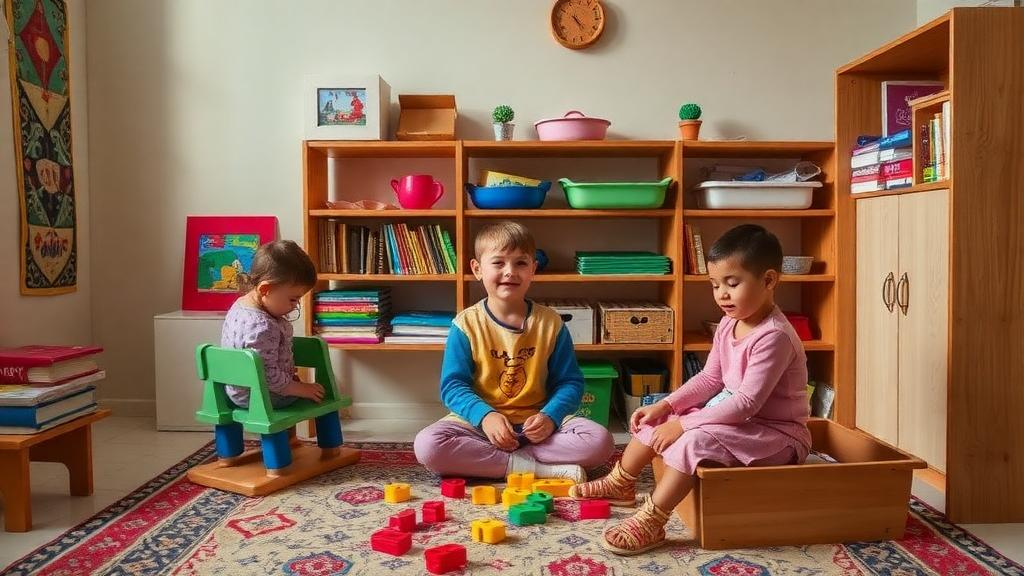
When two devastating earthquakes struck southern Türkiye in February 2023, hundreds of thousands of children found their worlds upended overnight. Homes collapsed, schools closed, and families were displaced into temporary accommodation centers across the region and beyond. Amid the rubble and uncertainty, one of the most quietly powerful responses to the disaster did not involve heavy machinery or medical teams, but colorful mats, building blocks, crayons, and trained volunteers. A new qualitative study published in BMC Psychology examines how child-friendly playrooms established in the province of Kayseri functioned as a psychosocial support service in the aftermath of the Kahramanmaraş earthquakes, offering rare, ground-level evidence on what works—and what does not—when disaster response is built around the developmental needs of young children.
The research, conducted by Ayşenur Gündüz of Erciyes University, Dicle Gözüm of the Turkish Ministry of National Education, and Sümeyye Öcal of Kütahya Dumlupınar University, focused on the experiences of the people who actually ran these spaces: volunteer play facilitators. Children affected by large-scale disasters face elevated risks of psychosocial distress and developmental disruption, and child-friendly spaces have become a standard component of humanitarian response worldwide. Yet, as the authors note, rigorous qualitative evidence about how such interventions are implemented in practice, and how they are perceived by those delivering them, has remained strikingly limited. Their study set out to fill that gap by listening closely to the facilitators themselves.
The methodological design was deliberately grounded and practical. Using a qualitative descriptive approach, the researchers selected ten voluntary play facilitators through purposive sampling from a larger pool of sixty-five facilitators who worked in seventeen child-friendly playrooms set up in temporary accommodation centers in Kayseri province. Data were collected through semi-structured online interviews, allowing participants to describe their experiences in their own words, and the resulting material was analyzed using content analysis, a technique that systematically codes textual data to identify recurring themes and patterns. Ethical approval was obtained from the Erciyes University Social and Human Sciences Ethics Committee, and all participants were adults who provided written informed consent before taking part, in line with the Declaration of Helsinki.
The findings paint a vivid picture of what these playrooms actually did for the children who used them. Facilitators consistently perceived the playrooms as safe environments that supported children’s wellbeing, development, peer interaction, and—perhaps most importantly—their return to daily routines. In disaster psychology, the restoration of routine is considered a cornerstone of recovery: predictable structure helps children regain a sense of control and normalcy after the chaos of a catastrophic event. The playrooms provided exactly that, offering scheduled, familiar activities in a protected setting where children could simply be children again, rather than displaced survivors of a disaster.
Equally striking was the level of engagement the spaces generated. Participants highlighted the high degree of involvement not only from children but also from their parents, suggesting that the playrooms functioned as more than childcare. By giving children a structured, supportive environment, the spaces indirectly relieved pressure on caregivers who were themselves coping with loss, displacement, and the logistical burdens of life in temporary accommodation. The authors conclude that volunteer play facilitators perceived the playrooms as valuable settings for supporting children directly and families indirectly—a dual benefit that multiplies the impact of a relatively low-cost intervention.
The study also scrutinized the preparation of the volunteers themselves, and here the picture was more nuanced. Facilitators judged their training to become play facilitators as sufficient in general terms, but they advised that future preparation should go deeper in three specific areas: child mental health, psychological first aid, and play interventions. This recommendation carries real technical weight. Psychological first aid is an internationally recognized early intervention approach designed to reduce initial distress and foster adaptive coping, while targeted play interventions can help children process traumatic experiences nonverbally. Volunteers without formal grounding in these areas may struggle to recognize signs of post-traumatic stress or to respond appropriately when a child’s play reveals deep distress, making training a critical quality-control point for any future deployment.
Implementation, the facilitators reported, was far from frictionless. The study documented several practical difficulties clustered around four domains: the physical setting, materials, administration, and the voluntary delivery of services. Makeshift spaces in temporary accommodation centers inevitably pose challenges—heating, lighting, noise, safety, and privacy are hard to guarantee in emergency structures. Supplies of age-appropriate play materials could be inconsistent, and coordination among the various institutions involved added administrative complexity. The reliance on volunteers, while essential to scaling the response, also raised questions about continuity, burnout, and the sustainability of a service delivered by people without professional status or long-term commitments.
From these experiences, the participants constructed a clear vision of the ideal playroom: a space that is safe, accessible, aesthetically conducive, and developmentally appropriate, and that is equipped with suitable play materials. Each element of that definition maps onto established principles of child-centered design in early childhood education. Safety and accessibility address physical protection and inclusion; aesthetic quality signals care and normalcy to children in destabilized circumstances; developmental appropriateness ensures that activities match children’s cognitive, social, and emotional stages rather than merely keeping them occupied. The finding underscores that in disaster settings, the details of environment design are not cosmetic—they are therapeutic.
The Kayseri case also illuminates the institutional architecture behind the response. The playrooms operated within a network that included the Turkish Ministry of Youth and Sports, the Ministry of National Education, Guidance and Research Centers, and structures aligned with the international Child Protection Working Group, the coordinating body for child protection in humanitarian emergencies. The authors emphasize that inter-institutional collaboration, alongside appropriate physical environments and trained facilitators, is essential for the successful implementation of child-friendly playrooms. In other words, a playroom is not just a room with toys; it is the visible endpoint of a supply chain, a training pipeline, and a coordination framework that must all function together under emergency conditions.
The broader significance of the study lies in its contribution to a thin evidence base. Post-disaster psychosocial interventions for children are widely deployed, but implementation research—especially qualitative work capturing the perspectives of frontline deliverers—remains scarce. By documenting what facilitators experienced in Kayseri, the researchers have produced findings that can inform future disaster preparedness and child protection practices, both in Türkiye, which sits in one of the world’s most seismically active regions, and internationally. The lessons are deceptively simple: invest in volunteer training that includes child mental health and psychological first aid; plan physical spaces with children’s developmental needs in mind; secure materials and administration before the next crisis rather than during it; and treat play not as a diversion but as a legitimate, evidence-informed component of disaster response. For the children of the Kahramanmaraş earthquakes, a room with blocks and a trusted adult may have been one of the most effective therapies available—and for the next disaster, the study offers a blueprint for making sure that therapy is delivered well.
Subject of Research: Child-friendly playrooms as post-earthquake psychosocial support for children following the 2023 Kahramanmaraş earthquakes in Türkiye
Article Title: Playrooms as a post-earthquake psychosocial support service: case of Kayseri province
Article References: Gündüz, A., Gözüm, D., & Öcal, S. (2026). Playrooms as a post-earthquake psychosocial support service: case of Kayseri province. BMC Psychology. https://doi.org/10.1186/s40359-026-05719-4
Image Credits: AI Generated
DOI: 10.1186/s40359-026-05719-4
Keywords: child-friendly spaces, playrooms, psychosocial support, disaster response, earthquake, Kahramanmaraş, Kayseri, children's mental health, psychological first aid, play facilitators, qualitative research, Türkiye
Cite Scienmag News
Glenn Wilkins. (October 3, 2026). After the Earthquakes, Play Became Medicine: How Volunteer-Run Playrooms Helped Turkish Children Recover. Scienmag. https://scienmag.com/after-the-earthquakes-play-became-medicine-how-volunteer-run-playrooms-helped-turkish-children-recover/
Glenn Wilkins. "After the Earthquakes, Play Became Medicine: How Volunteer-Run Playrooms Helped Turkish Children Recover." Scienmag, 3 October 2026, https://scienmag.com/after-the-earthquakes-play-became-medicine-how-volunteer-run-playrooms-helped-turkish-children-recover/. Accessed 4 October 2026.
Glenn Wilkins. "After the Earthquakes, Play Became Medicine: How Volunteer-Run Playrooms Helped Turkish Children Recover." Scienmag. October 3, 2026. https://scienmag.com/after-the-earthquakes-play-became-medicine-how-volunteer-run-playrooms-helped-turkish-children-recover/


