


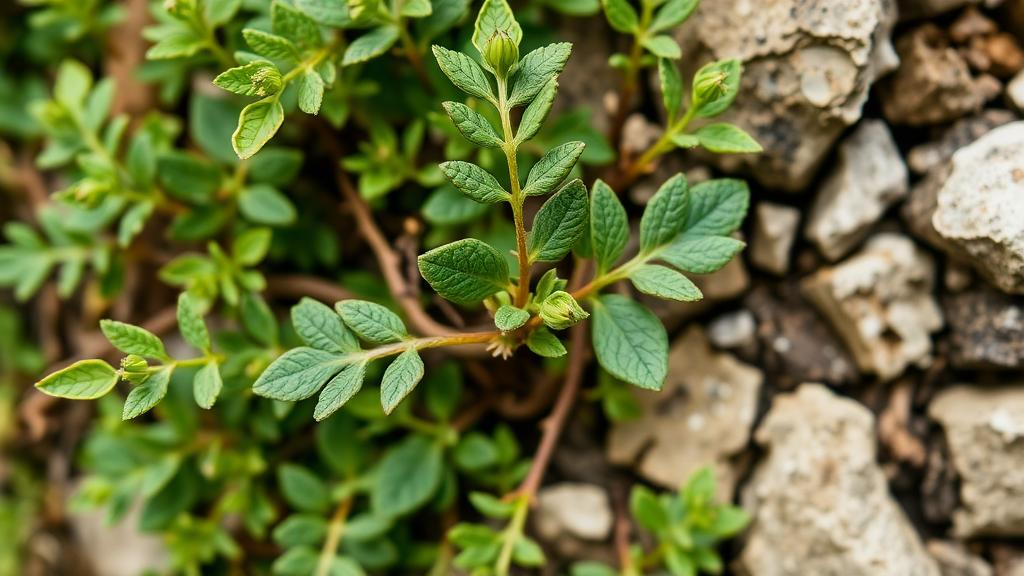
High in the hills of Uttarakhand, at an elevation of roughly 1,654 meters near Bhowali in the Nainital district, grows an aromatic undershrub that traditional healers across Asia have long valued but modern science has largely overlooked. Isodon coesta, a perennial member of the mint family Lamiaceae that reaches up to 2.5 meters in height, has been used in folk medicine for fever, gastrointestinal complaints, respiratory infections, inflammation, and even cancer. Now, a team of researchers at G.B. Pant University of Agriculture and Technology has subjected the whole plant to one of the most thorough chemical and computational workups it has ever received, combining solvent extraction, gas chromatography–mass spectrometry, antioxidant assays, molecular docking, and ADMET prediction into a single integrated investigation.
The study, published open access in Discover Chemistry, set out to close a conspicuous knowledge gap. While close relatives such as Isodon rubescens have been extensively characterized—yielding celebrated diterpenoids like oridonin that have attracted attention for anti-inflammatory and cytoprotective effects—I. coesta has remained comparatively obscure despite its wide distribution across Bangladesh, Nepal, India, China, Myanmar, the Philippines, Indonesia, Sri Lanka, and Thailand. The researchers harvested whole plants, excluding roots, in September 2023, air-dried them for two to four days, ground them into a fine powder, and extracted the material separately with methanol and hexane over ten to fifteen days of soaking. The polar solvent proved far more generous: the methanolic extract yielded 4.02 percent by weight, while the nonpolar hexane extract yielded only 1.10 percent, a difference that foreshadowed the chemistry to come.
Gas chromatography–mass spectrometry, performed at the Advanced Instrumentation Research Facility at Jawaharlal Nehru University in New Delhi on a Shimadzu GCMS-QP2010 Plus system with a DB-5 capillary column, identified 24 compounds in each extract. In the methanolic extract, these accounted for 81.93 percent of total composition, with the acyclic diterpene alcohol phytol dominating at 12.22 percent, followed by the steroid precursor pregnenolone acetate at 7.54 percent, squalene at 6.83 percent, and methyl linolenate at 6.51 percent. The hexane extract told a different story: squalene, a triterpene hydrocarbon famous for its antioxidant and skin-protective properties, led at 11.79 percent, with the long-chain hydrocarbon 2-methylhexacosane close behind at 9.68 percent, and hexatriacontane, propylene glycol monooleate, and palmitic acid rounding out the major peaks. Seven compounds appeared in both extracts, including phytol, squalene, neophytadiene, and vitamin E, suggesting overlapping biochemical pathways that persist regardless of solvent polarity.
The identity of the dominant molecules matters because several of them carry well-documented biological credentials. Phytol serves as a biosynthetic precursor to vitamins E and K1 and has reported antioxidant, anti-inflammatory, and anticancer activities. Pregnenolone acetate sits upstream in the biosynthesis of steroid hormones and has been studied for neuroprotective and anti-inflammatory effects, making it a molecule of interest in neuropharmacology and endocrinology. Squalene, meanwhile, is an intermediate in sterol biosynthesis and a widely used emollient in cosmetics and pharmaceuticals. The presence of gamma-sitosterol, tocopherol, and linoleic acid derivatives in the methanolic extract further enriches the profile of a plant whose chemical inventory had previously been little more than a footnote in the Isodon literature.
Quantitative colorimetric assays confirmed that polarity drives the phytochemical harvest. The methanolic extract registered a total phenolic content of 31.37 milligrams of gallic acid equivalents per gram, a total flavonoid content of 313.28 milligrams of quercetin equivalents per gram, and a total antioxidant capacity of 8.61 milligrams of ascorbic acid equivalents per gram. The hexane extract trailed on every measure, with 17.19 milligrams GAE per gram of phenolics, 117.57 milligrams QE per gram of flavonoids, and 2.07 milligrams AAE per gram of antioxidant capacity. The pattern is chemically intuitive: methanol, being polar, efficiently pulls phenols and flavonoids out of plant tissue, whereas hexane preferentially dissolves lipids, waxes, and terpenoid hydrocarbons. Flavonoids, in particular, are major contributors to plant antioxidant activity, so their concentration in the methanolic fraction is consistent with the rest of the data.
The radical-scavenging results, however, temper any temptation to crown the plant a super-antioxidant. In the DPPH assay, which tracks the reduction of a stable violet free radical by measuring absorbance at 517 nanometers, the methanolic extract posted an IC50 of 748.38 micrograms per milliliter and the hexane extract 794.13 micrograms per milliliter. Those figures indicate moderate to weak activity compared with ascorbic acid, the reference standard, which achieved an IC50 of just 74.72 micrograms per milliliter. Two-way ANOVA showed that concentration strongly influenced scavenging activity, with a highly significant effect, while the difference between the two extract types alone did not reach statistical significance, though a significant interaction between extract type and concentration revealed concentration-dependent divergence in their responses. The authors caution that direct comparison with the standard should be interpreted carefully because different concentration ranges were used for the plant extracts and the reference compound.
To probe how the major constituents might behave at the molecular level, the team turned to computational docking against two enzymes that sit at opposite ends of the oxidative-stress balance. Human peroxiredoxin-5, resolved by X-ray crystallography at 1.50 angstrom resolution, is a thioredoxin-family antioxidant enzyme that detoxifies hydrogen peroxide and peroxynitrite, defending cells against oxidative injury. NADPH oxidase, resolved at 1.80 angstroms, is the enzymatic engine of reactive oxygen species generation, and its overactivation drives inflammatory damage. Using PyRx 0.8 with AutoDock Vina, the researchers docked phytol, pregnenolone acetate, squalene, and 2-methylhexacosane into both binding pockets. Pregnenolone emerged as the clear frontrunner, binding peroxiredoxin-5 at minus 6.1 kilocalories per mole and NADPH oxidase at minus 8.4 kilocalories per mole through a mix of hydrogen bonds, pi-anion, and pi-alkyl contacts. Phytol followed with moderate affinities, while 2-methylhexacosane performed worst, managing only minus 3.0 and minus 5.7 kilocalories per mole through weak van der Waals and alkyl interactions.
The ADMET analysis added a sobering pharmacokinetic dimension. All four compounds passed the molecular-weight criterion of Lipinski’s rule of five, but squalene, phytol, and 2-methylhexacosane showed MLOGP values far above the acceptable ceiling of 4.15, signaling extreme lipophilicity that predicts poor aqueous solubility and low gastrointestinal absorption. Pregnenolone was the only compound predicted to have high GI absorption, the only one expected to cross the blood–brain barrier, and the only one that is not a P-glycoprotein substrate, making it the most drug-like molecule in the set. Toxicity predictions from ProTox 3.0 were reassuring across the board: none of the compounds showed hepatotoxicity, carcinogenicity, or AMES mutagenicity, and squalene and phytol carried LD50 values of 5,000 milligrams per kilogram, indicating generous safety margins. The authors suggest that nanoemulsions, liposomes, solid lipid nanoparticles, or phospholipid-based delivery systems could rescue the bioavailability of the lipophilic constituents.
The researchers are careful to frame the docking results as hypothesis-generating rather than proof of pharmacological activity, and they recommend in vivo validation, molecular dynamics simulations, and quantitative phytochemical confirmation by HPLC or LC–MS as the necessary next steps. Even with those caveats, the study positions Isodon coesta as a flavonoid-rich reservoir of bioactive metabolites from one of the world’s great biodiversity hotspots—the Indian Himalayan region harbors roughly half of India’s flowering plant species with nearly 30 percent endemism, and Uttarakhand alone supports more than 5,000 vascular plant species. As computational screening increasingly complements fieldwork in natural-product drug discovery, this aromatic undershrub of the Himalayan slopes may yet translate its ethnobotanical reputation into molecules worthy of the laboratory bench and, eventually, the clinic.
Subject of Research: Phytochemical profiling and computational antioxidant evaluation of Isodon coesta from the Uttarakhand Himalaya
Article Title: Comprehensive phytochemical profiling, molecular interaction studies, and ADMET analysis of hexane and methanol extracts of Isodon coesta from Uttarakhand’s Himalayan Region
Article References: Mawri, D., Pujari, R., Bahuguna, A., Rawat, D. S., Prakash, O., Kumar, R., & Dubey, S. K. (2026). Comprehensive phytochemical profiling, molecular interaction studies, and ADMET analysis of hexane and methanol extracts of Isodon coesta from Uttarakhand’s Himalayan Region. Discover Chemistry, 3(1), Article 558. https://doi.org/10.1007/s44371-026-01003-x
Image Credits: AI Generated
DOI: 10.1007/s44371-026-01003-x
Keywords: Isodon coesta, phytochemistry, GC-MS, antioxidant, molecular docking, ADMET, Uttarakhand, Himalayan medicinal plants, phytol, pregnenolone, squalene, Lamiaceae
Cite Scienmag News
Bethany Barker. (October 3, 2026). Himalayan Herb Isodon coesta Reveals Antioxidant Compounds in New Study. Scienmag. https://scienmag.com/himalayan-herb-isodon-coesta-reveals-antioxidant-compounds-in-new-study/
Bethany Barker. "Himalayan Herb Isodon coesta Reveals Antioxidant Compounds in New Study." Scienmag, 3 October 2026, https://scienmag.com/himalayan-herb-isodon-coesta-reveals-antioxidant-compounds-in-new-study/. Accessed 3 October 2026.
Bethany Barker. "Himalayan Herb Isodon coesta Reveals Antioxidant Compounds in New Study." Scienmag. October 3, 2026. https://scienmag.com/himalayan-herb-isodon-coesta-reveals-antioxidant-compounds-in-new-study/


