


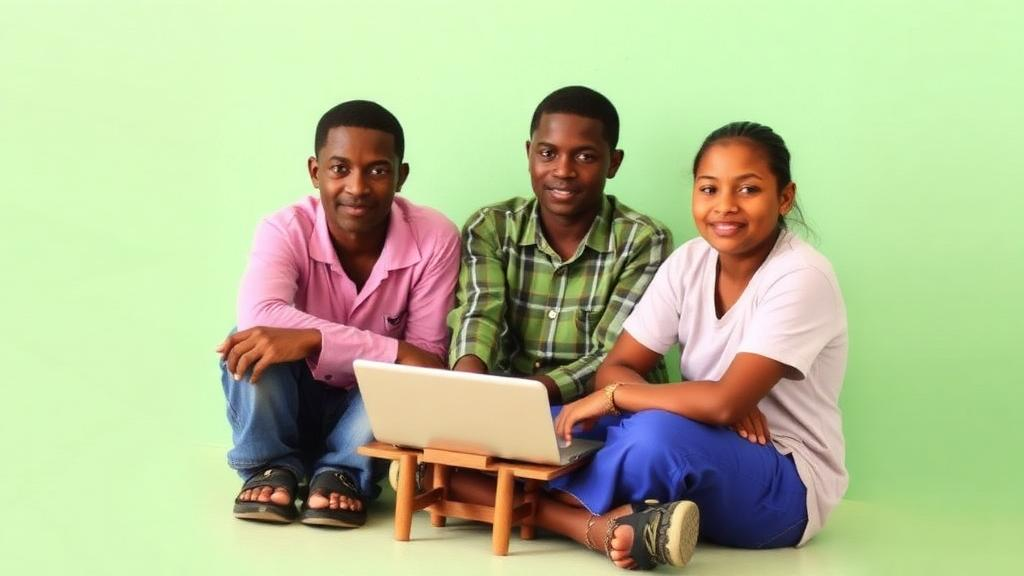
A bold experiment in university teaching has delivered striking results in one of the world’s most resource-constrained higher education systems. Between 2020 and 2024, researchers from Finland and Tanzania co-created and implemented a locally adapted version of Challenge-Based Learning across five Tanzanian universities, and a new study published in Discover Education reports that the programme measurably strengthened students’ technical skills, systems thinking, confidence, and collaborative problem-solving. The findings, drawn from 226 students and an unusually rich mixed-methods dataset, offer some of the first systematic evidence that globally popular pedagogical innovations can be successfully recontextualised for African universities, while also exposing the structural barriers that continue to limit their reach.
Challenge-Based Learning, or CBL, has become one of the most widely adopted pedagogical frameworks in higher education worldwide. Rooted in constructivist and experiential learning theory, it flips the traditional classroom: instead of receiving content from lecturers, students work in teams to identify authentic real-world problems, investigate them collaboratively, and design solutions using digital tools relevant to their disciplines. The approach typically unfolds in three iterative phases, engage, investigate, and act, originally conceptualised through Apple’s ACOT2 initiative. Empirical studies across engineering, computer science, entrepreneurship, and sustainability education have linked CBL to gains in critical thinking, creativity, digital literacy, perseverance, and communication, making it an increasingly strategic element of institutional missions aligned with the Sustainable Development Goals.
Yet adoption of CBL remains strikingly uneven. Resource-constrained environments, particularly in Sub-Saharan Africa, have seen few applications and even fewer contextually grounded studies of their impact. The researchers behind the new study argue that this gap mirrors broader structural inequalities in global higher education, where models originating in the Global North are often transplanted without adequate consideration of local pedagogical cultures, infrastructural constraints, or political-economic realities. Universities in the region face systemic pressures to produce digitally skilled graduates for emerging labour markets, but they contend with limited digital infrastructure, constrained funding, rigid curricula, and insufficient faculty development, all of which constrain innovation and experiential learning.
To address this gap, the team developed the Multi-competence Learning (MCL) programme through an institutional cooperation project called GeoICT4e, which brought together eight universities from Finland and Tanzania to support the digital transformation of geospatial and ICT education. MCL builds on CBL’s foundations but diverges in deliberate ways shaped by Tanzanian realities. It supports students less familiar with self-directed learning, treats geospatial and digital innovation competencies as core outcomes reflecting African employment needs, and integrates stakeholder co-creation and feedback in settings where access to data, technology, and mentorship is uneven. The programme targets four competence domains: problem-solving in space and time, geospatial data and technology skills, entrepreneurial and innovation skills, and climate, sustainability, and resilience skills.
Implemented during 2022 and 2023, MCL ran as a structured eight-week campaign across ten cohorts at five Tanzanian universities, engaging 226 students, 116 male and 110 female, from more than 20 study programmes spanning geography, geospatial sciences, business, information technology, environmental sciences, forestry, and the social sciences. Students tackled locally relevant umbrella challenges including water resource management, urban waste management, and land use planning. The research design was ambitious: weekly surveys tracking learning progress yielded 699 responses, a comprehensive end-of-course survey captured 140 students, and 40 semi-structured group interviews with 20 student teams provided qualitative depth, all embedded within a Participatory Action Research framework and ethnographic observation.
The results are emphatic. Between 89 and 95 percent of students agreed or strongly agreed with all six indicators of learning support in the final survey, including mentorship, DigiCampus online materials, and confidence in project progress. Students reported growing proficiency with open-source geospatial tools such as QGIS, Google Earth Pro, KoboToolbox, and ODK, with roughly 62 percent identifying geospatial tools as a major learning gain and 48 percent reporting new digital or ICT skills such as coding, prototyping, or app development. The programme produced mobile applications, interactive maps, and infographics, and for many students it offered a first exposure to an online learning environment, fundamentally changing how they interacted with course materials and applied digital tools to mapping, data collection, and analysis.
Beyond technical competence, the data reveal profound personal and interpersonal growth. In open-ended responses, 44 percent of students identified problem-solving or critical thinking as a key skill gained, while 22 percent highlighted systems thinking or the ability to conceptualise complex problems. Forty-one percent explicitly named teamwork and collaboration as a central gain, describing how interdisciplinary teams fostered creativity, empathy, and collective problem-solving even when differences in perspectives and technical levels caused friction. Students described a trajectory from hesitation to agency: initially reluctant to speak up, many ended the programme chairing meetings, coordinating tasks, and steering projects toward milestones. One student captured the shift plainly, reporting new confidence in framing complex problems, formulating relevant questions, and working across mentors, peers, and stakeholders to design solutions.
The learning culture itself emerged as transformative. In contrast to traditional lecture-based courses, students experienced MCL as open, dialogical, and psychologically safe, valuing the freedom to ask questions and learn through experimentation without fear of criticism, a condition known to foster inquiry and risk-taking. The social dimension mattered too: informal interactions such as shared meals and team-building activities built trust and a sense of belonging that sustained engagement. Remarkably, 88 percent of students expressed willingness to continue their projects beyond the programme, requesting additional financial support, more extensive technical training, stakeholder engagement opportunities, and improved digital infrastructure to do so.
But the study is equally candid about the obstacles. Internet connectivity problems were cited by 46 percent of students in open-ended responses, financial constraints by 38 percent, difficulty obtaining datasets by 27 percent, and time pressure from the programme’s short duration by 24 percent. Technical difficulties and inconsistent mentor availability affected smaller but significant shares. Students struggled initially with unfamiliar software, and the intensive pace compressed the time available for prototyping and testing, limiting the depth of final outputs. Most tellingly, weekly survey participation collapsed from 210 students in week two to just 51 by week seven, a pattern the authors interpret as a critical equity concern suggesting that some students disengaged due to infrastructural, financial, or logistical barriers rather than lack of interest.
The authors are careful to acknowledge limitations, including reliance on self-reported data, the absence of a control group, the eight-week programme’s short duration, and potential researcher involvement bias. Even so, the implications are far-reaching. The Tanzanian case demonstrates that adapted challenge-based frameworks can advance inclusive, practice-oriented learning in resource-limited settings, but only with strategic investment in digital infrastructure, faculty development, flexible curricula, and policy reform. The researchers call for embedding such models into national higher education agendas, longer programme durations, and future research on long-term impacts on graduate employability and civic engagement. As African universities grapple with how to prepare students for digital futures, this study offers both a proof of concept and a sober checklist of what must change first.
Subject of Research: Student learning experiences and outcomes in an adapted Challenge-Based Learning programme across five Tanzanian universities
Article Title: Student learning experiences in challenge based learning across five Tanzanian universities
Article References: Timbuka, M., Käyhkö, N., Kasvi, E., Tengström, T., Msilanga, M., Järvi, A., Ismail, M., Mbwilo, B., Mbise, M., Babere, N., & Hooli, L. (2026). Student learning experiences in challenge based learning across five Tanzanian universities. Discover Education, 5(1), Article 1079. https://doi.org/10.1007/s44217-026-02240-z
Image Credits: AI Generated
DOI: 10.1007/s44217-026-02240-z
Keywords: Challenge-Based Learning, Multi-competence Learning, Tanzania, higher education, geospatial education, Sub-Saharan Africa, student engagement, digital divide, pedagogy, experiential learning, ICT skills, educational innovation
Cite Scienmag News
Courtney Benton. (October 2, 2026). Real-World Challenges Transform Learning for 226 Students Across Tanzanian Universities. Scienmag. https://scienmag.com/real-world-challenges-transform-learning-for-226-students-across-tanzanian-universities/
Courtney Benton. "Real-World Challenges Transform Learning for 226 Students Across Tanzanian Universities." Scienmag, 2 October 2026, https://scienmag.com/real-world-challenges-transform-learning-for-226-students-across-tanzanian-universities/. Accessed 2 October 2026.
Courtney Benton. "Real-World Challenges Transform Learning for 226 Students Across Tanzanian Universities." Scienmag. October 2, 2026. https://scienmag.com/real-world-challenges-transform-learning-for-226-students-across-tanzanian-universities/


