


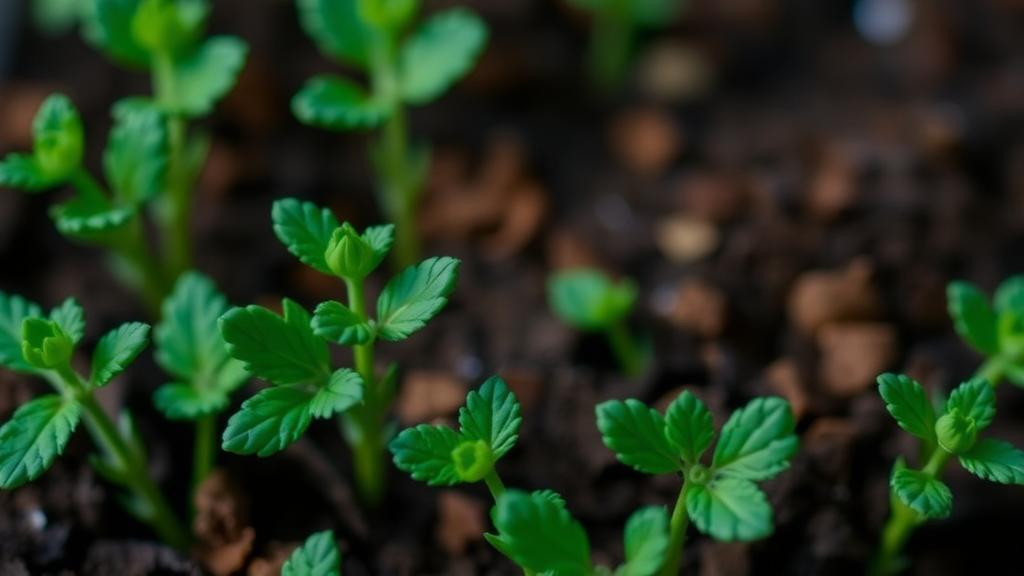
Biostimulants have become one of the most talked-about tools in the race to keep agriculture productive under a changing climate. Derived from seaweed, beneficial microbes, protein hydrolysates, humic acids and other natural sources, these products promise to help crops withstand drought, heat and nutrient stress without adding more chemical fertilizer to already strained soils. The global market has grown steadily since 2015, driven by farmer interest and European regulations that favor environmentally friendly plant-strengthening agents. Yet a comprehensive new review published in the Journal of Agriculture and Food Research by researchers at the Julius Kuehn-Institute argues that the promise of biostimulants remains largely unfulfilled for the crops that matter most to global food security: cereals such as wheat, barley and maize grown in open fields. The authors systematically dissect why these products so often work in the greenhouse but disappoint in the field, and they lay out a detailed roadmap for making biostimulant action effective and reproducible at scale.
The distinction between biostimulants and other biological products is central to the problem. Unlike biopesticides, which combat pathogens and fall under plant protection law, biostimulants are defined by what they are supposed to do, stimulating growth, nutrient use efficiency, crop quality or tolerance of abiotic stress, rather than by what they contain. In practice, their composition is frequently not fully characterized at all. That definitional looseness has real consequences. The review catalogs proven successes in horticultural crops: moringa extracts boosting growth in peas and beans, microalgal extracts lengthening tomato roots, arbuscular mycorrhizal fungi improving phosphorus uptake in cotton, and seaweed extracts from Ascophyllum nodosum enhancing stress tolerance in broccoli and spinach. But when the authors searched the literature from 2020 to 2026 for studies on biostimulants in cereals, a starkly different picture emerged, one dominated by inconsistency, single-environment experiments and effects that failed to survive the journey from growth chamber to farm.
At the molecular level, the mechanisms behind biostimulants are genuinely impressive, which makes the field-level failures all the more frustrating. Arbuscular mycorrhizal fungi enhance phosphorus uptake by inducing phosphate transporter genes, raise antioxidant defenses such as superoxide dismutase and catalase, and reduce water loss by downregulating aquaporin proteins. Plant growth-promoting rhizobacteria modulate entire gene networks involved in ethylene biosynthesis, salicylic acid and jasmonate signaling, dehydrin production and osmolyte accumulation. Seaweed extracts upregulate abscisic acid-responsive genes that accelerate stomatal closure, improving water use efficiency, while their cytokinin content promotes cell division. Humic acids stimulate root growth through reactive oxygen species modulation and expansin gene expression. These are not vague claims; they are documented, gene-level physiological responses. The problem is that a mechanism demonstrated in a climate chamber on a single genotype under a defined stress tells you almost nothing about what will happen in a heterogeneous field with unpredictable weather, variable soil and a complex native microbiome.
The review’s literature analysis makes the translation gap concrete. Of the cereal studies examined, the majority were conducted under controlled conditions, in petri dishes, climate chambers or greenhouses, typically in a single environment, making reproducibility impossible to assess. Most evaluated biostimulants under non-stress conditions, even though the economic rationale for such applications is questionable. And the few studies that did span multiple environments generally reported inconsistent responses: seaweed extracts showed low consistency for yield and grain quality in barley, humic acid effects in wheat varied between years, microbial treatments in maize differed between locations, and rice responses depended on genotype. The authors describe this as the translation gap between controlled experimental systems and field conditions, widely regarded as the most critical challenge limiting biostimulant application in cereals. Promising greenhouse findings repeatedly fail to deliver reliable agronomic benefits, creating unrealistic expectations and ultimately disappointing growers who have bet on these products.
The strongest evidence for inconsistency points to the products themselves. Because biostimulants come from natural raw materials, their chemical composition varies enormously. Three commercial seaweed extract products differed substantially in nitrogen, macro- and micronutrient, ash and carbohydrate content, producing distinct physiological responses in wheat leaves. Fifteen accessions of Reynoutria from invasive Central European populations showed considerable variation in both chemistry and genetics. Manufacturing compounds the problem: extraction method, solvent ratios, temperature and duration all significantly alter the final composition, and comparisons of four extraction methods for Chlorella vulgaris showed that acid hydrolysis and microwave-assisted extraction produced the strongest growth promotion in wheat. For microbial products, low quality, such as deficiencies of living cells, and mutations during propagation undermine reproducibility. Heavy metal impurities have even been detected in some formulations. In short, two bottles labeled with the same product may be biologically quite different substances.
Environmental dependence adds a second layer of unpredictability. Seaweed extracts elicit stronger responses in tropical climates than in cooler regions, and a meta-analysis found significant biostimulant-induced yield increases in maize only in Asia and South America. Heat and drought can reduce the efficacy of microbial biostimulants by impairing survival and colonization, while soil texture influences how seaweed-derived polysaccharides affect nutrient retention and root-soil interactions. Beyond these well-supported factors, the review identifies moderate-evidence causes: application method, timing and dosage, and crucially, genotype. In a study of ten spring barley genotypes under early drought, drought-sensitive lines benefited more from biostimulants than drought-tolerant ones, meaning the value of a treatment depends on the genetic adaptation strategy of the crop it is applied to. Seed priming is cheap and low-input but applies the product blind, before anyone knows whether stress will occur; foliar spraying and soil application offer flexibility but demand large volumes and risk drift and washoff.
Some of the most intriguing hypotheses concern the soil microbiome, though the evidence here remains thin. Soil microbial activity depends strongly on soil type, humus content and particle size, and it is genuinely unclear whether inoculating arbuscular mycorrhizal fungi in the field helps or harms indigenous mycorrhizal communities, as both outcomes have been reported. A zeolite-based biostimulant was found to negatively affect soil enzyme activity. Introduced microbes may persist only briefly, with laboratory studies showing survival of less than 28 days for E. coli in natural soil and up to 49 days for other biostimulant-associated strains. Host plants shape rhizosphere communities through root exudates, and cereal-dominated rotations may accumulate soil-borne pathogens such as Alternaria alternata or Fusarium oxysporum that could negate biostimulant effects entirely. Single-strain inoculants face particular difficulty establishing against endemic communities already adapted to local conditions. None of these interactions has been systematically studied in cereals, representing a major knowledge gap.
The proposed solutions are refreshingly practical. In the near term, the authors call for identifying the active compounds in biostimulants using liquid and gas chromatography coupled to mass spectrometry, following the model that turned pyrethrin from chrysanthemum into the well-characterized insecticide allethrin. Standardized cultivation of raw materials, macroalgae grown in photobioreactors and tank cultures rather than harvested wild from oceans, and clonal propagation of species like Gracilaria and Kappaphycus would stabilize composition. Multi-environment trials with precisely defined experimental parameters, stress-specific validation and genotype-specific evaluation would expose which products actually work, for which crops, under which conditions. Screening large genotype sets within a single crop, and eventually identifying quantitative trait loci associated with biostimulant responsiveness, could let breeders select varieties that respond reliably. Application technology also has room to improve: dropleg sprayers, originally developed to protect pollinators in oilseed rape, deliver product to the underside of cereal leaves with less drift, while moderate application frequencies of four to six seaweed treatments outperformed sporadic use, and powdered mycorrhizal inoculants adhere best to the rough, hairy surface of cereal grains.
Looking further ahead, the review sketches a genuinely futuristic agenda. Next-generation sequencing could identify the biosynthetic gene clusters responsible for biostimulant activity in microbes, fungi and seaweeds, enabling CRISPR/Cas9 engineering of so-called designer biostimulants with stable, defined compositions, though European regulation and the risk of metabolic burden on crops remain obstacles. Drones equipped with multispectral and hyperspectral cameras could map crop stress in real time and generate prescription maps for site-specific biostimulant application, an approach already proven for disease detection and fertilizer optimization, though battery limits, cost and weather dependence currently restrict practical use. Circular economy approaches could lower costs by converting shrimp shells, potato peels and chicken feathers into protein hydrolysates and chitosan derivatives, provided contaminants such as pharmaceuticals and microplastics are excluded. Artificial intelligence applied to multi-omics data, genomics, transcriptomics, proteomics and metabolomics, could untangle the nonlinear interactions among soil, microbiome and plant that determine whether a treatment works. The authors’ bottom line is sober but optimistic: biostimulants are not a universal solution, but treated as precisely targeted tools, matched to specific crops, genotypes, stresses and sites, they could yet become a dependable pillar of sustainable cereal production.
Subject of Research: Improving the effectiveness and reproducibility of biostimulants in field-grown cereal crops
Article Title: How to make the action of biostimulants more effective and reproducible for field crops?
Article References: Töpfer, V., Breitkreuz, C., Matros, A., Stahl, A., Warnemünde, S., & Wehner, G. (2026). How to make the action of biostimulants more effective and reproducible for field crops?. Journal of Agriculture and Food Research, 31, Article 103316. https://doi.org/10.1016/j.jafr.2026.103316
Image Credits: AI Generated
DOI: 10.1016/j.jafr.2026.103316
Keywords: biostimulants, cereals, drought stress, soil microbiome, seaweed extracts, arbuscular mycorrhizal fungi, plant growth-promoting rhizobacteria, precision agriculture, genotype-specific response, circular economy, CRISPR, sustainable agriculture
Cite Scienmag News
Alan Morgan. (October 2, 2026). Why Biostimulants Fail in the Field and How Science Plans to Fix Them. Scienmag. https://scienmag.com/why-biostimulants-fail-in-the-field-and-how-science-plans-to-fix-them/
Alan Morgan. "Why Biostimulants Fail in the Field and How Science Plans to Fix Them." Scienmag, 2 October 2026, https://scienmag.com/why-biostimulants-fail-in-the-field-and-how-science-plans-to-fix-them/. Accessed 2 October 2026.
Alan Morgan. "Why Biostimulants Fail in the Field and How Science Plans to Fix Them." Scienmag. October 2, 2026. https://scienmag.com/why-biostimulants-fail-in-the-field-and-how-science-plans-to-fix-them/


