


A sweeping review published in Discover Soil argues that the future of global food security may rest less on the next bag of synthetic fertilizer and more on the trillions of microscopic organisms already living in farmers’ fields. Led by Mehedi Hasan Khan of the Bangladesh Rice Research Institute, the study synthesizes more than a decade of peer-reviewed evidence on biofertilizers—preparations containing living microorganisms that colonize plant roots, unlock soil nutrients, and shield crops from stress. The authors contend that as the world’s population grows and dietary patterns shift, demand for food, energy, and water is projected to rise sharply by 2030, and that meeting those demands will be impossible without restoring the fertility of degraded soils. Their conclusion is both optimistic and sobering: biofertilizers can raise yields, cut pollution, and rebuild soil health, but only if scientists and policymakers overcome a stubborn set of technical and practical obstacles.
The case for alternatives to conventional fertilizers rests on well-documented problems. Chemical fertilizers deliver nutrients quickly and in concentrated form, which is precisely why they dominate modern agriculture, but their overuse has disturbed ecological balance, contributed to environmental pollution, and become increasingly unaffordable for many farmers. The review notes that synthetic fertilizers, pesticides, and herbicides are among the principal drivers of environmental contamination worldwide. By contrast, biofertilizers work more slowly but more gently: they convert nutrients that plants cannot access into forms they can, gradually enriching the soil rather than depleting it. Reported yield gains from microbial inoculants range from 10 to 40 percent, and after three to four years of continuous use, the introduced microbial populations can sustain themselves, reducing the need for repeated applications.
At the heart of the review is a detailed taxonomy of the microbial workhorses involved. Nitrogen-fixing biofertilizers, including symbiotic bacteria from the Rhizobiaceae family such as Rhizobium, Bradyrhizobium, and Sinorhizobium, reside in legume root nodules and can fix 50 to 100 kilograms of nitrogen per hectare, boosting legume yields by 10 to 35 percent. Free-living fixers like Azotobacter and Azospirillum, along with nitrogen-fixing cyanobacteria, extend these benefits to non-leguminous crops; in rice systems, biological nitrogen fixation combined with soil organic matter mineralization is estimated to meet 50 to 60 percent of the crop’s nitrogen requirement. Phosphate-solubilizing bacteria from genera such as Pseudomonas, Bacillus, and Burkholderia tackle a different bottleneck: roughly 95 to 99 percent of soil phosphorus exists as insoluble phosphates that plants cannot use, and these microbes release it through localized acidification and organic acid secretion.
The review extends this catalog to nutrients that receive less attention. Potassium-mobilizing bacteria such as Bacillus mucilaginosus dissolve mineral sources like micas, illite, and orthoclase, improving enzyme activation, photosynthesis, and disease resistance in crops. Sulfur-oxidizing bacteria, including Thiobacillus species, have been shown to improve plant growth in calcareous and saline soils by increasing nutrient accessibility. Zinc-solubilizing microbes address a micronutrient deficiency that causes chlorosis, smaller leaves, and heightened stress susceptibility, while silicate-solubilizing bacteria such as Bacillus megaterium and Pseudomonas fluorescens release silicon from abundant but insoluble crustal minerals, benefiting high silicon-accumulating species under unfavorable conditions. Siderophore-producing bacteria, meanwhile, chelate insoluble ferric iron and deliver it to plant roots, supporting photosynthesis and chlorophyll production.
Perhaps the most biologically intricate section concerns the dialogue between plants and microbes. Roots exude a chemical cocktail of sugars, amino acids, organic acids, vitamins, and phenolic compounds that act as chemo-attractants, guiding beneficial bacteria toward the root surface. A two-step acquisition model describes how microbes first pass through membrane and cell-wall recognition filters and are then further selected by host genetic traits. Recent comparative genomic work suggests that traits related to carbon and nitrogen acquisition, rather than auxin production, determine which strains successfully colonize the rhizosphere. Quorum sensing allows bacteria to coordinate their activities in response to environmental conditions, and multi-omics analyses have revealed that nitrogen fixation genes, phosphate transporters, and ACC deaminase genes are upregulated in the rhizosphere within 48 to 72 hours of root contact—a remarkably rapid functional activation that opens the door to predictive, mechanism-based inoculant design.
Beyond nutrition, the review documents biofertilizers’ role as stress-mitigation agents, an increasingly urgent function as climate change intensifies drought, salinity, and heat. Arbuscular mycorrhizal fungi, which form mutualistic symbioses with about 80 percent of land plant species, produce glomalin, a glycoprotein that aggregates soil particles and retains water. The endophytic fungus Piriformospora indica confers tolerance to salinity and systemic diseases in barley, while Pseudomonas fluorescens has alleviated drought stress in crops by promoting growth under water-limited conditions. Plant growth-promoting rhizobacteria that produce ACC deaminase metabolize the ethylene precursors plants generate under heavy metal stress, and the mycorrhizal fungus Glomus intraradices has improved photosynthetic efficiency and antioxidant defenses in drought-stressed rice. Nitrogen-fixing Rhizobium strains from coastal regions have even enhanced productivity in saline soils.
The authors are refreshingly candid about why biofertilizers so often disappoint in the field. A meta-analysis cited in the review found that biofertilizers increased crop yields by an average of 12 to 18 percent across more than 200 studies, but the coefficient of variation exceeded 40 percent, and in roughly a quarter of field trials the inoculants had no significant effect at all. Strains that boosted wheat yields by 25 percent in greenhouse pots managed only 0 to 8 percent across twelve field locations, largely because introduced bacteria cannot compete with native rhizosphere communities—colonization rates plummet from over 10^8 cells per gram of root in sterile conditions to under 10^4 in natural soil. High native soil nitrogen, low pH, heavy clay content, and temperatures above 35 degrees Celsius all suppress performance, and these constraints rarely appear on commercial product labels.
The futuristic toolkit described in the review aims to close that gap. Nano-biofertilizers encapsulate microbes in chitosan, alginate, or other polymer nanoparticles that protect them from desiccation, ultraviolet radiation, and heat while releasing nutrients in synchrony with plant demand; nano-encapsulated Rhizobium cells have remained viable for six months at 40 degrees Celsius, compared with two weeks for free cells. CRISPR-edited strains of Azospirillum and Pseudomonas have outperformed wild types in proof-of-concept studies, with targets including nitrogenase regulation, ACC deaminase overexpression, and enhanced biofilm formation. Machine learning models trained on metagenomic, climate, and yield datasets can predict which strain-host-environment combinations will succeed, potentially cutting screening time and costs by 60 to 70 percent, while synthetic communities combining complementary functions have shown improved root colonization and more consistent field performance than single-strain inoculants.
The review closes with a reminder that technology alone will not transform agriculture. Pilot programs in India, Brazil, and Kenya show that farmer training combined with subsidized starter kits raised adoption rates from below 10 percent to 40 percent within three to five years, suggesting that decentralized production, quality certification, and digital extension tools matter as much as laboratory breakthroughs. Circular-economy approaches that convert municipal waste, crop residues, and animal manure into biofertilizer formulations with viable counts exceeding 10^8 cells per gram offer the dual benefit of waste remediation and affordable farm inputs. If formulation stability, regulatory frameworks, and farmer knowledge advance in step with the underlying microbiology, the authors conclude, biofertilizers could become a cornerstone of climate-resilient farming—quietly, microbially, and at a fraction of the environmental cost of the chemicals they are meant to complement.
Subject of Research: The role of microbial biofertilizers in enhancing crop productivity, soil health, and environmental sustainability in modern agriculture
Article Title: Optimizing crop productivity and environmental sustainability through biofertilizer application in modern farming systems
Article References: Khan, M. H., Islam, S. M. M., Islam, M. N., Naher, U. A., Tarannum, F., Jannaty, M. J., Islam, T., Debnath, R. R., Zubayer, M., Akter, M., & Islam, M. R. (2026). Optimizing crop productivity and environmental sustainability through biofertilizer application in modern farming systems. Discover Soil, 3(1), Article 166. https://doi.org/10.1007/s44378-026-00326-6
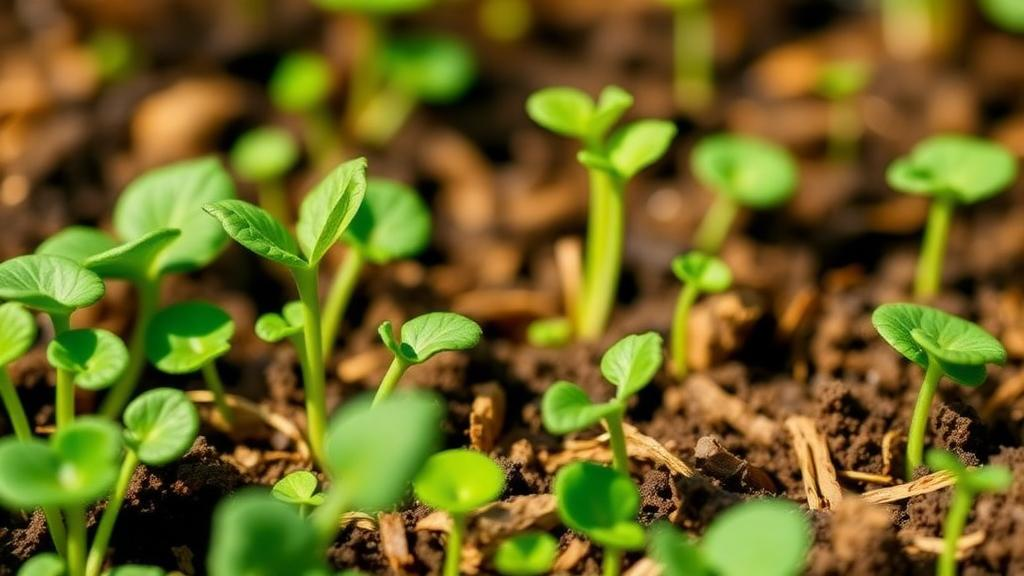
Image Credits: AI Generated
DOI: 10.1007/s44378-026-00326-6
Keywords: biofertilizers, sustainable agriculture, soil fertility, nitrogen fixation, plant growth-promoting rhizobacteria, mycorrhizal fungi, nano-biofertilizers, phosphate solubilization, environmental stress, crop productivity, microbial consortia, synthetic fertilizers
Cite Scienmag News
Alan Morgan. (October 1, 2026). Microbial Allies: How Biofertilizers Could Reshape the Future of Farming. Scienmag. https://scienmag.com/microbial-allies-how-biofertilizers-could-reshape-the-future-of-farming/
Alan Morgan. "Microbial Allies: How Biofertilizers Could Reshape the Future of Farming." Scienmag, 1 October 2026, https://scienmag.com/microbial-allies-how-biofertilizers-could-reshape-the-future-of-farming/. Accessed 1 October 2026.
Alan Morgan. "Microbial Allies: How Biofertilizers Could Reshape the Future of Farming." Scienmag. October 1, 2026. https://scienmag.com/microbial-allies-how-biofertilizers-could-reshape-the-future-of-farming/


