


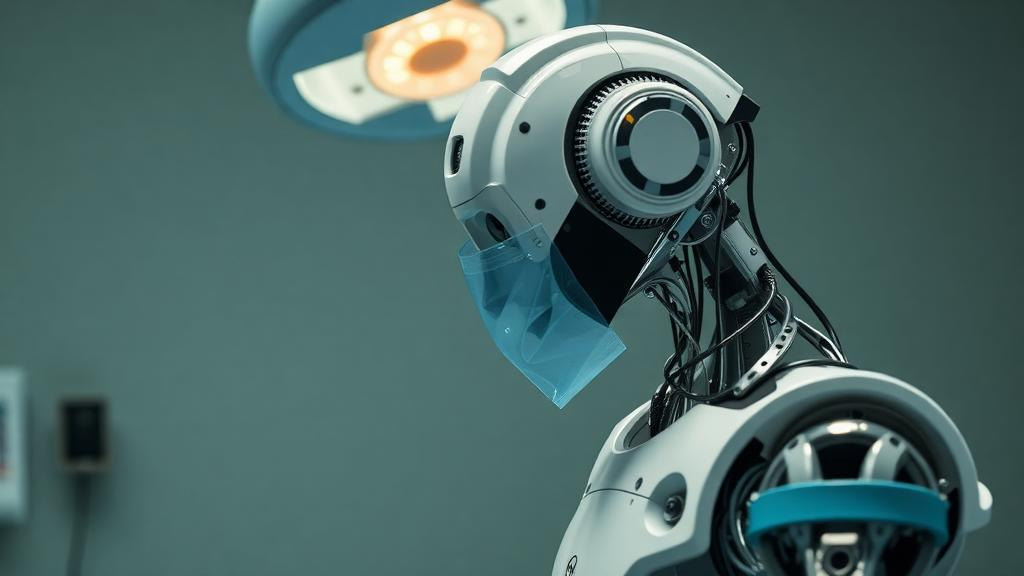
Surgical robots are getting steadily better at performing delicate tasks on their own, but a quiet tension sits at the heart of every autonomous capability: the more a machine does without asking, the less a human surgeon knows about what it is doing, and the more a machine asks, the more it interrupts the very workflow it was meant to support. A team of researchers at Nagoya University, working with a clinician at Aichi Cancer Center Hospital, has now tested a middle path. In a short communication published in the International Journal of Computer Assisted Radiology and Surgery, Jacinto Colan and colleagues describe a collaborative surgical framework that speaks up only when it is genuinely unsure, and their preliminary results suggest this uncertainty-triggered approach may offer a better balance between performance, workload, and operator trust than either full autonomy or constant supervision.
The study addresses a problem that has grown more urgent as autonomy levels in commercial and experimental surgical systems have climbed. A 2024 systematic review of FDA-cleared surgical robots documented a wide spectrum of autonomy, from teleoperated tools that merely filter tremor to systems executing defined subtasks without continuous guidance. Meanwhile, laboratory demonstrations have grown bolder, including deep learning-based autonomous retinal vein cannulation in ex vivo porcine eyes reported in Science Robotics in 2025. Yet clinicians and ethicists have repeatedly cautioned that a human must remain meaningfully in the loop, and research on interruptions in healthcare shows that poorly timed requests for attention can themselves become a safety hazard. The Nagoya group’s question was therefore not whether robots should ask for help, but when.
Technically, the framework supports three distinct interaction modalities for soft tissue resection, the task of cutting away target tissue. In the Autonomous modality, the robot executes the resection without any feedback requests, relying entirely on its internal perception and planning. In the Supervised modality, the robot pauses before every critical action and requires explicit confirmation from the human operator, a design that maximizes oversight but also maximizes the number of interruptions. The third option, which the authors call the Selective modality, is the novel contribution: the robot monitors its own internal uncertainty estimates and initiates communication with the operator only when those estimates cross a predefined threshold. When the system is confident about the cutting path, it proceeds silently; when it is not, it asks.
The machinery behind that confidence check draws on a well-established body of work in Bayesian deep learning and uncertainty estimation. Techniques such as deep ensembles, in which multiple neural networks are trained independently and their disagreement is treated as a proxy for uncertainty, and the decomposition of predictive uncertainty into aleatoric and epistemic components, as formalized by Kendall and Gal, give modern perception systems a way to know what they do not know. The team has previously applied related ideas to surgical workflow recognition and to monocular depth estimation for surgical scenes, and a companion study explored large language model-based detection of ambiguity in natural language instructions given to collaborative surgical robots. The Selective modality effectively converts those uncertainty signals into a communication policy.
To evaluate the approach, the researchers ran a preliminary user study in which participants performed resection of phantom tissue, a standard surrogate that mimics the mechanical properties of soft tissue without the ethical and regulatory complexity of real patients. Each interaction modality was assessed along two complementary axes. Quantitative reliability was measured through cutting path error, which captures how closely the executed cut matched the intended trajectory, and task completion time. Qualitative measures targeted the human side of the collaboration: the NASA Task Load Index quantified mental demand and overall workload, while validated trust and distrust questionnaires, building on foundational scales for trust in automated systems and more recent instruments for calibrating trust in artificial intelligence, captured how participants perceived the system’s reliability.
The results, though preliminary, point in a consistent direction. Compared with the Supervised modality, the Selective modality showed a trend toward lower mean path error and shorter mean completion time, suggesting that removing the requirement to confirm every single action did not come at the cost of precision and may actually have helped by keeping the operator’s attention focused where it mattered. Compared with the Autonomous modality, the Selective condition preserved the safety benefit of human involvement at the moments of greatest risk, since queries were concentrated precisely where the robot’s internal models were least certain.
The trust findings are arguably the most intriguing part of the study. Participants in the Selective condition reported lower mean distrust scores and lower mental demand than in the comparison conditions, while positive trust scores remained similar to those observed elsewhere. In other words, asking for help sparingly did not erode confidence in the robot; if anything, it reduced the suspicion and cognitive strain associated with a machine that either never checks in or never stops checking in. This aligns with a broader theme in human-robot interaction research, which suggests that appropriately timed communication can calibrate a human operator’s mental model of what an automated system is doing, rather than simply flattering it with reassurance.
The authors are careful about the limits of what they can claim. The study is explicitly labeled preliminary, the sample was small, and the observed differences in path error, completion time, and questionnaire scores are trends rather than statistically confirmed effects. The team states plainly that a larger study is required to determine whether the patterns they observed represent reliable phenomena. Phantom tissue, however realistic, also differs from living anatomy in ways that matter for bleeding, deformation, and visual appearance, so extending the evaluation toward more clinically representative scenarios is an obvious next step. The experimental protocols were approved by the Ethical Research Committee of Nagoya University, and informed consent was obtained from all participants.
Even so, the framework’s design philosophy has implications well beyond one lab bench. The work was supported by the Japan Science and Technology Agency’s CREST program, including the AIP Challenge Program, and by JSPS KAKENHI grants, reflecting a sustained national investment in human-centered automation. The idea of uncertainty-gated communication is modular: it does not dictate what the robot’s perception system must be, only that whatever confidence estimates it produces should be translated into a disciplined policy about when to involve the human. That makes the approach potentially compatible with the growing family of autonomous surgical assistance functions, from exposure maximization during dissection and cautery to tool exchange and workflow tracking, each of which could inherit the same selective interaction layer.
For surgeons, the near-term significance is a possible answer to a daily ergonomic complaint: automation that either demands constant babysitting or offers none at all forces an uncomfortable choice. A system that interrupts only when its internal uncertainty crosses a threshold promises to reserve human attention for the decisions that genuinely need it, while giving the operator a continuous, implicit signal about the machine’s state, because silence itself becomes informative. For patients, the longer-term promise is a class of surgical assistants that combine machine precision with human judgment in a way that is measurable rather than rhetorical. The Nagoya team’s data are early, but they sketch a credible engineering route toward surgical robots that are not just capable of autonomy, but judicious about exercising it, and that may prove to be the quality on which the trust of operating rooms ultimately turns.
Subject of Research: Uncertainty-triggered human-robot interaction strategies for reliable and trustworthy collaborative robotic surgical assistance
Article Title: Assessing selective interaction for reliable and trustworthy robotic surgical assistance
Article References: Colan, J., Davila, A., Yamada, Y., Misawa, K., & Hasegawa, Y. (2026). Assessing selective interaction for reliable and trustworthy robotic surgical assistance. International Journal of Computer Assisted Radiology and Surgery. https://doi.org/10.1007/s11548-026-03799-6
Image Credits: AI Generated
DOI: 10.1007/s11548-026-03799-6
Keywords: surgical robotics, human-robot collaboration, uncertainty estimation, selective interaction, soft tissue resection, NASA-TLX, trust in automation, autonomous surgery, Bayesian deep learning, phantom tissue, workload, Nagoya University
Cite Scienmag News
Denise Maddox. (September 30, 2026). Surgical Robot That Asks for Help Only When Unsure Balances Autonomy and Trust. Scienmag. https://scienmag.com/surgical-robot-that-asks-for-help-only-when-unsure-balances-autonomy-and-trust/
Denise Maddox. "Surgical Robot That Asks for Help Only When Unsure Balances Autonomy and Trust." Scienmag, 30 September 2026, https://scienmag.com/surgical-robot-that-asks-for-help-only-when-unsure-balances-autonomy-and-trust/. Accessed 30 September 2026.
Denise Maddox. "Surgical Robot That Asks for Help Only When Unsure Balances Autonomy and Trust." Scienmag. September 30, 2026. https://scienmag.com/surgical-robot-that-asks-for-help-only-when-unsure-balances-autonomy-and-trust/


