


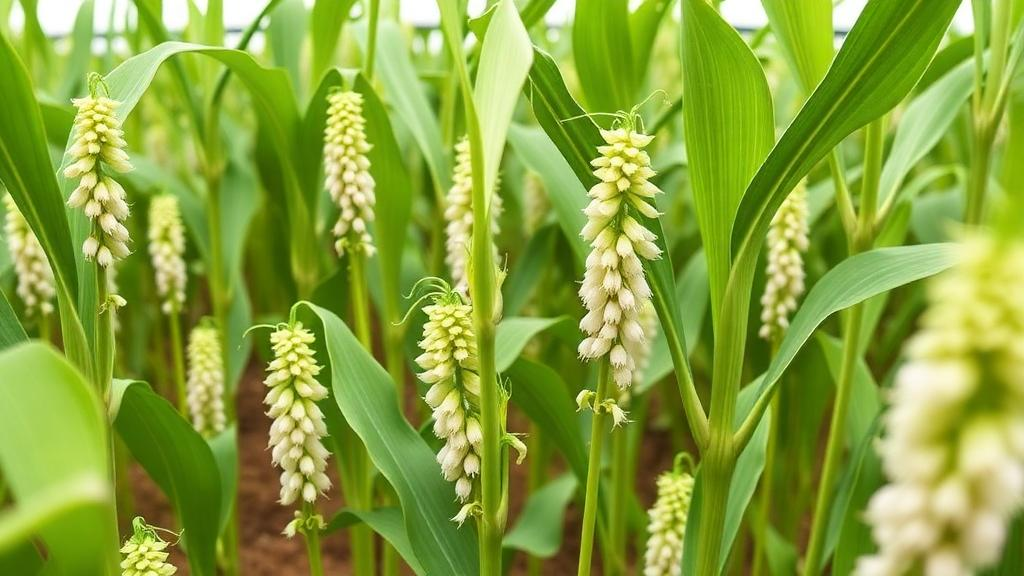
Soybean is one of the world’s most important crops, a cornerstone of plant protein and vegetable oil production, and a crop that European agriculture would dearly love to grow more of. Yet despite decades of breeding effort, the soybean’s cultivation footprint in Europe remains far smaller than its agronomic potential. The reason lies in the plant’s own biology: soybean is a short-day species, meaning its flowering is triggered by the length of the night, and most cultivars are so finely tuned to their local day length that they can only be grown within a narrow latitudinal band of roughly 200 kilometers. At higher latitudes, where long summer days dominate the growing season, soybean must flower early enough to complete seed fill before the first autumn frosts. A new study published in Theoretical and Applied Genetics now demonstrates that multiplex CRISPR-Cas9 genome editing can rapidly reprogram this photoperiod sensitivity, converting elite late-flowering soybean lines into early-flowering ones within just two generations.
The research, led by Manon Monfort and Fabien Nogué of Université Paris-Saclay and INRAE in collaboration with Corteva Agriscience, took aim at the genetic network that controls flowering time in soybean. Rather than knocking out a single gene and hoping for a dramatic effect, the team embraced a strategy known as Targeted Induced Gene Variation, or TIGV. The idea is elegant: instead of predicting in advance which allele combination will produce the desired phenotype, researchers simultaneously edit many genes within a defined developmental pathway, then screen the resulting population for the traits they want. Because flowering time is a polygenic trait, single-gene knockouts often produce discrete, all-or-nothing phenotypic shifts rather than the continuous gradation of flowering times that breeders actually need to fine-tune adaptation across latitude gradients. Multiplex editing, by contrast, generates a spectrum of allelic combinations that mimics and extends natural variation while remaining confined to biologically relevant targets.
To build their editing toolkit, the researchers first selected twelve flowering-time repressors whose loss of function was expected to accelerate flowering, drawing on decades of soybean genetics. The targets included the famous E1 gene, the master repressor of flowering under long days, along with its homologs E1La and E1Lb, the phytochrome genes E3, E4 and PHYA1, the circadian-associated Tof12, the CONSTANS-like genes COL1a and COL1b, the AP2-family repressor TOE4a, the flowering repressor E10/GmFT4, and DT1, which controls stem growth habit. Three plasmids were assembled, each carrying a different combination of guide RNAs, with the largest construct targeting eleven genes simultaneously. This scale is remarkable: previous multiplex CRISPR experiments in soybean had typically targeted three to six genes at a time. The Cas9 cassette was driven by the soybean EF1A2 promoter, and guide RNAs were expressed from native soybean U6 promoters, with each construct also carrying a spectinomycin selection marker and a DsRed seed-fluorescence marker to track transgene presence.
The two starting materials were proprietary commercial cultivars 91B42, belonging to maturity group I, and 93Y21, belonging to maturity group III. Soybean cultivars are classified into fourteen maturity groups, from MG 0000 in the highest latitudes to MG X in the tropics, reflecting their flowering response to day length. Both chosen cultivars were late-flowering but agronomically strong, making them ideal tests of whether editing could add precocity without destroying elite performance. Embryonic axes isolated from mature seeds were transformed with Agrobacterium tumefaciens carrying the three plasmids, and regenerated plantlets were grown to maturity in the greenhouse. Illumina amplicon sequencing of the T0 plants confirmed that nearly all guide RNAs were functional, with only the E1La/E1Lb guide in one plasmid failing to edit. Eight independent T0 plants of the 91B42 background and thirty of the 93Y21 background produced selfed T1 seed for screening.
The phenotypic results were striking. In the greenhouse under long-day conditions, the unedited 93Y21 control flowered on average 61.5 days after sowing, while the earliest edited T1 lines flowered at just 37 to 37.6 days, an advance of roughly 24 days, or nearly four weeks. Across the edited population, flowering times spanned a broad continuum, from more than three weeks earlier than wild type to only one week earlier or no difference at all, exactly the kind of phenotypic diversity the TIGV approach was designed to create. Genotyping of 2,408 targeted loci across the T1 populations revealed that 83 percent had been edited, with 28 percent carrying homozygous mutations and 38 percent carrying frameshift mutations on both alleles, configurations likely to abolish gene function entirely. The number of distinct alleles created at each locus ranged from 23 at E3 to 73 at DT1, underscoring the sheer diversity generated by the experiment.
The mutational signatures themselves told a familiar molecular story. More than half of the induced alleles were small deletions of fewer than 20 base pairs near the predicted cut site, many flanked by short microhomologies characteristic of the alternative end-joining repair pathway. Single base-pair insertions that duplicated an adjacent nucleotide, the hallmark of classical non-homologous end joining, accounted for about 10 percent of alleles, while larger insertions, including one of 112 base pairs, made up 14 percent. Roughly a third of the mutations were in-frame, consistent with a random distribution of repair outcomes. This repair bias toward small indels carries regulatory significance: in many jurisdictions, including under the recently adopted European framework for certain New Genomic Techniques, plants carrying such edits and free of exogenous DNA are classified as conventional crops rather than GMOs, a distinction that could smooth the path to commercialization for these early-flowering lines.
When the researchers advanced early-flowering T1 plants to the T2 generation and re-phenotyped their progeny, the early-flowering trait proved heritable and even more pronounced. The earliest lines, such as #19.12, #15.6 and #20.18, flowered 35 days after sowing compared with 62 days for the wild type, a 27-day advancement that actually preceded the flowering of the commercial ultra-early cultivar ES Comandor, a MG 000 variety. Other lines showed more moderate precocity of one to two weeks, and a few families displayed internal variability consistent with segregation from heterozygous T1 parents. Combining the genotype and phenotype data revealed the architecture of the trait: loss of function at E1 emerged as the major driver of early flowering, with lines carrying E1 frameshift alleles flowering roughly 20 to 22 days earlier than controls, while stacking three or four additional edits on top of the E1 knockout shaved off roughly another week. Frameshift mutations in E3 and E4 were also associated with earlier flowering in some backgrounds, whereas Tof12 and PHYA1 mutations produced no obvious additional shift in the combinations recovered.
The critical test came in the field. Seventy-two edited lines, all confirmed by Southern-by-sequencing to be free of the T-DNA editing construct, were planted in May 2025 in Iowa, within a maturity group II environment, alongside their wild-type parents and nine commercial or pre-commercial controls ranging from MG 000 to MG 0. The field results confirmed the direction of the greenhouse phenotype but tempered its magnitude. The earliest 91B42-derived edited lines flowered about one week earlier than their wild type in the field, compared with up to 24 days earlier in the greenhouse, while most 93Y21-derived lines flowered roughly ten days earlier in the field versus up to 27 days earlier indoors. Notably, the edited 93Y21 lines did not outperform the MG 00 and MG 000 commercial controls in the field as they had in the greenhouse, instead flowering at times comparable to the MG I control. The lesson is clear: greenhouse photoperiod and temperature regimes can exaggerate flowering-time effects, and only field evaluation can establish agronomic reality.
Earlier flowering translated into earlier maturity, with edited 91B42 lines maturing about one week sooner and edited 93Y21 lines about two weeks sooner than their parents. Flowering time and maturity were strongly correlated, with a Pearson coefficient of 0.77, but flowering explained only about 59 percent of the variation in maturity, a reminder that post-flowering development obeys its own genetic and environmental logic. Yield told a more nuanced story. Lines carrying a DT1 knockout, which imposes a determinate, dwarfed growth habit, proved disastrous under field conditions, producing severely stunted plants with pods close to the ground and average plot yields of only around 262 to 268 grams. In contrast, edited lines retaining the indeterminate growth habit performed well: edited 91B42 lines yielded 644 grams per plot, statistically indistinguishable from the MG 00 commercial control at 700 grams, and edited 93Y21 lines averaged 843 grams, comparable to MG 0 and MG I controls. Near-infrared spectroscopy confirmed that seed oil content, ranging from 18.1 to 21.4 percent, and protein content, from 33.1 to 39.5 percent, fell within the ranges of commercial controls, indicating no adverse effects on seed composition.
The broader implications extend well beyond a handful of early soybean lines. The study demonstrates that multiplex CRISPR-Cas9 editing can compress what would traditionally take a decade of crossing and selection into two generations, delivering a gradient of flowering times within elite genetic backgrounds rather than a single extreme phenotype. Breeders can now select the precise degree of precocity a target environment demands, and the genotype-phenotype map generated here, with E1 as the major entry point and secondary loci as fine-tuning dials, offers a rational guide for the next round of editing. The authors also point toward intriguing possibilities such as varietal mixtures, in which lines differing by only a few days in flowering time could buffer crops against increasingly erratic weather. Multi-location, multi-year trials across high-latitude European environments will be needed to confirm environmental stability, but the proof of concept is compelling: the genetic keys to northern soybean adaptation now sit within reach of a single editing experiment.
Subject of Research: CRISPR-Cas9 multiplex editing of flowering-time genes to generate early-flowering soybean lines adapted to high-latitude environments
Article Title: Targeted allelic diversification of flowering genes via CRISPR-Cas enables the development of multiple early-flowering soybean lines
Article References: Monfort, M., Brugière, N., Calbry, J., Lacou, L., Roeber, F., & Nogué, F. (2026). Targeted allelic diversification of flowering genes via CRISPR-Cas enables the development of multiple early-flowering soybean lines. Theoretical and Applied Genetics, 139(10), Article 286. https://doi.org/10.1007/s00122-026-05400-9
Image Credits: AI Generated
DOI: 10.1007/s00122-026-05400-9
Keywords: soybean, CRISPR-Cas9, flowering time, genome editing, maturity groups, E1 gene, photoperiod, plant breeding, TIGV, allele diversity, field trial, European agriculture
Cite Scienmag News
Juliet Wilcox. (September 30, 2026). CRISPR Multiplex Editing Rewires Soybean Flowering Genes to Create Early-Maturing Lines in Just Two Generations. Scienmag. https://scienmag.com/crispr-multiplex-editing-rewires-soybean-flowering-genes-to-create-early-maturing-lines-in-just-two-generations/
Juliet Wilcox. "CRISPR Multiplex Editing Rewires Soybean Flowering Genes to Create Early-Maturing Lines in Just Two Generations." Scienmag, 30 September 2026, https://scienmag.com/crispr-multiplex-editing-rewires-soybean-flowering-genes-to-create-early-maturing-lines-in-just-two-generations/. Accessed 30 September 2026.
Juliet Wilcox. "CRISPR Multiplex Editing Rewires Soybean Flowering Genes to Create Early-Maturing Lines in Just Two Generations." Scienmag. September 30, 2026. https://scienmag.com/crispr-multiplex-editing-rewires-soybean-flowering-genes-to-create-early-maturing-lines-in-just-two-generations/


