


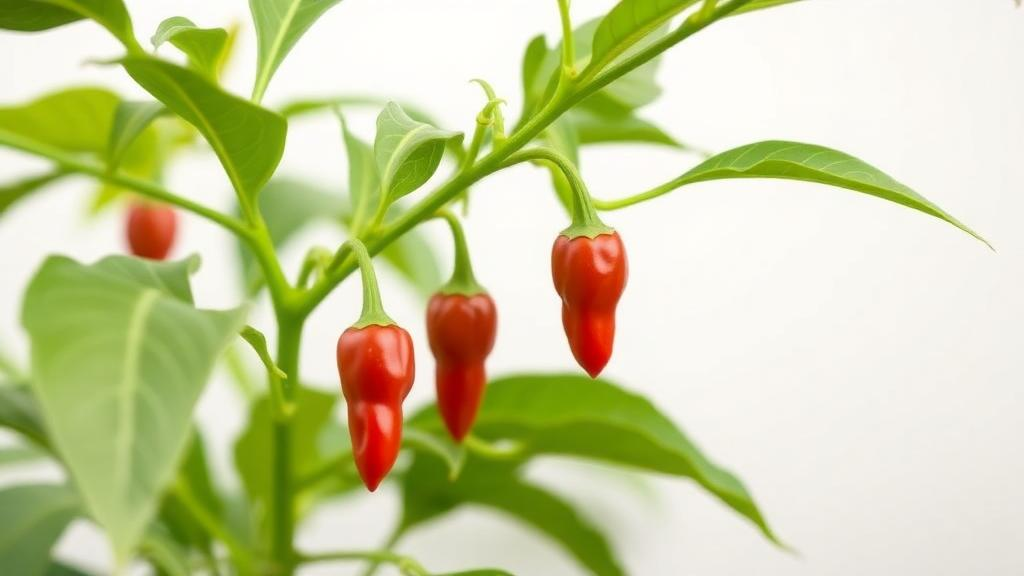
In the sweltering districts of southwestern Bangladesh, a climbing vine with a fiery secret has quietly commanded premium prices for generations. Chui Jhal, known scientifically as Piper chaba, is a woody member of the pepper family whose stems and roots lend a distinctive pungent heat to the celebrated meat curries of the Khulna region. A single kilogram of its stems or roots can fetch 800 to 1,200 Bangladeshi taka, a remarkable sum for an ingredient that is, botanically speaking, a close cousin of the long peppers prized across Asia. Yet despite this commercial allure, growers have long been frustrated by the plant’s stubborn reluctance to multiply. Now, a team of researchers at Patuakhali Science and Technology University has demonstrated that a simple dip in the right plant growth regulator can transform the propagation of this culinary treasure, achieving complete survival of treated cuttings and opening the door to commercial-scale cultivation.
The study, published as an open-access paper in the journal Discover Plants, was led by Al Amin Talukdar and colleagues from Patuakhali Science and Technology University, with collaborator Md. Jamal Hossain of the Bangladesh Institute of Research and Training on Applied Nutrition. The team set out to answer a deceptively simple question: which part of the Chui Jhal vine, treated with which growth regulator, produces the strongest new plants? Traditional propagation of the species relies on stem cuttings, but success rates are slow and erratic, and the use of plant growth regulators in Bangladesh’s Chui Jhal cultivation has remained strikingly limited. That gap, the authors argue, represents a substantial untapped opportunity for a plant that carries both cultural weight and medicinal promise, with traditional applications ranging from asthma and bronchitis to digestive complaints.
To interrogate the question rigorously, the researchers designed a two-factor experiment at the university’s Germplasm Centre in Dumki Upazila, Patuakhali District, within Agro-Ecological Zone 13. Vine material was originally sourced from the Spices Research Sub-centre of the Bangladesh Agricultural Research Institute in Faridpur. The first experimental factor was the position of the cutting on the vine: the base section, roughly twelve months old; the middle section, about eight months old; and the tip section, approximately six months old. The second factor was a battery of ten growth regulator treatments, spanning a control with no regulator, the auxins indole-3-acetic acid and indole-3-butyric acid, and naphthalene acetic acid, each tested at 250 and 500 milligrams per litre, alongside three combinations pairing two regulators at 250 milligrams per litre each.
The cuttings themselves were prepared with careful attention to horticultural detail. Semi-hardwood segments were taken from healthy, disease-free mother vines about six months old, each cutting carrying three to five buds and measuring 20 to 30 centimetres in length with a diameter of 0.8 to 1 centimetre. The work was conducted in July, when ambient temperatures ranged from 26 to 33 degrees Celsius, rainfall averaged around 39 centimetres, and daylight lasted 13 to 14 hours. After being washed in distilled water and air-dried in shade for ten minutes, the lower 2.5 centimetres of each cutting, including the basal node, was immersed in its assigned treatment solution for just fifteen seconds before being planted in polybags filled with a sterilised 1:1 mixture of loamy soil and cow dung compost, steam-treated at approximately 100 degrees Celsius for 30 minutes.
The results, tracked at 30, 45, and 75 days after cutting, reveal a clear hierarchy among vine positions. Base cuttings achieved the highest survival at the first measurement, 79.99 percent, while the middle section led at the later intervals with 76.66 and 73.33 percent at 45 and 75 days respectively. Tip cuttings trailed consistently, falling to just 55.55 percent survival by the final assessment. When growth regulators entered the equation, the picture sharpened dramatically. Indole-3-butyric acid at 500 milligrams per litre, the treatment designated T5, drove survival in base and middle cuttings to a perfect 100 percent at multiple measurement points, with several other treatment combinations, including those involving 250 milligrams per litre of indole-3-acetic acid and 500 milligrams per litre of indole-3-butyric acid, also reaching complete survival. Untreated controls languished at the bottom of the range, dropping as low as 33.33 percent in tip cuttings.
Shoot development told a complementary story. Base cuttings produced the most leaves, rising from 1.90 per cutting at 30 days to 3.56 at 75 days, and generated the longest new shoots, reaching 6.27 centimetres by the final measurement. The 500 milligrams per litre indole-3-butyric acid treatment again proved the most effective leaf-promoting regime, while both 250 and 500 milligrams per litre of the same compound delivered standout shoot elongation. In the interaction analysis, base cuttings treated with 250 milligrams per litre indole-3-butyric acid achieved shoots up to 9.24 centimetres, and the corresponding leaf counts climbed to 5.33 per cutting by 75 days. The authors note that these findings echo earlier work on long pepper, in which auxin treatments stimulated cell division and stem elongation, accounting for greater leaf production and shoot length in treated cuttings.
Root architecture, arguably the most critical determinant of a cutting’s fate, showed its own subtle positional preference. Middle-section cuttings produced the highest root counts, averaging 22.86 roots per cutting by 75 days compared with 22.36 for base cuttings and 21.33 for tips. At the treatment level, 500 milligrams per litre of indole-3-butyric acid again dominated root number, while 250 milligrams per litre of the same compound produced the longest roots. The interaction data were striking: middle cuttings treated with 500 milligrams per litre indole-3-butyric acid yielded up to 39 roots per cutting, while base cuttings with 250 milligrams per litre indole-3-butyric acid extended roots to 9.38 centimetres. Control combinations, by contrast, produced as few as 2 to 3 roots per cutting early in the trial, underscoring the magnitude of the growth regulator effect.
The physiological explanation for the positional differences, the researchers suggest, lies in the internal chemistry of the vine itself. Base and middle sections contain greater carbohydrate reserves, richer nutrient content, more mature tissues, and higher concentrations of endogenous auxins and rooting cofactors, all of which support the initiation and development of adventitious roots. Tip cuttings, composed of younger, actively growing tissue, carry comparatively lower nutrient reserves and a different hormonal balance that limits their rooting response. This framework aligns with a broader body of literature on adventitious rooting, in which the interplay between stored carbohydrates, current photosynthesis, and hormonal signalling determines whether a severed stem segment commits to forming roots. The consistency of the indole-3-butyric acid advantage across survival, leaf production, root number, and root length suggests the compound is effectively supplementing the vine’s own auxin pool at the precise moment of greatest need.
The practical implications extend well beyond the laboratory. The authors conclude that base and middle vine sections treated with 500 milligrams per litre of indole-3-butyric acid represent the most suitable protocol for Chui Jhal propagation and recommend the approach for commercial-scale production and sustainable cultivation in Bangladesh. For farmers in Khulna and beyond, whose harvests currently depend on slow and unpredictable conventional cuttings, a fifteen-second dip in an inexpensive auxin solution could meaningfully compress the timeline from planting to harvestable stems and roots. The team is candid about the study’s limitations, noting that it was conducted at a single location over a single season, and they call for replication across different regions, seasons, and environmental conditions before definitive recommendations can be issued. Even so, the findings mark a significant step toward securing the future of one of South Asia’s most distinctive spices, a vine whose value has always been recognised at the dinner table and may now, at last, be matched in the nursery.
Subject of Research: Vegetative propagation of Piper chaba vine cuttings using plant growth regulators
Article Title: Response of Chui Jhal (Piper chaba) vine cuttings to plant growth regulators
Article References: Talukdar, A. A., Robbani, M., Hossain, M. J., Chowdhury, M. N. U., & Islam, M. S. (2026). Response of Chui Jhal (Piper chaba) vine cuttings to plant growth regulators. Discover Plants, 3(1), Article 430. https://doi.org/10.1007/s44372-026-00906-4
Image Credits: AI Generated
DOI: 10.1007/s44372-026-00906-4
Keywords: Chui Jhal, Piper chaba, plant growth regulators, indole-3-butyric acid, vegetative propagation, vine cuttings, adventitious rooting, auxins, Bangladesh, horticulture, survivability, spice crops
Cite Scienmag News
Alan Morgan. (September 30, 2026). Growth Regulator Breakthrough Unlocks Rapid Propagation of Bangladesh’s Prized Chui Jhal Pepper Vine. Scienmag. https://scienmag.com/growth-regulator-breakthrough-unlocks-rapid-propagation-of-bangladeshs-prized-chui-jhal-pepper-vine/
Alan Morgan. "Growth Regulator Breakthrough Unlocks Rapid Propagation of Bangladesh’s Prized Chui Jhal Pepper Vine." Scienmag, 30 September 2026, https://scienmag.com/growth-regulator-breakthrough-unlocks-rapid-propagation-of-bangladeshs-prized-chui-jhal-pepper-vine/. Accessed 4 October 2026.
Alan Morgan. "Growth Regulator Breakthrough Unlocks Rapid Propagation of Bangladesh’s Prized Chui Jhal Pepper Vine." Scienmag. September 30, 2026. https://scienmag.com/growth-regulator-breakthrough-unlocks-rapid-propagation-of-bangladeshs-prized-chui-jhal-pepper-vine/


