


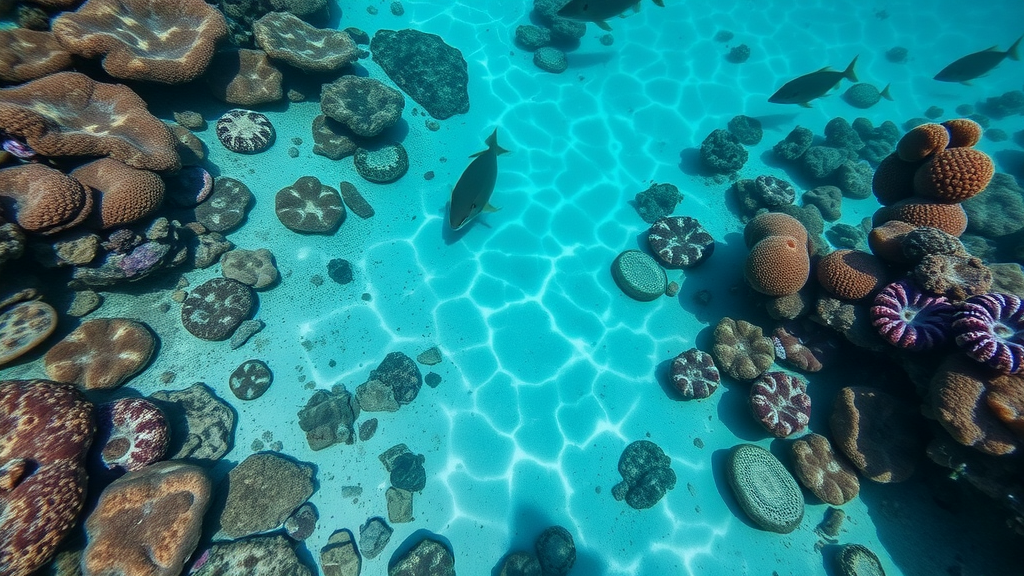
Two years after Thailand formally declared the Racha Islands a marine protected area, a team of Thai researchers has delivered one of the first rigorous audits of how the new park is actually performing. The verdict is a nuanced one: the Racha Islands Marine Protected Area, established in 2023 off the southern coast of Phuket, has moved well beyond being a mere line on a legal map, yet it still lacks the money, staff and equipment needed to prove that its coral reefs are genuinely better off because of it. The study, published in the journal Environmental Management, scored the park’s overall management effectiveness at 54.3 percent, a moderate result that reveals both encouraging progress and stubborn institutional gaps.
The Racha Islands, comprising the larger inhabited Racha Yai and the uninhabited Racha Noi, lie roughly 21 to 25 kilometers south of Phuket in the Andaman Sea. The protected area covers 375.359 square kilometers of water, reef and coastline, and sits in one of Thailand’s most intensively visited marine tourism destinations. Every day, flotillas of dive boats, snorkeling charters and recreational vessels converge on the islands’ fringing coral reefs. The park was created under Section 22 of Thailand’s Act on the Promotion of Marine and Coastal Resources Management, with the ministerial notification published in the Royal Thai Government Gazette on 13 March 2023. Crucially, the notification expires after five years, adding a layer of urgency to the question of whether management can mature quickly enough to justify renewal.
To evaluate the young park, researchers from Mahidol University and Thailand’s Department of Marine and Coastal Resources applied the International Union for Conservation of Nature and World Commission on Protected Areas management effectiveness framework, one of the most widely used auditing tools in global conservation. They adapted indicators from the Management Effectiveness Tracking Tool and a marine scorecard developed for the World Bank, producing a battery of 43 indicators spanning six components of the management cycle: context, planning, inputs, process, outputs and outcomes. Evidence was compiled between May and October 2025 through document analysis, questionnaire surveys and interviews with 69 respondents, including 50 local resource users and tourism stakeholders and 19 institutional respondents, along with field observations and available ecological monitoring data. Each indicator was scored on a four-point scale, with component scores calculated as percentages of the maximum possible total.
The results paint a picture of a protected area whose legal skeleton is strong but whose operational muscle is thin. The context component, which measures the legal, institutional and threat-related foundation for management, scored highest at 73.3 percent. Awareness among surveyed users was substantial: 60 percent identified the park’s habitat function, 48 percent recognized its importance for marine tourism, and more than 90 percent acknowledged ongoing threats to marine and coastal resources. The outputs component followed at 66.7 percent, with more than 75 percent of planned activity categories implemented on schedule, including mooring-buoy installation, surveillance patrols, underwater clean-ups, coral restoration and public-awareness campaigns. In other words, the park is doing things, not just declaring them.
But the component scores fell away sharply where resources matter most. Inputs, which capture financing, staffing, equipment and information, received the lowest score of just 33.3 percent. At the time of the assessment, the Protected Area Management Centre responsible for the park had only six staff members to cover island-based fieldwork, vessel operations, patrols, technical tasks and administration. Of the Centre’s two patrol vessels, one required repair and the other, the only operational boat, suffered frequent breakdowns. The temporary island office was not fully functional. The management budget depended entirely on annual government allocations with no secure multi-year financing, and while ecological baseline information existed, socio-economic baseline data were absent entirely. The process component, reflecting how management actually operates day to day, scored 48.5 percent, hampered by reactive maintenance, uncertainty about enforcement procedures and an advisory committee, appointed in March 2025, that had not yet held a single meeting.
Planning occupied an intermediate position at 58.3 percent, and here the study uncovered a subtle but consequential failure. A general five-year management plan covering 2024 to 2028 provided strategic direction across administration, monitoring, enforcement, reef conservation and stakeholder participation, and the park’s three management zones reflected reef locations, coastal habitats and differentiated use controls. Yet the plan’s objectives lacked quantitative targets and measurable outcome indicators, and stakeholder participation existed mainly on paper. Local users and tourism operators had been consulted during the park’s designation but played no substantive role in preparing either the five-year plan or the annual implementation plan for fiscal year 2025. The indicator measuring participation in planning received a score of zero, a deliberate distinction between including participation in policy documents and actually involving people in decisions.
The outcomes component, arguably the most important measure of whether any of this effort is working, scored 55.6 percent with evidence that was distinctly uneven. Most surveyed users perceived the overall level of threats as broadly unchanged. Ecological monitoring indicated stable or improving conditions at several reef sites but deterioration at others, meaning no park-wide trend could yet be established. Most respondents reported little change in income or related socio-economic conditions, and without a pre-designation baseline, researchers cannot attribute any observed change to the park’s management. Self-reported compliance was high at 83.7 percent, and more than 80 percent of surveyed users expressed satisfaction with management and enforcement, but recurring violations such as anchoring on coral reefs and fish feeding persisted. Fewer than half of institutional respondents demonstrated a solid understanding of the management plan itself, an internal knowledge gap that bodes poorly for coordinated implementation.
These findings resonate with a growing global literature on the gap between protected-area designation and protected-area performance. Research has repeatedly shown that legal designation alone does not ensure effective conservation when staffing, funding, enforcement and monitoring remain inadequate, and recent analyses indicate that marine protected areas at an actively managed stage achieve stronger ecological outcomes than those that have merely reached initial implementation. The Racha Islands assessment deliberately avoids the harsher label of paper park, since genuine management activities have followed legal establishment. Instead, the authors characterize it as an early-stage protected area in which implementation has advanced faster than the capacity to demonstrate its effects, a distinction that matters for the intensifying global debate over whether rapidly expanding marine protection coverage delivers real conservation.
Tourism emerges from the study as both the park’s greatest challenge and a potential source of strength. Diving and tourism groups already contribute to mooring-buoy work, underwater clean-ups and conservation initiatives, supplementing the government’s limited capacity, and evidence from the Great Barrier Reef shows such partnerships can mature into genuine site stewardship. But recurring pressures from anchoring, fish feeding, physical contact with corals and intensive vessel traffic suggest that zoning and mooring buoys are not enough without better communication of spatial rules and consistent enforcement. The authors argue that tourism operators should be treated as management partners rather than merely regulated users, through structured arrangements for operator briefings, violation reporting and collaborative monitoring. Notably, the study could not assess whether signage and operator briefings actually reach the transient international tourists who dominate visitation, leaving a significant blind spot for future research.
The path forward, according to the researchers, lies in predictable financing, adequate staffing and equipment, a site-specific management plan developed through meaningful participation, and a feasible set of measurable indicators tied directly to management objectives. Encouragingly, some institutional responses have already followed: the advisory committee held its first formal meeting in Phuket in July 2026, and the Department of Marine and Coastal Resources has begun preparing the site-specific plan required under Clause 13 of the designation notification, using the assessment findings to inform the process. Whether these steps translate into demonstrable reef recovery and community benefit remains an open question that only sustained monitoring can answer. For now, the Racha Islands offer a candid early benchmark for the hundreds of newly declared marine protected areas across Southeast Asia’s tourism-dependent coastlines, a reminder that protecting ocean biodiversity is less about drawing boundaries on maps and more about building the institutions capable of defending what lies inside them.
Subject of Research: Management effectiveness of the newly established Racha Islands Marine Protected Area in Phuket, Thailand
Article Title: Bridging the Gap Between Legal Designation and Management Outcomes: Evidence from a Newly Established Marine Protected Area in Thailand
Article References: Satumanatpan, S., Praisankul, S., Chankum, P., Singin, P., & Pantorn, T. (2026). Bridging the Gap Between Legal Designation and Management Outcomes: Evidence from a Newly Established Marine Protected Area in Thailand. Environmental Management, 76(10), Article 330. https://doi.org/10.1007/s00267-026-02622-x
Image Credits: AI Generated
DOI: 10.1007/s00267-026-02622-x
Keywords: marine protected areas, Thailand, coral reefs, IUCN-WCPA framework, management effectiveness, marine tourism, Phuket, ocean conservation, protected area governance, stakeholder participation, Andaman Sea, environmental management
Cite Scienmag News
Margaret Porter. (September 24, 2026). A New Thai Marine Park Looks Good on Paper, But Can It Protect Its Coral Reefs? Scienmag. https://scienmag.com/a-new-thai-marine-park-looks-good-on-paper-but-can-it-protect-its-coral-reefs/
Margaret Porter. "A New Thai Marine Park Looks Good on Paper, But Can It Protect Its Coral Reefs?" Scienmag, 24 September 2026, https://scienmag.com/a-new-thai-marine-park-looks-good-on-paper-but-can-it-protect-its-coral-reefs/. Accessed 24 September 2026.
Margaret Porter. "A New Thai Marine Park Looks Good on Paper, But Can It Protect Its Coral Reefs?" Scienmag. September 24, 2026. https://scienmag.com/a-new-thai-marine-park-looks-good-on-paper-but-can-it-protect-its-coral-reefs/


