


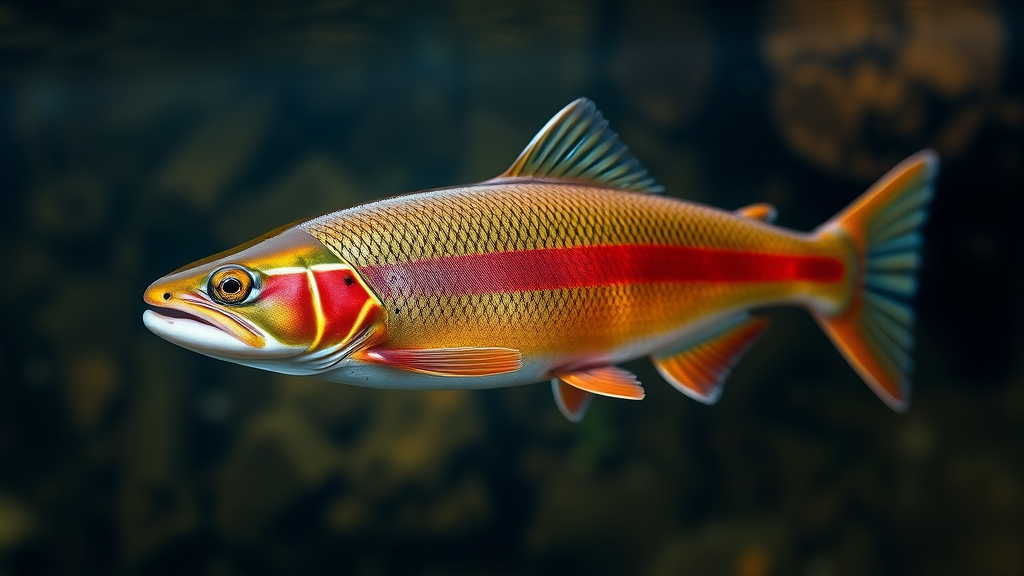
African clawed frogs have long been staples of the toxicology laboratory, but for most regulatory purposes their acute toxicity data are surprisingly scarce. A new study published in the journal Ecotoxicology offers a way to fill that gap without running a single new animal experiment. Researchers have built an interspecies correlation estimation (ICE) model that predicts how lethal an organic chemical is likely to be to tadpoles of the African clawed frog, Xenopus laevis, using existing lethality data from one of the most heavily tested animals in aquatic toxicology: the juvenile rainbow trout, Oncorhynchus mykiss. The model, described as statistically robust by the criteria of the US Environmental Protection Agency’s Web-ICE software, could allow regulators and industry scientists to estimate amphibian acute toxicity directly from fish data, avoiding additional vertebrate studies.
The logic behind ICE models is deceptively simple. When two species respond similarly to a wide range of chemicals, the toxicity of a new compound in one species can be estimated from its measured toxicity in the other. The challenge lies in demonstrating that the correlation is strong enough, and based on enough matched data points, to be trustworthy. For this model, the authors gathered acute toxicity data for both species from publicly available databases, pairing 96-hour LC50 values, the concentrations lethal to half of the exposed animals over four days, for the same chemicals in frog tadpoles and in juvenile rainbow trout.
Raw database values cannot simply be pooled. The researchers curated the dataset carefully, converting units where necessary so that all values were directly comparable, and calculating geometric mean values whenever multiple LC50 values existed for the same chemical. They also checked the paired data for potential outliers that might distort the regression. After this cleaning process, the final analysis rested on 138 LC50 values covering 69 organic chemicals, a respectable sample size for a model intended to support regulatory hazard assessment.
The statistical outcome was clear. Spearman’s rank correlation coefficient between frog and trout toxicity values was 0.86, with a p-value below 0.0001, indicating a highly significant relationship across the chemicals tested. The regression itself yielded an R-squared of 0.74, also with p below 0.0001, and the model was judged statistically robust according to the evaluation criteria built into the US EPA’s Web-ICE software, the standard tool for this class of interspecies estimation models. In practical terms, knowing how toxic a chemical is to rainbow trout explains roughly three quarters of the variation in its toxicity to African clawed frog tadpoles.
Why build a frog model from fish data at all? The answer lies in how the two species are actually used in testing. Rainbow trout are among the fish species most commonly employed for acute toxicity testing worldwide, so trout LC50 values exist for a very large number of chemicals, including many pesticides and industrial organics. The African clawed frog, by contrast, is primarily used in endocrine assays, tests that examine how chemicals interfere with hormones rather than how quickly they kill. Acute lethality data for the frog are therefore comparatively rare, even though the species is a standard laboratory organism with a long history in aquatic toxicology.
That scarcity matters in specific regulatory contexts. Acute toxicity information for Xenopus laevis may be needed to set test concentrations for endocrine assays, ensuring that animals in those experiments are exposed to meaningful but not uniformly lethal doses. Where required, frog LC50 values also serve as inputs for aquatic risk assessments for amphibians. Without a model like this one, obtaining such a value could mean commissioning an additional vertebrate study, with all the ethical, financial and temporal costs that entails. The authors note that by applying this robust ICE model, additional vertebrate studies can be avoided altogether, a point that resonates strongly with ongoing efforts across toxicology to reduce animal testing.
The new model fits into a broader and rapidly maturing framework. The US EPA maintains the Web-ICE platform, which hosts a family of interspecies correlation estimation models linking standard test species to one another, and recent work has focused on uncertainty analysis and updated user guidance for these models, including their behavior with low-toxicity compounds. Other recent evaluations have examined how ICE models can increase the taxonomic diversity of chemical assessments while reducing reliance on animal testing under statutes such as the Toxic Substances Control Act. Adding a fish-to-amphibian model extends this toolkit to a class of vertebrates, amphibians, that sits between fish and reptiles in many assessment schemes but has historically been underrepresented in acute toxicity databases.
Amphibians occupy an awkward position in chemical regulation. Their aquatic larvae share exposure routes with fish, yet their biology differs in ways that could plausibly alter sensitivity, from permeable skin and developmental transitions to distinct metabolic pathways. Earlier comparative studies have examined the relative acute and chronic sensitivity of fish and amphibians, and case studies have asked whether fish assays and standardized frog embryo assays are protective enough for amphibian larvae. The strong correlation reported here between trout and frog acute toxicity suggests that, at least for the organic chemicals covered by the 69-compound dataset, rainbow trout data capture much of the interspecies variation in lethal sensitivity, lending empirical weight to the practice of using fish as a surrogate for amphibian acute hazard.
The underlying data themselves tell a story about the history of ecotoxicology. The matched values compiled for the model draw on decades of published acute toxicity testing, spanning legacy compounds and modern pesticides alike. Amphibian toxicity testing has its own long lineage, from early studies of pesticides on tadpoles of various species to the development of standardized protocols such as the Frog Embryo Teratogenesis Assay-Xenopus, known as FETAX, and the suite of OECD test guidelines covering the amphibian metamorphosis assay, the larval amphibian growth and development assay, and the Xenopus eleutheroembryonic thyroid assay. Each of these endpoints probes a different aspect of chemical hazard, but none generates the simple 96-hour LC50 as routinely as the fish acute toxicity test does, which is precisely the gap the ICE model is designed to bridge.
For the model to be useful in practice, its limitations need to be respected. An ICE model is only as reliable as the chemicals it was trained on; predictions for compounds with modes of action or physicochemical properties far outside the 69-chemical training set carry greater uncertainty, and interspecies correlations generally perform better for chemicals within the range of toxicity values used to fit the regression. The authors describe the model as a non-testing method to generate an amphibian LC50 value when a rainbow trout value is available, for use in hazard and risk assessment. Read that way, the equation does not replace amphibian testing where it is genuinely required, but it offers a defensible, quantitative alternative when the question is whether a frog study is needed at all, or what concentrations a planned assay should cover.
The implications extend beyond the laboratory. Chemical registration programs worldwide routinely require acute fish toxicity data, meaning trout LC50 values already exist for thousands of substances in regulatory dossiers. A validated trout-to-frog model effectively unlocks that existing data trove for amphibian hazard characterization, at zero additional cost to laboratory animals. As environmental agencies continue to confront the question of how well fish-based assessments protect other aquatic vertebrates, models like this one provide the quantitative evidence needed to make those judgments transparent. For a species whose embryos and tadpoles have taught generations of biologists about development, the African clawed frog may now also help redefine how chemical safety is assessed, one regression equation at a time, with fewer animals in the tanks.
Subject of Research: An interspecies correlation estimation model predicting acute chemical toxicity to the African clawed frog using rainbow trout toxicity data
Article Title: An interspecies correlation estimation (ICE) model to predict acute toxicity of organic chemicals to the African clawed frog (Xenopus laevis) using rainbow trout (Oncorhynchus mykiss) data
Article References: Weltje, L., & Savaliya, D. (2026). An interspecies correlation estimation (ICE) model to predict acute toxicity of organic chemicals to the African clawed frog (Xenopus laevis) using rainbow trout (Oncorhynchus mykiss) data. Ecotoxicology, 35(8), Article 170. https://doi.org/10.1007/s10646-026-03165-x
Image Credits: AI Generated
DOI: 10.1007/s10646-026-03165-x
Keywords: Xenopus laevis, rainbow trout, ICE model, Web-ICE, acute toxicity, LC50, ecotoxicology, amphibians, animal testing reduction, organic chemicals, risk assessment, regulatory toxicology
Cite Scienmag News
Sloane Callahan. (September 24, 2026). Rainbow Trout Data Could Spare Frogs From Toxicity Testing, New Model Shows. Scienmag. https://scienmag.com/rainbow-trout-data-could-spare-frogs-from-toxicity-testing-new-model-shows/
Sloane Callahan. "Rainbow Trout Data Could Spare Frogs From Toxicity Testing, New Model Shows." Scienmag, 24 September 2026, https://scienmag.com/rainbow-trout-data-could-spare-frogs-from-toxicity-testing-new-model-shows/. Accessed 24 September 2026.
Sloane Callahan. "Rainbow Trout Data Could Spare Frogs From Toxicity Testing, New Model Shows." Scienmag. September 24, 2026. https://scienmag.com/rainbow-trout-data-could-spare-frogs-from-toxicity-testing-new-model-shows/


