


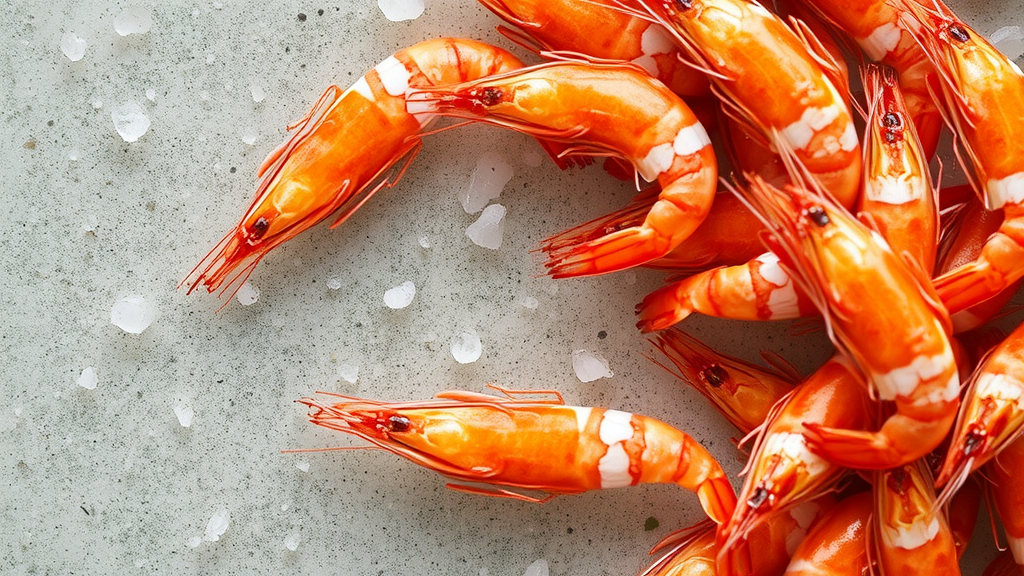
Copper is one of the most widespread metal contaminants in the world’s waterways, and a new laboratory study suggests that one of the simplest properties of seawater—its saltiness—may determine just how lethal it becomes for the small crustaceans that anchor estuarine food webs. Researchers at Southern University at New Orleans exposed grass shrimp of the genus Palaemon to a range of copper concentrations at four different salinity levels and found a striking pattern: the saltier the water, the more likely the shrimp were to survive. The findings, published open access in the journal Discover Toxicology, carry implications for how regulators and conservationists assess metal pollution in the brackish estuaries where rivers meet the sea.
The team, led by Charrel A. Williams with Murty S. Kambhampati and Rayan Demery, set out to test a deceptively simple question: does salinity change how toxic copper is to aquatic life? The hypothesis going in was that a moderate salinity of 10 parts per thousand, combined with a copper concentration of 1.0 parts per million, would offer shrimp the best protection. The data told a different story. Optimal survival occurred at the highest salinity tested, 20 parts per thousand, paired with the lowest copper dose of 0.25 parts per million. In other words, the protective effect of salt was stronger than the researchers anticipated, and it scaled upward rather than peaking at an intermediate level.
The experimental design was methodical. Saltwater solutions were prepared at 1, 5, 10, and 20 parts per thousand and aerated in glass aquaria for up to ten days to stabilize the media. Copper treatments were made from copper sulfate pentahydrate at concentrations of 0.25, 0.50, 1.0, and 2.0 parts per million, alongside copper-free controls. Shrimp measuring roughly two to two and a half centimeters were acclimated overnight to their assigned salinity before being placed four to a bowl, with each treatment run in triplicate for a total of twelve animals per salinity-copper combination. The animals were then monitored at intervals spanning three to ninety-six hours for mortality, behavioral changes, and visible deformities.
Water quality was held steady throughout the trials, with dissolved oxygen averaging 8.675 parts per million, pH at 6.88, and temperature at 28.75 degrees Celsius—conditions within the known tolerance range for Palaemon species. That stability matters, because it means the differences in survival the team recorded can be attributed to the variables under test rather than to drifting environmental conditions. The shrimp themselves are well suited to this kind of work. Native to North American estuaries, they are euryhaline, meaning they tolerate salinities from near-freshwater to hypersaline, and previous research has established them as sensitive bioindicators of metal contamination.
The results were unambiguous. Copper toxicity increased as salinity decreased, with the fastest and most severe mortality occurring at 1 part per thousand, the lowest salinity tested. At that salinity, every shrimp exposed to 1.0 parts per million copper was dead within twelve hours, and the 5 parts per thousand replicates reached complete mortality by twenty-four hours. By contrast, at 10 and 20 parts per thousand, death came more gradually, with the lethal threshold for half the population not exceeded until around forty-eight hours. The lethal concentration, or LC50, values rose steadily with salinity, confirming a clear protective gradient.
Dose mattered as much as salt. Mortality followed a strict dose-response relationship across every salinity level: 0.25 parts per million copper produced the lowest death rates, while 2.0 parts per million was the most lethal concentration tested, pushing all replicates past the LC50 threshold by forty-eight hours regardless of salinity. Intermediate doses of 0.50 and 1.0 parts per million fell in between, with mortality accelerating more rapidly at the higher of the two. Notably, even in copper-free control bowls, shrimp held at 1 and 5 parts per thousand reached the LC50 threshold within twenty-four hours—a baseline observation suggesting that low salinity alone stresses these animals enough to influence survival, independent of any metal exposure.
The chemistry behind this pattern is well understood. In saltier water, abundant sodium and chloride ions compete with copper ions for binding sites on cell membranes, effectively crowding the metal out of biological uptake pathways. Chloride ions also bind copper into dissolved complexes that are far less bioavailable than the free copper ions that wreak havoc inside cells. The net effect is that the same nominal copper concentration delivers a much smaller toxic payload to an animal’s tissues in seawater than it does in nearly fresh water. This mechanism aligns with earlier findings in fish and crabs showing that copper toxicity tracks closely with the osmoregulatory demands of the organism.
The visible toll on the shrimp told the same story. Animals in the highest salinity treatments were noticeably more active and showed fewer deformities—discoloration, reduced mobility, and failure to respond when their bowls were gently agitated—than those in dilute media, a trend consistent across all copper concentrations. Shrimp dying at higher copper doses, 1.0 and 2.0 parts per million, took on a redder hue at death than those exposed to lower concentrations, echoing prior reports that copper exposure alters shrimp pigmentation. Copper is known to generate free radicals through its redox cycling between oxidation states, driving oxidative stress that damages lipids, proteins, and DNA, and to disrupt ion regulation through the chloride cells that aquatic animals rely on to maintain their internal salt balance.
Statistical analysis sharpened the temporal picture. A two-way analysis of variance found significant interactions between salinity and copper on survival at exposure times of 3, 6, 9, 12, and 24 hours, with p-values below the 0.05 threshold, indicating that during the critical first day of exposure both variables—and their combination—strongly shaped whether shrimp lived or died. At longer exposure times of 48, 72, and 96 hours, the effect lost statistical significance, suggesting that by then the fate of the animals had largely been sealed by the early hours of intoxication. The practical lesson is that the first day of a pollution event may be the decisive window for estuarine organisms.
The authors caution that species-level identification of the shrimp was not performed, and different Palaemon species may vary in salinity tolerance and copper sensitivity, a limitation worth bearing in mind. Still, the broader message is clear and consequential: salinity is not a background variable in metal toxicity but an active modulator of it. The team calls for follow-up work using techniques such as inductively coupled plasma spectrometry to quantify how much copper actually accumulates in shrimp tissue at different salinities, and for long-term studies of how chronic exposure affects reproduction, growth, and population dynamics. For the roughly 190 million pounds of metallic ions released into United States waters each year, the findings suggest that where a pollutant lands—up a freshened river delta or out in the saline bay—may matter as much as how much of it there is.
Subject of Research: The modulating effect of water salinity on acute copper toxicity in estuarine grass shrimp (Palaemon spp.)
Article Title: The impact of salinity on copper-induced toxicity in Palaemon spp.: effects on survival, morphological deformities, and toxicity indicators
Article References: Williams, C. A., Kambhampati, M. S., & Demery, R. (2026). The impact of salinity on copper-induced toxicity in Palaemon spp.: effects on survival, morphological deformities, and toxicity indicators. Discover Toxicology, 3(1), Article 3. https://doi.org/10.1007/s44339-025-00027-9
Image Credits: AI Generated
DOI: 10.1007/s44339-025-00027-9
Keywords: copper toxicity, salinity, Palaemon, grass shrimp, estuarine ecotoxicology, LC50, heavy metal pollution, osmoregulation, bioavailability, water quality, dose-response, Discover Toxicology
Cite Scienmag News
Sloane Callahan. (September 24, 2026). Saltier Water Shields Estuarine Shrimp From Deadly Copper Pollution, Study Finds. Scienmag. https://scienmag.com/saltier-water-shields-estuarine-shrimp-from-deadly-copper-pollution-study-finds/
Sloane Callahan. "Saltier Water Shields Estuarine Shrimp From Deadly Copper Pollution, Study Finds." Scienmag, 24 September 2026, https://scienmag.com/saltier-water-shields-estuarine-shrimp-from-deadly-copper-pollution-study-finds/. Accessed 4 October 2026.
Sloane Callahan. "Saltier Water Shields Estuarine Shrimp From Deadly Copper Pollution, Study Finds." Scienmag. September 24, 2026. https://scienmag.com/saltier-water-shields-estuarine-shrimp-from-deadly-copper-pollution-study-finds/


