


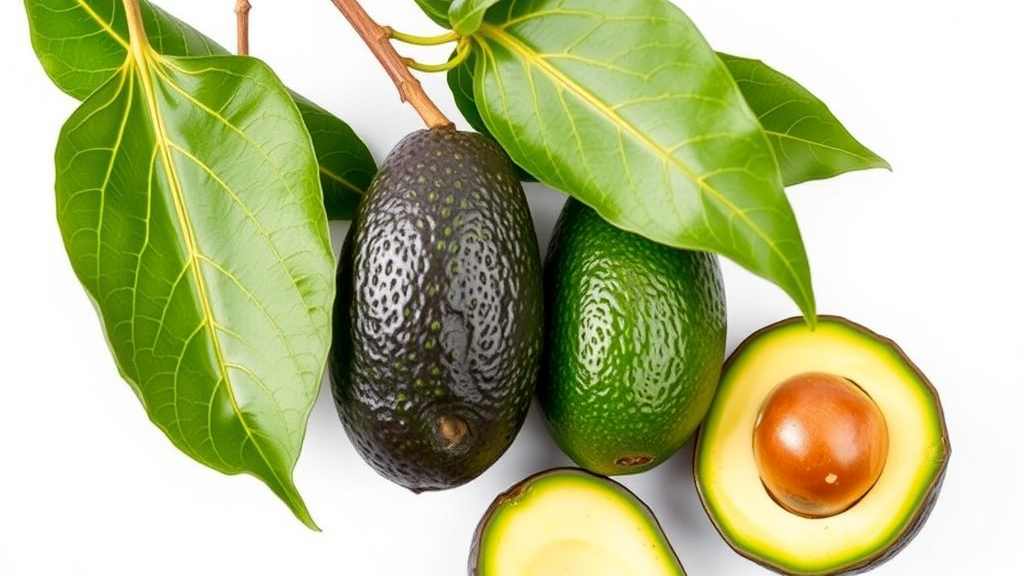
Avocados have conquered the world. Global production of the creamy green fruit has tripled since 2000, reaching roughly 19 billion pounds by 2021, driven by consumer enthusiasm for its healthy fats, fibre, vitamins and minerals. Yet behind the global boom lies a quieter scientific challenge: preserving the genetic raw material that will allow breeders to keep the crop productive in the face of pests, diseases and a changing climate. A new study from Nigeria now offers a detailed molecular snapshot of one of West Africa’s most important avocado collections, and its findings carry lessons for genebanks everywhere.
Researchers at the National Horticultural Research Institute (NIHORT) in Ibadan set out to assess the genetic diversity of fifteen avocado accessions conserved in the institute’s genebank. The seeds behind these accessions were originally collected from smallholder farmers across four states in south-eastern Nigeria — Imo, Enugu, Anambra and Abia — during successive collection missions, and were registered with NIHORT accession numbers upon entry into the genebank. Because avocado is highly heterozygous and predominantly outcrossing, with a protogynous–protandrous flowering system that promotes cross-pollination, the seedlings raised from these seeds represent open-pollinated half-sib progenies rather than clones of the maternal trees, and were treated as independent accessions in the analysis.
The team, led by Omolara I. Akinyoola and published in the journal Discover Plants, employed two complementary DNA marker systems: inter-simple sequence repeats (ISSR) and start codon targeted (SCoT) markers. ISSR primers amplify DNA fragments lying between simple sequence repeats in the genome and require no prior knowledge of the species’ DNA sequence, making them accessible and inexpensive. SCoT markers, first developed in rice by Collard and Mackill, target regions surrounding the start codons of genes, giving them a functional bias that often makes them more informative. After a pilot screen of twenty ISSR and fifteen SCoT primers on three representative accessions, the researchers selected five primers of each type based on band clarity, polymorphism and reproducibility.
The laboratory work began with fresh young leaflets collected from the field and preserved in liquid nitrogen. Genomic DNA was extracted from approximately 100 milligrams of leaf tissue per accession using a modified CTAB protocol, in which polyvinylpyrrolidone and 2-mercaptoethanol were added to suppress polyphenols and oxidation, and the chloroform–isoamyl alcohol extraction step was repeated twice to remove residual protein and lipid. DNA was precipitated overnight with ice-cold isopropanol, washed with 70 percent ethanol and re-suspended in buffer containing RNase A. Quality checks on 1 percent agarose gels confirmed sharp, high-molecular-weight bands with no shearing, and Nanodrop spectrophotometry gave A260/A280 purity ratios between 1.80 and 2.00 before samples were diluted to a working concentration of 30 nanograms per microlitre.
Polymerase chain reactions were carried out in 25-microlitre volumes on an Applied Biosystems GeneAmp 9700 thermal cycler. ISSR amplification used a touchdown profile in which the annealing temperature dropped from 65 to 56 degrees Celsius over ten cycles before thirty standard cycles at 55 degrees, while SCoT amplification used thirty-five cycles with a 50-degree annealing temperature. Amplified fragments were separated on 2 percent agarose gels, visualised under ultraviolet transillumination and scored manually against a 50-base-pair ladder, with faint or ambiguous bands excluded. The convergence of results across two independent marker systems, and across multiple analysis platforms, provided a form of internal validation that strengthens confidence in the findings.
The results revealed a moderate but meaningful reservoir of variation. The ten loci detected a total of 41 polymorphic alleles, averaging 4.1 alleles per locus — higher than the 3.1 alleles per locus reported in a previous avocado study using EST-SSR primers. The polymorphism information content, a measure of a locus’s discriminating power, ranged from 0.509 to 0.825 with a mean of 0.654, and gene diversity averaged 0.708 across the ten loci. Genetic similarity coefficients between accessions ranged from 0.59 to 0.84. Notably, SCoT markers outperformed ISSR markers, generating a higher mean number of alleles per locus (4.4 versus 3.8) and higher mean PIC values (0.671 versus 0.637), leading the authors to recommend the combined use of both systems rather than either alone.
When the researchers clustered the accessions using the unweighted pair group method with arithmetic mean (UPGMA) on Jaccard dissimilarities, supported by 1000 bootstrap resamplings, the fifteen accessions split into two main clusters — one containing six accessions and the other nine — with membership broadly reflecting the south-eastern states of origin. A factorial coordinate analysis performed in DARwin software resolved four geographic groups along the first two factorial axes, with groups dominated respectively by accessions from Imo, Enugu and Anambra, while the single Abia accession stood apart. Some accessions, however, were interwoven between groups, a pattern the authors attribute to informal farmer-to-farmer seed exchange across state boundaries.
The most striking result came from the analysis of molecular variance. AMOVA partitioned 99.3 percent of the genetic variation within the UPGMA clusters and only 0.7 percent between them, with a Phi statistic of 0.007 that was statistically non-significant (P = 0.395, based on 9999 random permutations). Cross-validation in a second R package yielded an essentially identical result (P = 0.390), confirming the robustness of the partitioning. In other words, the two clusters represent dissimilarity gradients within a single, largely panmictic gene pool rather than genetically isolated subpopulations. The authors attribute this to two interacting forces: avocado’s strongly outcrossing reproductive biology, which maintains high heterozygosity within genotypes, and widespread informal seed exchange among smallholder farmers, which has homogenised allele frequencies across the sampled states.
The study is not without limitations, which the authors acknowledge candidly. The sample of fifteen accessions, while reflecting the current holdings of the NIHORT avocado germplasm at the time of sampling, is modest for inferring fine-scale population structure and limits the statistical power of subgroup analyses. Marker-trait associations were not pursued, and the dominant nature of ISSR and SCoT markers means each accession had to be treated as a single haploid genotype. Future work, the team suggests, should integrate SNP-based platforms such as genotyping-by-sequencing with phenotypic and biochemical fruit characterisation, to link the genetic variation documented here to agronomically relevant traits such as fruit quality, pest resistance and climate resilience.
Even so, the significance of the work extends well beyond a single genebank. Nigeria’s avocado industry is growing rapidly and holds considerable potential in the global market, but it faces threats from pests including the avocado lace bug, the Persea mite and the western avocado leaf roller, as well as diseases such as anthracnose and avocado black streak. The moderate diversity documented in the NIHORT collection provides a baseline molecular dataset for future curation, hybridisation and selection, and underscores a broader truth for crop science: genetic diversity is the raw currency of breeding, and knowing exactly what a genebank holds is the first step towards spending it wisely. The identified variation can now be deployed in breeding programmes aimed at developing better varieties with desirable traits, while the finding that most variation lies within rather than between geographic groupings offers a caution against assuming that provenance alone guarantees genetic distinctiveness in conserved germplasm.
Subject of Research: Genetic diversity assessment of avocado germplasm using ISSR and SCoT molecular markers
Article Title: Genetic diversity assessment of avocado (Persea americana Mill.) germplasm from NIHORT genebank
Article References: Akinyoola, O. I., Olagunju, Y. O., Matthew, J. O., Akin-Idowu, P. E., & Ajayi, E. O. (2026). Genetic diversity assessment of avocado (Persea americana Mill.) germplasm from NIHORT genebank. Discover Plants, 3(1), Article 414. https://doi.org/10.1007/s44372-026-00866-9
Image Credits: AI Generated
DOI: 10.1007/s44372-026-00866-9
Keywords: avocado, Persea americana, genetic diversity, ISSR markers, SCoT markers, germplasm, genebank, Nigeria, NIHORT, molecular markers, AMOVA, plant breeding
Cite Scienmag News
Alan Morgan. (September 23, 2026). DNA Barcodes Reveal Hidden Diversity in Nigeria’s Avocado Genebank. Scienmag. https://scienmag.com/dna-barcodes-reveal-hidden-diversity-in-nigerias-avocado-genebank/
Alan Morgan. "DNA Barcodes Reveal Hidden Diversity in Nigeria’s Avocado Genebank." Scienmag, 23 September 2026, https://scienmag.com/dna-barcodes-reveal-hidden-diversity-in-nigerias-avocado-genebank/. Accessed 23 September 2026.
Alan Morgan. "DNA Barcodes Reveal Hidden Diversity in Nigeria’s Avocado Genebank." Scienmag. September 23, 2026. https://scienmag.com/dna-barcodes-reveal-hidden-diversity-in-nigerias-avocado-genebank/


