


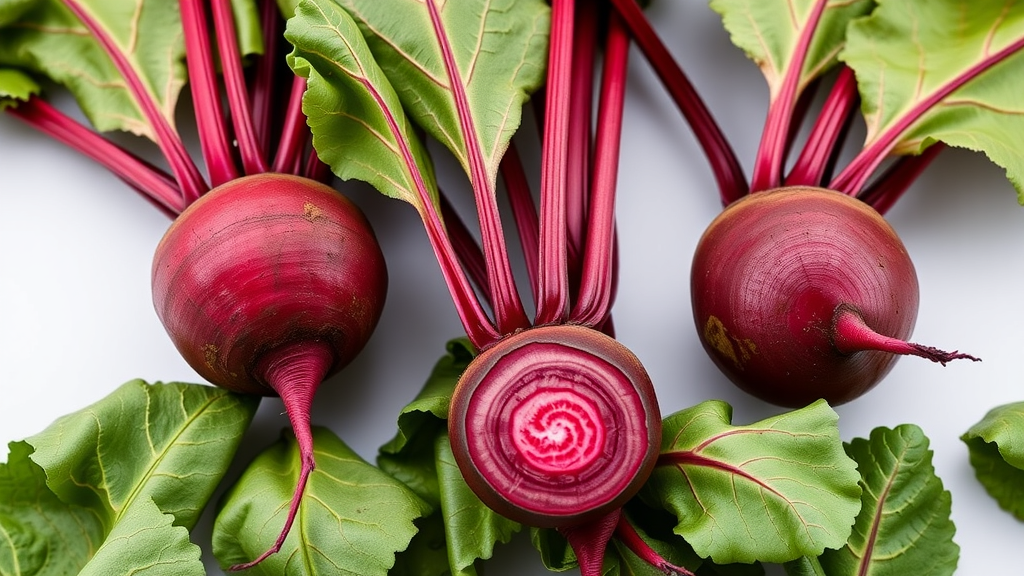
For more than half a century, the molecular machinery that keeps sugar beet from fertilizing itself has remained one of plant science’s most stubborn mysteries. Now, in an open-access study published in Theoretical and Applied Genetics, a team at BOKU University in Vienna has delivered the first genomic evidence for a candidate self-incompatibility locus in beet (Beta vulgaris), identifying T2/S-RNase candidate genes and a complex, highly repetitive S-locus on beet chromosome 2. The work, led by Gil Yardeni with Thomas Holzweber, Juliane C. Dohm, and Heinz Himmelbauer, opens a genomic window onto a reproductive system that classical geneticists last examined in earnest during the 1970s.
Self-incompatibility, or SI, is one of the most widespread devices flowering plants use to avoid the genetic costs of inbreeding. Roughly half of all angiosperms deploy some form of it: a molecular recognition system in which the female tissue of the pistil detects self-pollen through protein-protein interactions and then halts the pollen tube’s development before fertilization can occur. In its classic form, the system is governed by two tightly linked determinants at a single genetic address called the S-locus, one expressed in the pistil and one in the pollen. Because these genes are under strong negative frequency-dependent selection, they are extraordinarily polymorphic and divergent, which makes S-loci notoriously difficult to assemble, annotate, and genotype even with modern sequencing technology.
Among the many independent SI systems that have evolved across flowering plants, one stands out for its breadth and likely antiquity: the RNase-based system, or RSI. This gametophytically controlled mechanism is recognized in at least six plant families spanning rosids, asterids, and, more recently, the Caryophyllales, the order to which beets belong. Its female determinant is an S-RNase, a member of the ancient T2-type ribonuclease family that is itself divided into three phylogenetic classes. Intriguingly, only class III T2/S-RNases have ever been implicated in SI responses. Functional S-RNases carry a signature set of features: a strongly basic isoelectric point, a gene structure with two introns, and two highly conserved histidine residues at the RNase active site. The male determinant, an F-box protein known as SLF, is expressed specifically in pollen. These combined criteria gave the Vienna team a precise molecular roadmap to hunt for the beet equivalent.
Beets are an unusually good test case. The genus Beta contains both self-incompatible and self-compatible taxa, providing a natural experiment in mating-system evolution. Sea beet, the wild progenitor of all cultivated forms, is self-incompatible and produces hundreds of small, wind-pollinated hermaphroditic flowers. In contrast, the critically endangered wild beet B. patula, endemic to two tiny islets off Madeira with fewer than 3,000 individuals, is naturally self-compatible and shows lower heterozygosity than its sister species. Crucially, self-compatibility in the sugar beet breeding lines used in this study is thought not to result from degeneration of the S-locus itself, but from a single dominant, still uncharacterized self-fertility gene called Sf, which acts epistatically to override the incompatibility response. That meant the researchers could plausibly search for the S-locus even in fully homozygous, self-compatible cultivar genomes.
The team cast a wide net. They assembled a database of 615 known T2/S-RNase protein sequences drawn from 186 plant species and used it to screen the annotated proteins of four sugar beet genome assemblies representing three genotypes, including the long-read reference assembly RefBeet of genotype KWS2320. Between 15 and 25 candidate T2/S-RNase genes turned up in each assembly. A maximum-likelihood phylogeny of nearly 700 sequences recovered the three canonical classes, and the beet candidates fell into two distinct clusters within class III, the class that defines functional S-RNases. One cluster resided on chromosome 8; the other, consistently across all four assemblies, was split between chromosome 1 and chromosome 2. The chromosome 1 candidates were quickly downgraded, however, because they showed expression in root and leaf tissues, something a pistil-restricted female determinant should never do.
Expression data provided the decisive filter. Mining public RNA-seq datasets across root, leaf, seed, seedling, and inflorescence tissues, the researchers found that candidates on chromosome 2 and on unscaffolded contigs were almost exclusively expressed in inflorescence tissue. Two RefBeet genes stood out: Bv2-092920.RB195 on chromosome 2 and BvU-004470.RB195 on an unscaffolded contig, both expressed only in floral tissue at low but detectable levels of roughly 3.7 to 4.1 log-CPM. The chromosome 2 candidates also carried the expected biochemical fingerprint, with strongly basic isoelectric points above 8, conserved two-intron gene structures, and the two signature histidine residues visible in protein alignments with the Christmas cactus S. truncata. Four candidates, all populating a single region of chromosome 2, satisfied every test the team could throw at them.
That region, spanning roughly 128 kilobases in RefBeet, revealed an architecture that is both telling and treacherous. Each T2/S-RNase gene is flanked by F-box genes, the family to which the SLF male determinant belongs, echoing the paired layout seen in rosids and asterids. But the locus is dramatically dynamic: assemblies from the very same genotype differed in gene count, with RefBeet holding four T2/S-RNase genes and the ONT-based assembly of the same line holding six. Three of the RefBeet copies carried a 13-base-pair deletion at the start of exon 2 that induces a frameshift, partially rescued by a 4-base-pair insertion, and showed little to no expression, a pattern consistent with recent duplication followed by degeneration. Across genotypes, the locus ranged from about 71 to 199 kilobases, with variable F-box gene numbers and evidence of unannotated genes and structural variation, all hallmarks of the repeating, rearranging architecture that characterizes S-loci across the angiosperms.
The most striking evolutionary comparison came from the self-compatible wild beet B. patula. Its putative S-locus, identified by synteny on scaffold 1153, spans fewer than 30 kilobases, less than half the size of the shortest sugar beet version, even though the surrounding 490-kilobase chromosomal neighborhood is well conserved, sharing 84.3 percent average sequence identity overall and 92.6 percent in the flanking regions. Inside the locus itself, the picture collapses: sequences could not be reliably aligned to sugar beet except for a single short intergenic block, and the sole recovered RNase sequence aligned at only 57 to 59 percent identity, containing two frameshifts and a swollen 4,680-base-pair intron, more than four times the species average, along with numerous substitutions in otherwise conserved residues. The team concludes that the B. patula S-region likely harbors a non-functional pseudogene, offering a plausible molecular echo of that species’ shift toward selfing.
The authors are careful about what their evidence can and cannot claim. Pollen transcriptomes were unavailable, so the identity of a male determinant remains unconfirmed, and the near-constitutive expression of several F-box genes across tissues is puzzling given that no pleiotropic SLF has been described before. The reliance on homozygous, self-compatible genomes may have masked the allelic heteromorphism expected of a functional S-locus, and the tandem repeats spanning 25 to 50 kilobases are challenging even for contemporary long-read assemblers. Validation, they argue, will require tissue-specific sampling of pollen and pistil, comparisons with self-incompatible cultivars and wild populations, and controlled crosses paired with transcriptomic profiling to link S-genotypes directly to phenotypes.
Even so, the study marks a conceptual turning point. By demonstrating that class III T2/S-RNase genes derived from an ancestral, deeply conserved family are present and active in Beta, and that their genomic context matches expectations for an RSI system despite roughly 100 million years of divergence from the cacti where the system was recently characterized, the work establishes a genomics-first framework for studying self-incompatibility in taxa that are technically nightmarish to phenotype, wind-pollinated species with tiny, inconspicuous flowers. For breeders, the implications are tangible: understanding the S-locus and the epistatic Sf gene could sharpen the production of inbred lines and hybrid seed in sugar beet, a crop second only to sugar cane in global sugar production. For evolutionary biologists, the degenerating B. patula locus offers a rare real-time snapshot of what happens to a rejection machine when a plant stops saying no to itself. The beet’s S-locus, it turns out, is as cryptic and complex as any described, and this study has finally given science the coordinates to start exploring it.
Subject of Research: Candidate RNase-based self-incompatibility locus identification in sugar beet genomes
Article Title: Identification of a candidate self-incompatibility locus in beet (Beta vulgaris)
Article References: Identification of a candidate self-incompatibility locus in beet (Beta vulgaris). (n.d.). https://doi.org/10.1007/s00122-026-05368-6
Image Credits: AI Generated
DOI: 10.1007/s00122-026-05368-6
Keywords: sugar beet, self-incompatibility, S-locus, S-RNase, Beta vulgaris, plant reproduction, genomics, T2 RNase, F-box genes, mating system evolution, crop breeding, B. patula
Cite Scienmag News
Juliet Wilcox. (September 23, 2026). Scientists Pinpoint a Candidate Self-Incompatibility Locus in Sugar Beet, Revealing a Genomic Swiss Army Knife of Reproduction. Scienmag. https://scienmag.com/scientists-pinpoint-a-candidate-self-incompatibility-locus-in-sugar-beet-revealing-a-genomic-swiss-army-knife-of-reproduction/
Juliet Wilcox. "Scientists Pinpoint a Candidate Self-Incompatibility Locus in Sugar Beet, Revealing a Genomic Swiss Army Knife of Reproduction." Scienmag, 23 September 2026, https://scienmag.com/scientists-pinpoint-a-candidate-self-incompatibility-locus-in-sugar-beet-revealing-a-genomic-swiss-army-knife-of-reproduction/. Accessed 5 October 2026.
Juliet Wilcox. "Scientists Pinpoint a Candidate Self-Incompatibility Locus in Sugar Beet, Revealing a Genomic Swiss Army Knife of Reproduction." Scienmag. September 23, 2026. https://scienmag.com/scientists-pinpoint-a-candidate-self-incompatibility-locus-in-sugar-beet-revealing-a-genomic-swiss-army-knife-of-reproduction/


