


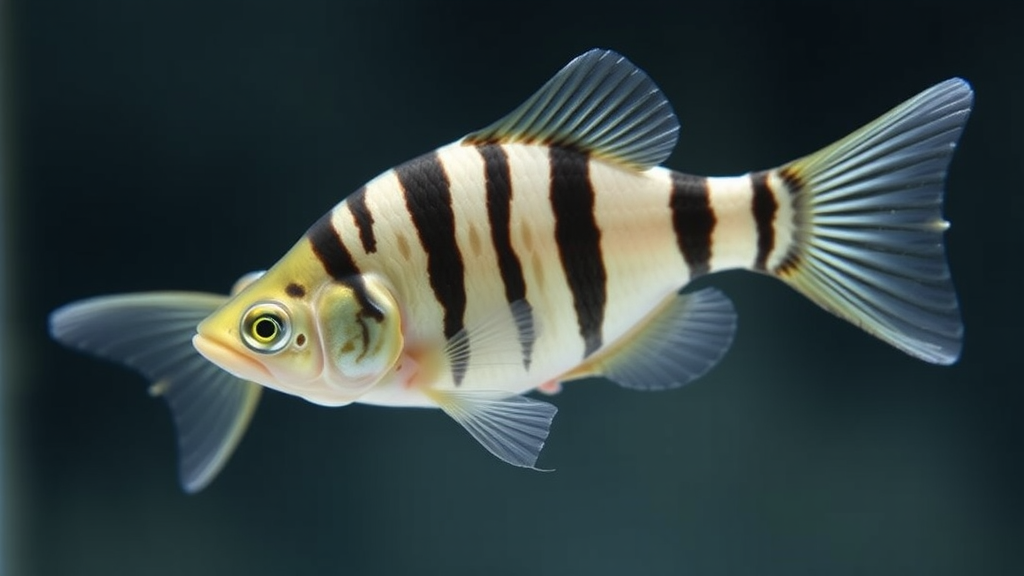
Synthetic cannabinoid receptor agonists, the man-made compounds sold as “Spice” and “K2,” are the second most detected class of new psychoactive substances worldwide, trailing only stimulants. They bind the same CB1 and CB2 receptors as THC, the active ingredient in cannabis, but often with far greater potency and efficacy, which helps explain why their use has been linked to psychosis, seizures, cardiotoxicity, acute kidney injury, and death. Yet for every compound that reaches forensic labs, the pharmacology and toxicity remain poorly or entirely unknown, because human research is limited by safety and ethical constraints and because many of these drugs are identified only after they have already circulated. A new open-access study in Discover Toxicology now offers a systematic in vivo assessment of two emerging SCRAs, ADB-INACA and CHO-4′Me-5′Br-FUBOXPYRA, using zebrafish at every stage of life, from embryo to self-administering adult.
The scale of the problem the researchers confront is enormous. According to the United Nations Office on Drugs and Crime, new psychoactive substances are compounds that threaten public health yet fall outside the 1961 Single Convention on Narcotic Drugs and the 1971 Convention on Psychotropic Substances. By the end of 2024, the European Union Drugs Agency was monitoring 1,000 such substances in Europe, 47 of them first reported that year. Between 2012 and 2025, the UNODC Early Warning Advisory logged 1,391 new psychoactive substances across 152 countries and territories, while the NPS Discovery program of the Center for Forensic Science Research and Education identified 174 compounds for the first time in the United States between 2018 and 2024, including 20 in 2024 alone. Each new structure demands a rapid toxicological evaluation, and the zebrafish, with its transparent embryos, rapid development, and vertebrate reward circuitry, has become one of the most practical platforms for that task.
The two compounds chosen for this study illustrate the cat-and-mouse dynamics of the synthetic drug market. ADB-INACA is a so-called tail-less precursor, an indazole carboxamide lacking the N-alkyl tail found in potent controlled SCRAs such as ADB-BUTINACA. First flagged by NPS Discovery in 2023, it has since appeared in nine drug-material cases and seven toxicological specimens. CHO-4′Me-5′Br-FUBOXPYRA, by contrast, was engineered with a novel 5-bromo-4-methylpyridin-2(1H)-one core specifically to evade China’s 2021 generic ban on synthetic cannabinoids. First identified in Europe in 2022, it has since surfaced in Germany, Italy, Slovenia, Sweden, Lithuania, Romania, Spain, and, as of 2023, in United States drug material, with a first toxicological detection reported in 2024. Prior receptor studies suggested both compounds carry only limited CB1 activity, making them ideal candidates to test whether structural loopholes translate into genuine physiological risk.
To answer that question, the team, led by Leonardo Costalonga Rodrigues and colleagues at the Universidade Estadual de Campinas in Brazil and the University of Utah, deployed a battery of complementary assays. Acute embryonic toxicity was measured with the fish embryo acute toxicity test standardized by the Organization for Economic Co-operation and Development as guideline 236, in which newly fertilized eggs are exposed to a compound for 96 hours and scored for lethal endpoints: coagulation of the egg, lack of somite formation, failure of the tail bud to detach from the yolk sac, and absence of heartbeat. Concentrations ranged from 0.001 to 10 micromolar, with 16 embryos per concentration, and sublethal observations such as pericardial edema, loss of posture, and heart rate changes were recorded daily under a stereoscopic microscope. At three days post-fertilization, heartbeats of five larvae per group were filmed for 20 seconds and extrapolated to beats per minute, and at four days each larva was touched on the tail with a micropipette tip to test its escape response.
The results from embryonic exposure were strikingly mild. Both SCRAs produced low mortality across the entire tested range, with embryo coagulation the only lethal endpoint observed, and even that appeared in fewer than 19 percent of embryos at any time point. CHO-4′Me-5′Br-FUBOXPYRA, however, did produce sublethal cardiac and postural effects that crossed the study’s 30 percent reporting threshold: pericardial edema at 10 micromolar, loss of posture in 69 percent of larvae at the highest concentration at three days post-fertilization, and a statistically significant reduction in heart rate at 10 micromolar, with a p-value below 0.01. Escape responses were blunted at all concentrations above 0.1 micromolar for this compound. ADB-INACA produced mainly impaired escape responses at select concentrations without significant lethality or cardiac effects. A companion maximum tolerated concentration test in larvae, exposing animals from five to eight days post-fertilization, largely confirmed this picture, with absent escape responses and occasional loss of posture at the highest doses but little else.
The behavioral experiments are where the study breaks genuinely new ground. Social behavior was assessed at 21 days post-fertilization using the Fishbook assay, a scalable, fully automated system first described in 2022. Juvenile zebrafish swim in a three-dimensional-printed rectangular arena divided by transparent windows into a central test compartment, an end compartment holding a live fish as a social stimulus, and an empty end compartment. Forty-four arenas are imaged simultaneously through a telecentric lens system, and software streams frame-by-frame positional coordinates that are converted into a social score between negative one and one, where higher values indicate that a fish spent more time near the social stimulus. Neither compound altered the social score: fish exposed to 10 micromolar ADB-INACA averaged 0.484 versus 0.424 in controls, and fish exposed to 10 micromolar CHO-4′Me-5′Br-FUBOXPYRA averaged 0.658 versus 0.623 in controls. To the researchers’ knowledge, this is the first in vivo evaluation of any SCRA’s impact on social interaction.
The final and arguably most ambitious assay tested whether the new compounds could drive drug-seeking behavior. Building on a paradigm developed by Bossé and Peterson, the team constructed a custom arena with two submersible platforms, an “active” one wired to a Raspberry Pi minicomputer and infrared cameras that trigger a peristaltic pump releasing a drug solution, and an “inactive” one that dispenses nothing. A recirculation system prevented drug diffusion to the inactive corner. Adult zebrafish first learned over five days of food conditioning that crossing the active platform yields a reward, then received five days of drug treatment. Hydrocodone served as the positive control, and it performed as expected: fish consistently sought the opioid, triggering the active platform far more often than the inactive one. Fish exposed to 0.625 micrograms of CHO-4′Me-5′Br-FUBOXPYRA per trigger, however, showed a progressive decline in active-platform crossings indistinguishable from the water-treated controls, indicating the compound lacked reinforcing effects under these conditions. ADB-INACA was not carried into self-administration testing because the earlier toxicity assays had revealed no significant effects.
The authors connect their findings to the wider pharmacological literature on these structural families. Earlier work on tail-less indazole precursors found minimal CB1 receptor activity for ADB-INACA, with concentration-response curves that failed to reach a clear plateau and potency estimates that could not be determined, while brominated analogs showed only partial receptor activation even at 100 micromolar. For CHO-4′Me-5′Br-FUBOXPYRA, a 2025 investigation of its metabolism identified four hydroxylated metabolites and a limited activation potential at both CB1 and CB2. The new zebrafish data align neatly with that weak receptor profile: limited cannabinoid-like behavioral effects, normal social behavior, no drug-seeking, and only modest cardiotoxicity for the brominated pyridone compound in the form of pericardial edema and reduced heart rate at the highest concentration tested. The study does have limitations the authors themselves acknowledge: only two compounds were evaluated, exposures were acute rather than chronic, and no molecular or neurochemical endpoints were measured to confirm what the receptors were doing during the behavioral tests.
Even so, the methodological takeaway may prove more consequential than the individual toxicological verdicts. By combining OECD-standard embryo testing, larval maximum tolerated concentration assays, the automated Fishbook social paradigm, and an operant self-administration assay within a single vertebrate model, the study demonstrates an end-to-end pipeline capable of profiling a novel psychoactive substance from developmental toxicity to abuse liability in a matter of weeks. The authors describe these assays as feasible, reproducible, and translationally relevant, and argue that they can be extended to a much larger number of emerging compounds, offering a rapid toxicological surveillance bridge between preclinical toxicology and public health needs. As forensic chemists continue to identify new SCRAs faster than regulators can schedule them, the humble zebrafish may become one of the fastest ways to learn whether the next designer cannabinoid is a genuine threat or, as appears to be the case for ADB-INACA and CHO-4′Me-5′Br-FUBOXPYRA at the concentrations tested, a structural dodge with surprisingly little punch.
Subject of Research: Toxicity and behavioral effects of the synthetic cannabinoid receptor agonists ADB-INACA and CHO-4′Me-5′Br-FUBOXPYRA in zebrafish models
Article Title: Evaluation of synthetic cannabinoid receptor agonists toxicity in zebrafish (Danio rerio) through self-administration and Fishbook assays
Article References: Rodrigues, L. C., Muhsen, M., Aliabadi, S. R., Zhang, T., Maurer-Morelli, C. V., Peterson, R. T., & Costa, J. L. (2026). Evaluation of synthetic cannabinoid receptor agonists toxicity in zebrafish (Danio rerio) through self-administration and Fishbook assays. Discover Toxicology, 3(1), Article 4. https://doi.org/10.1007/s44339-026-00049-x
Image Credits: AI Generated
DOI: 10.1007/s44339-026-00049-x
Keywords: synthetic cannabinoids, new psychoactive substances, zebrafish, toxicology, ADB-INACA, CHO-4′Me-5′Br-FUBOXPYRA, Fishbook assay, self-administration, drug-seeking behavior, CB1 receptor, embryotoxicity, social behavior
Cite Scienmag News
Louis Brooks. (September 23, 2026). Zebrafish Put Two New Synthetic Cannabinoids to the Test, With Surprisingly Mild Results. Scienmag. https://scienmag.com/zebrafish-put-two-new-synthetic-cannabinoids-to-the-test-with-surprisingly-mild-results/
Louis Brooks. "Zebrafish Put Two New Synthetic Cannabinoids to the Test, With Surprisingly Mild Results." Scienmag, 23 September 2026, https://scienmag.com/zebrafish-put-two-new-synthetic-cannabinoids-to-the-test-with-surprisingly-mild-results/. Accessed 23 September 2026.
Louis Brooks. "Zebrafish Put Two New Synthetic Cannabinoids to the Test, With Surprisingly Mild Results." Scienmag. September 23, 2026. https://scienmag.com/zebrafish-put-two-new-synthetic-cannabinoids-to-the-test-with-surprisingly-mild-results/


