


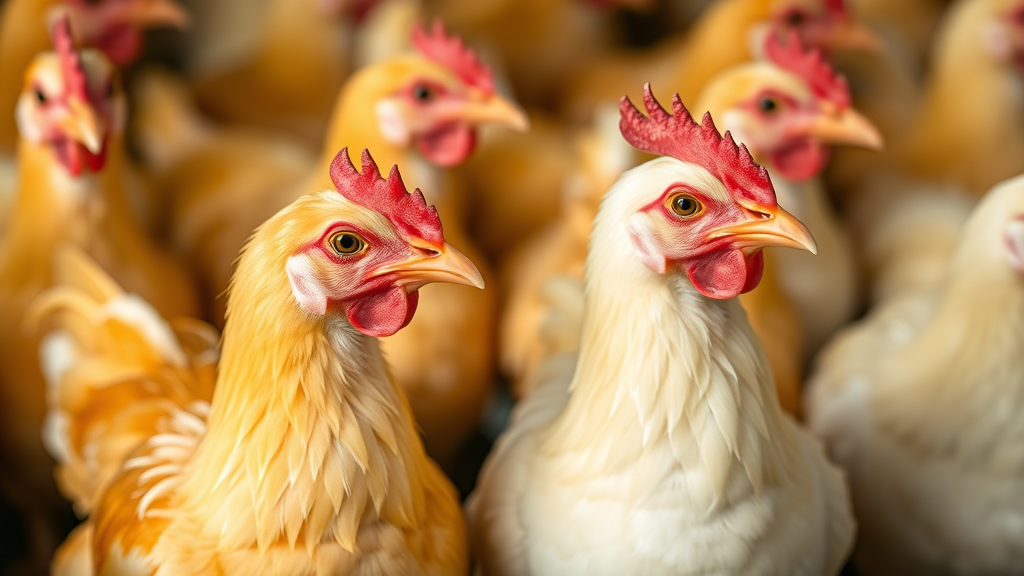
A seven-microbe probiotic cocktail has shown it can push young broiler chickens to grow faster than birds given single-strain probiotics or no supplement at all, according to a new study from King Saud University in Saudi Arabia published in Food Science & Nutrition. The formulation, known as RISCO–NUTRIFOUR solution (RNFS), combines Bacillus subtilis, Saccharomyces cerevisiae, two Lactobacillus species, two Rhodopseudomonas species, and Candida ethanolic into a single multi-genera blend. At a 0.2% inclusion level, the blend significantly improved both average body weight and body weight gain during the grower phase, offering a compelling antibiotic-free strategy for poultry producers.
The research arrives at a critical moment for global poultry farming. Antibiotics were once routinely added to feed as growth promoters, enhancing gut health and nutrient utilization across commercial flocks. But mounting evidence that this practice fuels antimicrobial resistance, and specifically the risk of horizontal gene transfer from livestock bacteria to the human microbiome, has triggered sweeping regulatory crackdowns. The European Union led the way with its 2006 ban on antibiotic growth promoters under Regulation (EC) No. 1831/2006, and producers worldwide have been scrambling to find effective substitutes ever since.
Probiotics have emerged as the leading candidate among these alternatives. These live, non-pathogenic microorganisms confer measurable health benefits to the host by improving mucosal integrity, modulating the intestinal microflora, enhancing nutrient uptake, and strengthening immune responses. Previous work has shown that probiotic supplementation can improve the architecture of intestinal villi, the finger-like projections that dramatically increase the absorptive surface of the gut, translating directly into better feed efficiency. Yet results with single-strain products, particularly the widely used B. subtilis and S. cerevisiae, have been notoriously inconsistent, likely because outcomes depend heavily on dosage, strain specificity, administration route, and rearing conditions.
The Saudi research team reasoned that a multi-strain formulation might overcome this variability through synergistic interactions between different microbial species. Their product contains B. subtilis and both Lactobacillus harbinensis and Lactobacillus parabunchneri at one billion colony-forming units per milliliter each, S. cerevisiae and Candida ethanolic at one hundred thousand CFU per milliliter, and two photosynthetic Rhodopseudomonas species at ten million CFU per milliliter. The diversity spans bacteria, yeasts, and even phototrophic organisms, an unusually broad consortium that the authors hypothesized could reshape gut ecology, antioxidant status, and nutrient utilization simultaneously.
To test this hypothesis rigorously, the researchers ran a controlled feeding trial with 288 one-day-old male Ross 308 broiler chicks, individually weighed and randomly assigned to six treatment groups, each with eight replicate cages of six birds. From days 1 to 14, treatments were delivered through drinking water; from days 15 to 28, they were mixed into feed. The groups comprised an unsupplemented negative control, three RNFS doses at 0.1%, 0.2%, and 0.4%, a single-strain B. subtilis product (CloSTAT), and a yeast product (SafMannan). All birds were housed under climate-controlled conditions, vaccinated against major poultry pathogens, and fed diets formulated to Aviagen’s Ross 308 specifications.
The results pointed clearly toward a mid-range dose. Birds receiving 0.2% RNFS reached an average body weight of 1557.5 grams at day 28, significantly heavier than the control (1449.7 g), the B. subtilis group (1444.7 g), and the S. cerevisiae group (1513.0 g), with a reported p-value of 0.04. During the grower phase from days 14 to 28, this dose lifted daily weight gain to 80.7 grams per bird, outpacing the control by 11.77%, the B. subtilis group by 9.80%, and the S. cerevisiae group by 4.67%. Notably, these gains came without significant changes in feed intake or feed conversion ratio, suggesting the probiotic improved how efficiently nutrients were utilized rather than simply stimulating appetite.
Chemical analysis of the formulation hints at why it might work. Gas chromatography–mass spectrometry identified 45 volatile and semi-volatile compounds in RNFS, including phenol (9.17% of the extract) and 2,4-di-tert-butylphenol (6.86%), both recognized for antioxidant and antimicrobial properties. Fatty acid esters such as methyl stearate and methyl linoleate, along with organic acids like lactic acid, rounded out a phytochemically diverse profile. The authors propose that these bioactive compounds act synergistically with the live microbes, reinforcing gut integrity, modulating microbial balance, and supporting metabolic efficiency. Concentrations of phenolic and naphthalene-derived compounds were low and within ranges considered safe for poultry diets under prior European Food Safety Authority evaluations.
Carcass characteristics told a subtler story. At day 28, slaughter weight, hot and cold carcass weights, carcass yield, and the weights of most internal organs, including breast, liver, heart, kidney, pancreas, and lymphoid tissues such as the thymus, bursa of Fabricius, and spleen, did not differ significantly among treatments. The one clear exception was the gizzard, the muscular grinding organ of the avian digestive tract, which was heaviest in birds given 0.2% RNFS or 0.1% S. cerevisiae and lightest in the unsupplemented control group, a difference the researchers linked statistically (p = 0.023). A larger gizzard typically indicates more vigorous digestive function, which could partially explain the growth advantages observed in those groups.
The divergence between growth performance and carcass traits, the authors argue, reflects genuinely different physiology. Growth metrics respond quickly to improvements in digestibility and gut health, whereas carcass composition is governed by genetic potential, slaughter age, and metabolic partitioning of nutrients, factors that a 28-day trial window may simply be too short to reveal. Earlier studies from the same group had already shown that RNFS improves breast meat texture, juiciness, and tenderness, and that a 1 mL per kilogram dose mitigates heat-stress damage to meat quality and growth efficiency. The new trial extends that record by demonstrating that a combined water-and-feed administration strategy can deliver measurable growth benefits during the crucial starter-to-grower transition.
Limitations remain. Organ-level comparisons relied on eight birds per group, a sample size that may have missed subtle differences, and the study did not include microbiome profiling or antioxidant biomarkers that would pin down the mechanisms at work. The authors call for molecular-level follow-up studies and validation across varied production conditions. Still, the evidence assembled so far positions RNFS as a practical, antibiotic-free candidate for broiler production, particularly in hot climates where heat stress compounds the challenge of maintaining flock performance. For an industry under pressure to eliminate growth-promoting antibiotics while feeding a growing global population, a probiotic blend that outperforms its single-strain rivals may be exactly the kind of solution the field has been waiting for.
Subject of Research: Effects of a multi-strain probiotic blend on growth performance and carcass traits in broiler chickens
Article Title: Effect of RISCO–NUTRIFOUR Probiotic on Growth and Carcass Traits in Broilers During Starter and Grower Phases
Article References: Al‐abdullatif, A. A., Al‐Garadi, M. A., Qaid, M. M., Matar, A. M., Al‐Badwi, M., Alobre, M. M., Suliman, G. M., & Hussein, E. O. (2026). Effect of RISCO–NUTRIFOUR Probiotic on Growth and Carcass Traits in Broilers During Starter and Grower Phases. Food Science & Nutrition, 14(9), Article e71335. https://doi.org/10.1002/fsn3.71335
Image Credits: AI Generated
DOI: 10.1002/fsn3.71335
Keywords: probiotics, broilers, poultry, Bacillus subtilis, Saccharomyces cerevisiae, antibiotic alternatives, gut health, growth performance, carcass traits, feed conversion, animal nutrition, Poultry Science
Cite Scienmag News
William Thompson. (September 23, 2026). Multi-Strain Probiotic Blend Boosts Broiler Growth Without Antibiotics. Scienmag. https://scienmag.com/multi-strain-probiotic-blend-boosts-broiler-growth-without-antibiotics/
William Thompson. "Multi-Strain Probiotic Blend Boosts Broiler Growth Without Antibiotics." Scienmag, 23 September 2026, https://scienmag.com/multi-strain-probiotic-blend-boosts-broiler-growth-without-antibiotics/. Accessed 23 September 2026.
William Thompson. "Multi-Strain Probiotic Blend Boosts Broiler Growth Without Antibiotics." Scienmag. September 23, 2026. https://scienmag.com/multi-strain-probiotic-blend-boosts-broiler-growth-without-antibiotics/


