


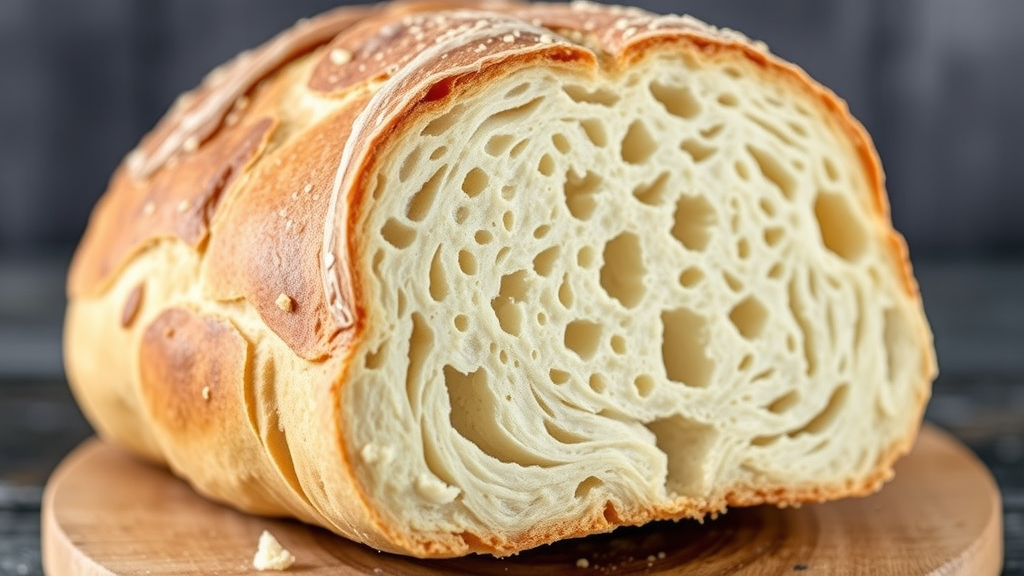
Sourdough is one of the oldest fermented foods on Earth, yet the microbial partnerships that make it work remain remarkably fragile when scaled up to industrial production. A new study from researchers at the Vrije Universiteit Brussel has now mapped, week by week, how the classic sourdough duo of the bacterium Fructilactobacillus sanfranciscensis and the yeast Maudiozyma humilis survives—or collapses—inside two wholemeal wheat mother sourdoughs maintained at Belgian industrial bakeries. The findings, published in Applied Microbiology and Biotechnology, reveal that the fate of this celebrated consortium hinges not on any single variable but on the combined effect of process parameters that bakers often adjust independently: dough yield, backslopping conditions and the rhythm of refreshment.
The research team, led by Yohanes Raditya Wardhana and corresponding author Frédéric Leroy, followed two industrial sourdoughs designated IB-A and IB-B over many months of realistic production. Both were wholemeal wheat sourdoughs, but they differed in a crucial technological parameter: dough yield, an index that expresses the ratio of flour plus water in the dough. IB-A was a firm sourdough with a dough yield of 160, while IB-B was a semi-liquid sourdough with a dough yield of 200. The two bakeries also operated different backslopping conditions, the practice of carrying a portion of mature sourdough into the next batch, which continually inoculates fresh dough with the resident microbial community.
To test resilience under stress, the researchers subjected both sourdoughs to two refreshment regimes. In the weekly regime, each sourdough was refreshed every seven days, combining cold storage at 4 degrees Celsius with a backslopping step at either room temperature for 24 hours or at 30 degrees Celsius for 16 hours. The triweekly regime stretched the interval between refreshments to roughly three weeks, imposing longer periods of cold storage on the microbes between feeding cycles. These regimes were designed to reflect the operational realities of industrial bakeries, where production pauses, holidays and scheduling constraints can lengthen the time between sourdough refreshments far beyond what laboratory models typically assume.
Under weekly refreshment, the news was encouraging for both sourdoughs. The Fructilactobacillus sanfranciscensis and Maudiozyma humilis consortium persisted for one month in IB-A and IB-B alike, demonstrating that this partnership can tolerate routine cold storage and reactivation cycles when refreshments come at a reasonable pace. The result matters because this specific pairing is the cornerstone of traditional sourdough fermentation. Fructilactobacillus sanfranciscensis, long regarded as the emblematic sourdough lactic acid bacterium, produces the lactic and acetic acids that give sourdough its characteristic tang and contribute to dough rheology, shelf life and flavor. Maudiozyma humilis, formerly assigned to other yeast genera, handles the alcoholic fermentation that leavens the dough and supplies metabolites the bacterium can use.
The ecological relationship between the two species is built on complex trophic interactions. Fructilactobacillus sanfranciscensis is famously fastidious: it has demanding nutritional requirements, relying on amino acids and other nutrients, and it uses maltose phosphorylase-based metabolism that yields glucose it does not need itself. That leftover glucose, along with other compounds released during fermentation, nourishes the yeast. The yeast, in turn, releases amino acids and peptides through proteolysis, feeding the bacterium. This metabolic cross-feeding explains why the pair dominates so many traditional sourdoughs and why their persistence is often coupled: remove one partner and the other may follow. The new study set out to determine whether this mutualism, so robust in artisanal settings and laboratory models, could withstand the pressures of a real industrial workflow over the long term.
The answer under triweekly refreshment was sharply split between the two sourdoughs. In the firm sourdough IB-A, both species remained stable throughout the extended monitoring period, and the metabolic signature confirmed it: consistent production of acetic acid, ethanol and mannitol indicated that the consortium’s characteristic activity—the heterofermentative conversion of fructose into mannitol while generating acetic acid, alongside yeast-driven ethanol formation—continued undiminished. In the semi-liquid sourdough IB-B, however, the partnership fell apart. Fructilactobacillus sanfranciscensis was lost after 12 weeks, and Maudiozyma humilis disappeared after 15 weeks. Their decline opened the door for other organisms: Levilactobacillus parabrevis and Pediococcus parvulus became prevalent in the abandoned ecological space, reshaping the sourdough’s microbial identity and, by extension, its flavor and functional profile.
Why did the two sourdoughs diverge so dramatically when only their dough yield and backslopping conditions differed? The authors point to the interplay of process parameters rather than any single cause. A firmer dough with a lower dough yield creates different conditions for microbial survival: less free water, different diffusion of acids and substrates, and potentially less environmental stress during prolonged cold storage. The backslopping conditions at each bakery further modulated how much active inoculum and which physiological state of cells were transferred at each refreshment. When refreshments are only weekly, even a less favorable matrix can sustain the consortium; stretch the interval to three weeks and the margin of safety vanishes in the semi-liquid sourdough, allowing slower-growing or more cold-tolerant competitors such as Levilactobacillus parabrevis and Pediococcus parvulus to gain the upper hand.
The study carries immediate practical weight for the baking industry. Industrial bakeries increasingly rely on controlled, defined starter cultures to guarantee consistent product quality, and the Fructilactobacillus sanfranciscensis and Maudiozyma humilis pairing is a natural choice for authentic sourdough production. But a starter culture is only as good as its persistence in the mother sourdough that anchors daily production. The results show that bakers cannot treat dough yield, storage temperature and refreshment frequency as interchangeable dials: losing the signature consortium in a semi-liquid sourdough subjected to infrequent refreshment means losing the acids, alcohols and sugar alcohols that define the product, and acquiring in their place a different fermentation profile driven by opportunistic lactic acid bacteria. Formulating firm sourdoughs, or tightening refreshment schedules for semi-liquid ones, emerges as a concrete strategy for safeguarding microbial stability.
Scientifically, the work adds a long-term, industrially grounded dimension to a literature dominated by short laboratory experiments with defined media and idealized cycles. By monitoring real mother sourdoughs across successive refreshments, the researchers captured the slow dynamics of microbial succession—how a dominant community erodes over weeks, not days, and how replacement species colonize only after the incumbents fade. The metabolite data reinforce the ecological story: in the stable firm sourdough, the trio of acetic acid, ethanol and mannitol served as a chemical fingerprint of the intact consortium, a reminder that microbial ecology and metabolic output in fermented foods are two sides of the same coin. For a food whose appeal rests on the delicate chemistry of fermentation, that stability, the study concludes, must be engineered deliberately through suitable combined process parameters rather than assumed.
Subject of Research: Long-term stability of the Fructilactobacillus sanfranciscensis and Maudiozyma humilis consortium in industrial sourdough under varying process parameters.
Article Title: Stability of Fructilactobacillus sanfranciscensis-Maudiozyma humilis in industrial sourdough
Article References: Wardhana, Y. R., González-Alonso, V., Pradal, I., Leroy, F., & De Vuyst, L. (2026). Stability of Fructilactobacillus sanfranciscensis-Maudiozyma humilis in industrial sourdough. Applied Microbiology and Biotechnology. https://doi.org/10.1007/s00253-026-14018-2
Image Credits: AI Generated
DOI: 10.1007/s00253-026-14018-2
Keywords: Fructilactobacillus sanfranciscensis, Maudiozyma humilis, sourdough, microbial consortium, dough yield, refreshment regime, backslopping, lactic acid bacteria, food fermentation, industrial baking, Levilactobacillus parabrevis, Pediococcus parvulus
Cite Scienmag News
Morgan Morrow. (September 23, 2026). Firm Sourdough Keeps Its Signature Microbes Stable, Long-Term Study Finds. Scienmag. https://scienmag.com/firm-sourdough-keeps-its-signature-microbes-stable-long-term-study-finds/
Morgan Morrow. "Firm Sourdough Keeps Its Signature Microbes Stable, Long-Term Study Finds." Scienmag, 23 September 2026, https://scienmag.com/firm-sourdough-keeps-its-signature-microbes-stable-long-term-study-finds/. Accessed 23 September 2026.
Morgan Morrow. "Firm Sourdough Keeps Its Signature Microbes Stable, Long-Term Study Finds." Scienmag. September 23, 2026. https://scienmag.com/firm-sourdough-keeps-its-signature-microbes-stable-long-term-study-finds/


