


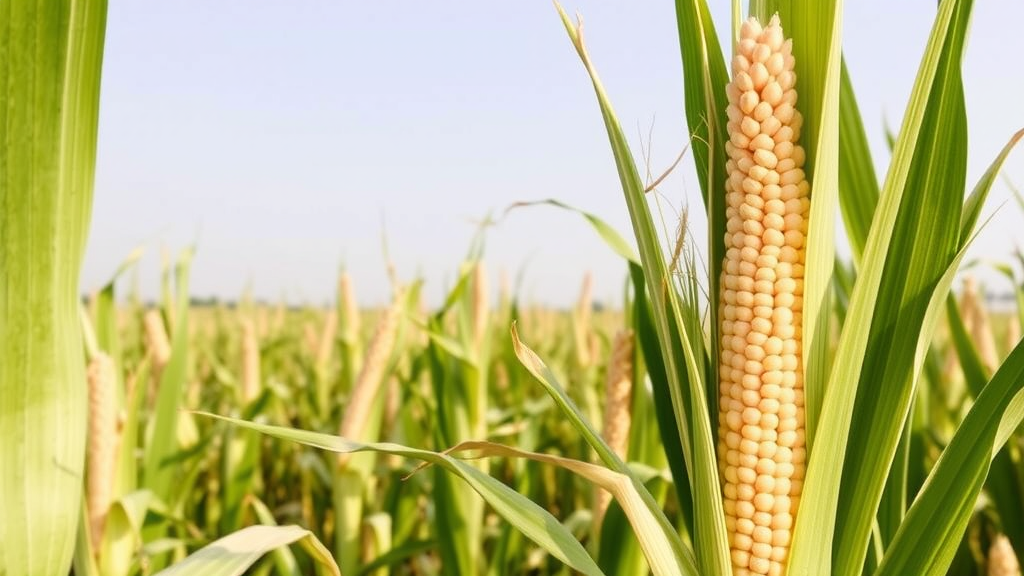
Maize is the third most important cereal crop in Pakistan, trailing only wheat and rice in both production and cultivated area, and its role in the country’s food and feed economy is growing fast. With roughly 1.6 million hectares under cultivation yielding about 9.8 million tonnes, the crop contributes 2.9 percent to agricultural value addition and 0.7 percent to gross domestic product. Yet a persistent challenge has haunted breeders and farmers alike: hybrids that flourish at one research station often falter at another, and a champion in one season can disappoint in the next. A new multi-year study from Pakistan’s National Agricultural Research Centre has now systematically disentangled this problem, identifying which newly developed maize hybrids deliver both high yields and dependable stability across the country’s remarkably diverse growing regions.
The research team, led by Salman Saleem, Musab Imtiaz, Mubashir Ahmed Khan, Tayyub Hussain and Usman Saleem, evaluated nineteen newly developed single-cross maize hybrids alongside a commercial check variety across eight locations over two autumn growing seasons. The trial sites spanned Islamabad, Mardan, Faisalabad, Sahiwal, Vehari, Chiniot, Nowshera and Pakpattan, capturing a wide spectrum of altitude, latitude and macro-climatic conditions that reflect the true range of maize production environments in Pakistan. The hybrids themselves were bred from eighteen yellow-kernelled inbred lines at the Maize, Sorghum and Millet Program within the Crop Sciences Institute, and the check used for comparison was the widely grown commercial hybrid 30Y87 from Pioneer Seeds.
At the heart of the study lies one of the most consequential phenomena in modern plant breeding: the genotype-by-environment interaction, commonly abbreviated as GEI. This interaction describes how the relative performance of different genetic lines changes as environmental conditions change. A hybrid carrying genes well suited to a hot, dry location may underperform a different hybrid in a cooler, wetter valley, and the rankings can flip entirely from one year to the next. When GEI is strong, selecting winners from a single location or a single season becomes misleading, because the apparent superiority may simply reflect a fortunate match between one genotype and one set of conditions rather than genuine genetic merit.
The combined analysis of variance revealed just how dominant these interactions are in Pakistani maize. Of the total variability in grain yield observed across the trials, the genotype-by-environment interaction accounted for a striking 72.60 percent, dwarfing the contributions of genotype alone at 13.40 percent and environment alone at 8.82 percent. In practical terms, this means that where and when a hybrid is grown matters far more to its observed yield than the hybrid’s average genetic potential in isolation. The GE interaction was decomposed into fifteen significant principal components, with the first explaining 24.7 percent of the interaction variability, the second 19.2 percent, and the first five together capturing 78.5 percent of the total.
To make sense of such a complex interaction structure, the researchers turned to two complementary statistical frameworks that have become workhorses of multi-environment trial analysis. The first, the Additive Main Effects and Multiplicative Interaction model, or AMMI, integrates classical analysis of variance with principal component analysis, allowing the additive contributions of genotypes and environments to be separated from the multiplicative interaction terms. Expressed graphically as biplots, AMMI results position genotypes along axes representing mean yield and interaction scores, so that a breeder can see at a glance which entries combine high productivity with low sensitivity to environmental fluctuation. The AMMI Stability Value, derived from the first two principal component scores, further quantifies stability into a single ranking metric.
The second framework, the GGE biplot, is built on genotype main effects plus the genotype-by-environment interaction, and it excels at answering questions that AMMI alone addresses less directly. By constructing a polygon around the genotypes positioned farthest from the origin, the which-won-where analysis partitions the testing locations into mega-environments, each dominated by a different winning hybrid. A companion biplot, ranking genotypes against concentric circles around an ideal entry, identifies which hybrid comes closest to the theoretical combination of maximum mean yield and perfect stability. A third view, based on the average environment coordination, orders hybrids by their distance from the stability axis.
The results were unambiguous. Two hybrids, designated G10 and G6, achieved overall mean grain yields exceeding 13,000 kilograms per hectare while simultaneously showing principal component scores close to zero and favourable stability rankings, marking them as broad adapters capable of performing well across all eight environments and both years. Meanwhile, G13 and the commercial check G2 emerged as the most stable genotypes, maintaining good and consistent average yields even though their yields fell short of the top performers. In the GGE ranking biplot, G10 sat closest to the concentric circles around the ideal genotype, and the authors recommend it as the single best performer overall. In contrast, G18, despite ranking second in raw yield at 13,352 kilograms per hectare, displayed a large stability value and a wide spread across the biplot, marking it as specifically adapted rather than broadly reliable.
The which-won-where analysis carried particular significance for breeding strategy. Sixteen environments were partitioned into six sectors, with four identified as repeatable mega-environments, because individual locations tended to fall within the same sector in both trial years. This repeatability, observed for example among environments in Chiniot, Faisalabad, Sahiwal and Pakpattan, suggests genuine geographical adaptation zones rather than random year-to-year noise. For breeders, the implication is profound: locations that behave similarly across years can be grouped, redundant test sites can be pruned, and breeding programs can target specific mega-environments with hybrids tailored to their conditions, dramatically improving the efficiency of multi-environment testing.
The environmental evaluation component of the GGE analysis added yet another layer of insight. Environments differed substantially in their discriminating ability, visualised as vector length on the biplot. Mardan in both years proved the most effective location for separating genotypes, displaying the longest vectors, while sites such as Nowshera and Islamabad showed weaker discriminating power. Choosing test locations with strong discriminating ability and good representativeness of the target production region is a critical but often overlooked aspect of breeding program design, and this study demonstrates how biplot methods can guide those decisions empirically rather than by intuition.
Perhaps the most important methodological lesson from the work is that AMMI and GGE biplots are most powerful when used together. The two frameworks occasionally diverge in their assessment of individual genotypes, as they weight genotype main effects and interaction terms differently, and relying on either alone risks a skewed picture. By cross-validating candidates through AMMI stability values, mean yield rankings, and multiple GGE biplot views, the researchers converged on recommendations that are robust to the quirks of any single statistical model. The selected hybrids, particularly G10 and G6, are now candidates for incorporation into crop improvement programs aimed at developing broadly adapted, climate-resilient and high-yielding maize varieties for Pakistan’s farmers. As climate variability intensifies and demand for maize as food, feed and industrial raw material continues to climb, the ability to breed hybrids that yield heavily everywhere rather than brilliantly in one place may prove one of the most valuable tools in the agricultural toolkit.
Subject of Research: Genotype-by-environment interaction and yield stability analysis of maize hybrids using AMMI and GGE biplot methods in Pakistan
Article Title: Exploitation of genotype-by-environment interactions in maize hybrids at multiple locations in Pakistan using AMMI and GGE Biplots
Article References: Saleem, S., Imtiaz, M., Khan, M. A., Hussain, T., & Saleem, U. (2026). Exploitation of genotype-by-environment interactions in maize hybrids at multiple locations in Pakistan using AMMI and GGE Biplots. Discover Agriculture, 4(1), Article 287. https://doi.org/10.1007/s44279-026-00758-2
Image Credits: AI Generated
DOI: 10.1007/s44279-026-00758-2
Keywords: maize, genotype-by-environment interaction, AMMI model, GGE biplot, yield stability, multi-environment trials, plant breeding, Pakistan, Zea mays, grain yield, mega-environments, hybrid selection
Cite Scienmag News
Alan Morgan. (September 22, 2026). Two Standout Maize Hybrids Emerge From Pakistan’s Multi-Site Stability Trials. Scienmag. https://scienmag.com/two-standout-maize-hybrids-emerge-from-pakistans-multi-site-stability-trials/
Alan Morgan. "Two Standout Maize Hybrids Emerge From Pakistan’s Multi-Site Stability Trials." Scienmag, 22 September 2026, https://scienmag.com/two-standout-maize-hybrids-emerge-from-pakistans-multi-site-stability-trials/. Accessed 22 September 2026.
Alan Morgan. "Two Standout Maize Hybrids Emerge From Pakistan’s Multi-Site Stability Trials." Scienmag. September 22, 2026. https://scienmag.com/two-standout-maize-hybrids-emerge-from-pakistans-multi-site-stability-trials/


