


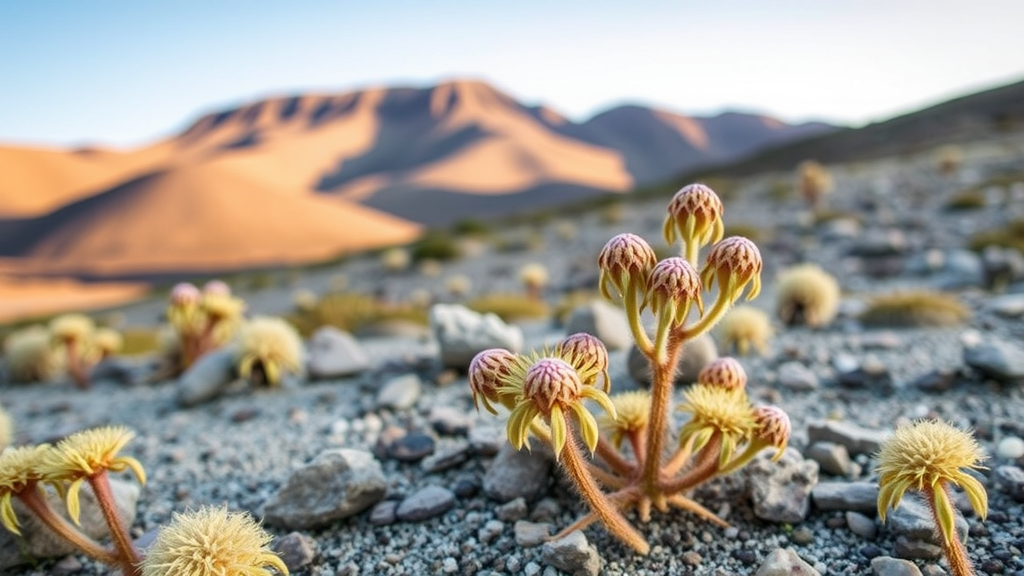
On the vast, wind-scoured expanses of the Qinghai-Xizang Plateau, plants live on the edge of what is biologically possible. The growing season is brutally short, temperatures swing wildly between day and night, and water arrives unpredictably. Now climate change is rewriting the rules of survival in this alpine desert, because the region is experiencing simultaneous warming and increased precipitation during the growing season. For the plants that dominate this landscape, that combination presents a puzzle: should they pour their newly available resources into growth, or should they fortify themselves against the stress that rapid environmental change inevitably brings? A new study published in Genome Biology has provided the most detailed molecular answer yet, and the findings suggest that the winners of a warmer, wetter future may already be among us.
The research team, led by scientists at the Institute of Tibetan Plateau Research of the Chinese Academy of Sciences together with colleagues from Yangzhou University, Tibet University, and the Xizang Academy of Forest, conducted a multi-year in-situ experiment at a field site on the plateau. Rather than simulating future climate in a greenhouse, the researchers manipulated temperature and precipitation directly in the natural ecosystem, using open-top warming chambers and altered rainfall treatments applied to intact plots. This design allowed them to observe how two dominant alpine desert species, Ajania tibetica and Ceratoides compacta, responded to realistic combinations of warming and added water over multiple growing seasons, integrating responses across physiology, growth, and genome-wide gene expression.
The two species, though growing side by side in the same harsh environment, turned out to be running fundamentally different biological playbooks. Ajania tibetica adopted what the researchers describe as a conservative strategy. When temperatures rose, this plant suffered oxidative stress and its growth was inhibited, and remarkably, this happened regardless of whether additional water was available. Even the relief of increased precipitation, which one might expect to buffer the harm of warming, could not rescue A. tibetica from the damaging effects of higher temperatures. Something deeper than water availability was constraining its capacity to cope, and that something turned out to be written in its transcriptome.
To dissect that constraint, the team developed a metric they call the physiological-transcriptomic decoupling index, or PTDI. The concept is elegant: it measures how much a plant changes its gene expression in relation to how much it actually gains physiologically. In A. tibetica, the PTDI was high, revealing a metabolically costly mismatch. Under warming, the plant massively upregulated genes involved in ribosome biogenesis, the energy-intensive process of building the cellular machinery for protein synthesis, yet this enormous transcriptional investment produced negligible physiological benefits. In effect, the conservative species was spending its limited energy budget on an expensive repair and rebuilding program that failed to translate into growth or improved stress tolerance, a molecular equivalent of running to stand still.
Ceratoides compacta told a completely different story. This species pursued an opportunistic strategy, characterized by a lower PTDI and enhanced growth under the experimental warming and altered precipitation conditions. Rather than escalating a costly molecular emergency response, C. compacta maintained its physiological performance with minimal transcriptional volatility, changing relatively few genes while achieving meaningful gains in biomass. The researchers traced this efficiency to a molecular network centered on heat shock proteins, the cellular guardians responsible for maintaining proteostasis, the proper folding, function, and turnover of the proteome. By keeping its existing proteins stable and functional under heat stress, C. compacta avoided the need for wholesale transcriptional restructuring, preserving resources that could instead be channeled into growth.
The contrast between these two modes carries profound implications for how we think about stress biology. Much of plant molecular research has focused on the magnitude of gene expression changes, on how many genes switch on or off under stress. This study reframes the question: the quality and economy of a transcriptional response may matter more than its scale. A high-cost repair mode, in which a plant frantically rebuilds its protein synthesis machinery in response to damage, can consume resources that a low-cost maintenance mode, anchored in proteostasis control, would leave available for reproduction and growth. In an environment where every calorie counts, transcriptomic efficiency, not transcriptomic drama, appears to determine adaptive success.
At the ecosystem scale, these findings sketch out a potential reshuffling of life on the plateau. The authors suggest that opportunistic species like Ceratoides compacta may outcompete conservative species like Ajania tibetica under future warmer and wetter climate scenarios, potentially driving significant shifts in alpine desert community structure. Such shifts would ripple far beyond the plants themselves. Alpine deserts of the Qinghai-Xizang Plateau anchor grazing economies, regulate water flows into major Asian river systems, and store carbon in fragile soils. If the dominant species composition changes, the ecosystem services these landscapes provide could change with them, making it essential to predict which species will thrive and which will fade as the climate continues to warm.
The methodological rigor of the work deserves emphasis. Conducting a multi-year manipulation experiment at high elevation on the Tibetan Plateau is logistically formidable, requiring sustained maintenance of field infrastructure in one of the most remote environments on Earth. The researchers combined physiological and biochemical trait measurements with genome-wide expression profiling and network analysis, using weighted gene co-expression network approaches whose statistical properties they carefully validated. By integrating physiological trajectories with transcriptomic data across treatments and species, they were able to move from correlation to a mechanistic account of why one species grew and the other stalled. The PTDI framework itself may prove a valuable export, offering researchers studying other ecosystems a quantitative way to ask whether a plant’s molecular response is efficient or wasteful.
There is also a sobering conservation dimension. A. tibetica’s plight illustrates that some species may possess no physiological escape route from warming, no matter how water availability changes. Its conservative strategy, presumably honed over evolutionary time in a colder and more stable climate regime, becomes a liability in a warmer world, locking the plant into a cycle of oxidative stress and stunted growth. Conservation planning for high-altitude ecosystems has often focused on range shifts, the idea that species will simply move upslope as conditions warm. This study adds a molecular warning: some species may be transcriptionally incapable of capitalizing on the new conditions even where they remain, and their decline may be written in gene expression long before it becomes visible at the population level.
As the planet’s high-altitude and high-latitude ecosystems warm faster than the global average, the lessons from the Qinghai-Xizang Plateau will resonate far beyond it. The growth-defense trade-off is one of the oldest concepts in ecology, but this research shows that its resolution is orchestrated at the level of the transcriptome, in the competing economies of ribosome construction and protein maintenance. Whether a plant faces the future with an expensive repair manual or a quiet, efficient toolkit may decide not just its own survival, but the face of entire communities. For the alpine deserts of the Tibetan Plateau, and perhaps for stressed ecosystems everywhere, the future may belong less to the plants that react loudest and more to those that respond with the quiet discipline of molecular efficiency.
Subject of Research: Growth-defense trade-offs and transcriptomic plasticity in alpine desert plants of the Qinghai-Xizang Plateau under climate change
Article Title: Transcriptomic efficiency shapes growth-defense trade-offs in alpine desert plants under climate change
Article References: Gan, L., Yang, Z., Wang, S., Meng, F., Liu, Y., & Dorji, T. (2026). Transcriptomic efficiency shapes growth-defense trade-offs in alpine desert plants under climate change. Genome Biology. https://doi.org/10.1186/s13059-026-04282-w
Image Credits: AI Generated
DOI: 10.1186/s13059-026-04282-w
Keywords: alpine desert, Qinghai-Xizang Plateau, climate change, growth-defense trade-off, transcriptomic plasticity, heat shock proteins, proteostasis, ribosome biogenesis, Ajania tibetica, Ceratoides compacta, plant stress responses, Genome Biology
Cite Scienmag News
Juliet Wilcox. (September 22, 2026). Molecular Efficiency Decides Which Alpine Desert Plants Survive Warming Climates. Scienmag. https://scienmag.com/molecular-efficiency-decides-which-alpine-desert-plants-survive-warming-climates/
Juliet Wilcox. "Molecular Efficiency Decides Which Alpine Desert Plants Survive Warming Climates." Scienmag, 22 September 2026, https://scienmag.com/molecular-efficiency-decides-which-alpine-desert-plants-survive-warming-climates/. Accessed 22 September 2026.
Juliet Wilcox. "Molecular Efficiency Decides Which Alpine Desert Plants Survive Warming Climates." Scienmag. September 22, 2026. https://scienmag.com/molecular-efficiency-decides-which-alpine-desert-plants-survive-warming-climates/


