Autophagy, the cellular recycling system that allows eukaryotic cells to engulf and degrade their own components, has long fascinated biologists for its central role in health and disease. Now a comprehensive review published in Cellular and Molecular Life Sciences by Sidi Zhang and Noboru Mizushima of the University of Tokyo traces the deep evolutionary history of the autophagy machinery, asking how a process that depends on roughly twenty dedicated genes came to exist in complex cells while leaving recognizable traces in organisms as simple as bacteria and archaea. The review synthesizes recent genomic, phylogenetic and cell biological advances into a coherent narrative of how autophagy emerged during eukaryogenesis, diversified across eukaryotic lineages, and inherited functional elements from prokaryotic ancestors.
Macroautophagy, the best-studied form of autophagy, is an intracellular degradation system that is essential for cellular homeostasis. In this process, a double-membraned vesicle called an autophagosome forms around cytoplasmic cargo, including damaged organelles and aggregated proteins, and delivers the cargo to the lysosome or vacuole for destruction and recycling. Building an autophagosome requires the concerted action of around twenty autophagy-related genes, known as ATG genes, together with components of the cytoskeleton and the endomembrane systems. Because this machinery involves membrane deformation on a massive scale, its origin poses a striking evolutionary puzzle: how did a process requiring such elaborate coordination arise in the first eukaryotic cells?
The review argues that the autophagy pathway likely already existed in the last eukaryotic common ancestor, often abbreviated LECA, the hypothetical organism from which all living eukaryotes descend. This conclusion rests on the observation that core components of the autophagy machinery are found across the major eukaryotic supergroups, suggesting that the pathway was present before those groups diverged. Rather than being an invention of any single lineage, autophagy appears to be an ancestral eukaryotic innovation that was subsequently modified, expanded or trimmed as different branches of the eukaryotic tree pursued their own evolutionary paths.
Interestingly, the pathway itself does not exist in prokaryotes. Bacteria and archaea lack autophagosomes, lysosomes and the endomembrane systems on which eukaryotic autophagy depends. Yet when researchers search prokaryotic genomes for sequences resembling ATG genes, they find remote homologs of several of them. These distant relatives of eukaryotic autophagy genes hint that the raw materials from which the autophagy machinery was built were available long before eukaryotic cells existed, and that the pathway was assembled by repurposing pre-existing protein modules for new cellular functions.
Zhang and Mizushima organize their review around three major themes. The first concerns the evolutionary context surrounding the emergence of the autophagy pathway during eukaryogenesis, the series of events by which complex eukaryotic cells arose from prokaryotic ancestors. The second addresses how ATG genes diversified in different eukaryotic lineages through gene duplications, gene losses, and lineage-specific gains, producing the varied complements of autophagy genes observed in fungi, plants, animals and protists today. The third explores the functions that remote homologs of ATG genes carried out in prokaryotes and the phylogenetic and evolutionary relationships linking the eukaryotic and prokaryotic versions of these genes.
The eukaryogenesis story is central to understanding autophagy’s origin. The autophagosome depends on membranes, vesicle trafficking and cytoskeletal dynamics, all hallmarks of the eukaryotic cell plan. As the ancestors of eukaryotes acquired endomembrane compartments and an elaborate cytoskeleton, the molecular tools needed for autophagosome formation became available. The review suggests that the pathway’s emergence was tied to this broader cellular transformation, with ancestral protein families that carried out simpler membrane-related or stress-related functions in prokaryotes being recruited and elaborated into the coordinated autophagy machinery of early eukaryotes. In this view, autophagy is not an isolated invention but an integrated product of the cellular revolution that created the eukaryotic cell.
The diversification of ATG genes across eukaryotic lineages reveals how evolution both conserves and reshapes essential systems. Core autophagy genes have been retained across vast evolutionary distances, reflecting the fundamental importance of intracellular degradation to cell survival. At the same time, gene duplications have produced expanded families in some lineages, allowing functional specialization of related proteins, while gene losses have streamlined the machinery in others, and lineage-specific gains have introduced novel components not found elsewhere. These patterns mean that different organisms deploy partially distinct sets of ATG proteins to accomplish a fundamentally conserved process, and they complicate the task of identifying autophagy genes by sequence similarity alone, particularly in poorly studied protist groups.
The prokaryotic homologs of ATG genes add an intriguing dimension to this picture. Although bacteria and archaea do not perform macroautophagy, several of their proteins are recognizably related in structure or sequence to eukaryotic autophagy factors. Understanding what these remote homologs do in prokaryotic cells, whether they handle membrane remodeling, stress responses, protein trafficking or other tasks, offers clues about the ancestral functions from which autophagy components were drawn. Tracing the phylogenetic relationships between the eukaryotic and prokaryotic versions of these genes helps distinguish scenarios in which eukaryotes inherited the genes vertically from archaeal ancestors from those in which lateral gene transfer or other routes contributed to the modern complement of autophagy factors.
The implications of this evolutionary perspective extend well beyond comparative genomics. Autophagy is implicated in human health in contexts ranging from neurodegenerative disease to cancer and immunity, and much of what is known about the pathway comes from studies of yeast and mammalian cells. Recognizing which components are ancestral and universal, which are lineage-specific innovations, and which features of the machinery have been reshaped by evolution can guide researchers in choosing appropriate model systems and in interpreting similarities and differences between organisms. The review’s evolutionary framework provides a map for predicting where the pathway may vary and which of its elements represent the ancient core.
Zhang and Mizushima also look forward, outlining possible future directions for the field. These include filling in the distribution of autophagy genes across under-sampled eukaryotic lineages to better resolve when and how duplications and losses occurred, deepening the functional characterization of prokaryotic homologs to illuminate the pre-eukaryotic roles of ancestral proteins, and refining models of eukaryogenesis to place autophagy’s emergence within a firmer chronology. As genome data from diverse organisms continue to accumulate, the authors anticipate that the boundary between what is known about autophagy in model organisms and what can be inferred across the tree of life will continue to blur, yielding a more complete account of how one of the cell’s most sophisticated degradation systems came to be.
The review, which is open access, was supported by a Grant-in-Aid for Specially Promoted Research from the Japan Society for the Promotion of Science awarded to Noboru Mizushima. By gathering the threads of genomics, phylogenetics and cell biology into a single evolutionary narrative, the work underscores a theme that resonates throughout modern biology: even the most intricate molecular machines of complex cells are built from parts with far older histories, and reconstructing those histories is essential for understanding how the machinery works today.
Subject of Research: Evolutionary origins and diversification of autophagy-related genes across prokaryotes and eukaryotes
Article Title: Autophagy genes across the tree of life: from prokaryotic homologs to eukaryotic complexity
Article References: Zhang, S., & Mizushima, N. (2026). Autophagy genes across the tree of life: from prokaryotic homologs to eukaryotic complexity. Cellular and Molecular Life Sciences. https://doi.org/10.1007/s00018-026-06423-7
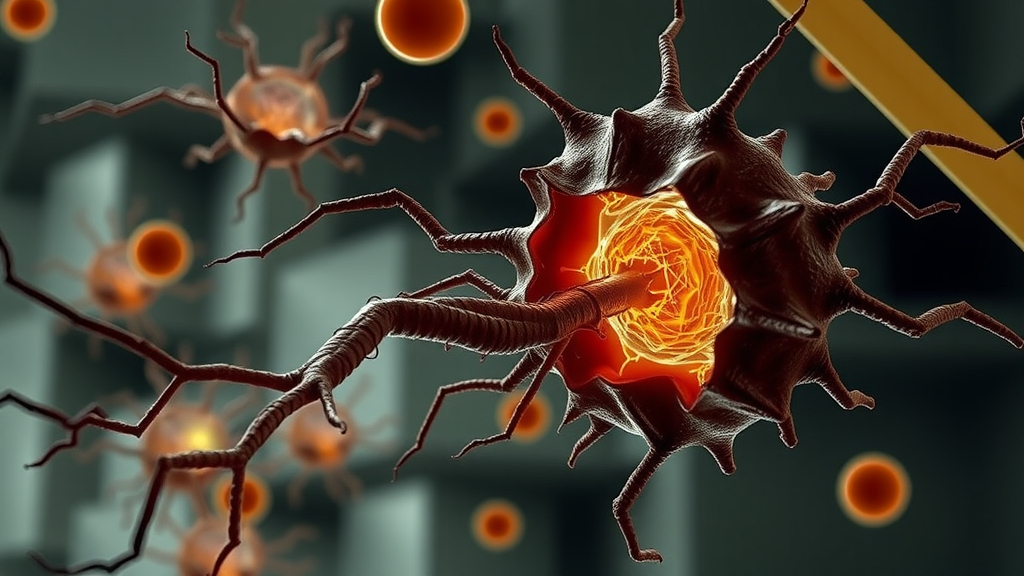
Image Credits: AI Generated
DOI: 10.1007/s00018-026-06423-7
Keywords: autophagy, ATG genes, macroautophagy, eukaryogenesis, last eukaryotic common ancestor, prokaryotic homologs, gene duplication, genome evolution, phylogenetics, autophagosomes, cellular degradation, evolution
Cite Scienmag News
Juliet Wilcox. (September 22, 2026). Ancient Origins of Autophagy Traced from Bacteria to Complex Eukaryotic Cells. Scienmag. https://scienmag.com/ancient-origins-of-autophagy-traced-from-bacteria-to-complex-eukaryotic-cells/
Juliet Wilcox. "Ancient Origins of Autophagy Traced from Bacteria to Complex Eukaryotic Cells." Scienmag, 22 September 2026, https://scienmag.com/ancient-origins-of-autophagy-traced-from-bacteria-to-complex-eukaryotic-cells/. Accessed 22 September 2026.
Juliet Wilcox. "Ancient Origins of Autophagy Traced from Bacteria to Complex Eukaryotic Cells." Scienmag. September 22, 2026. https://scienmag.com/ancient-origins-of-autophagy-traced-from-bacteria-to-complex-eukaryotic-cells/