


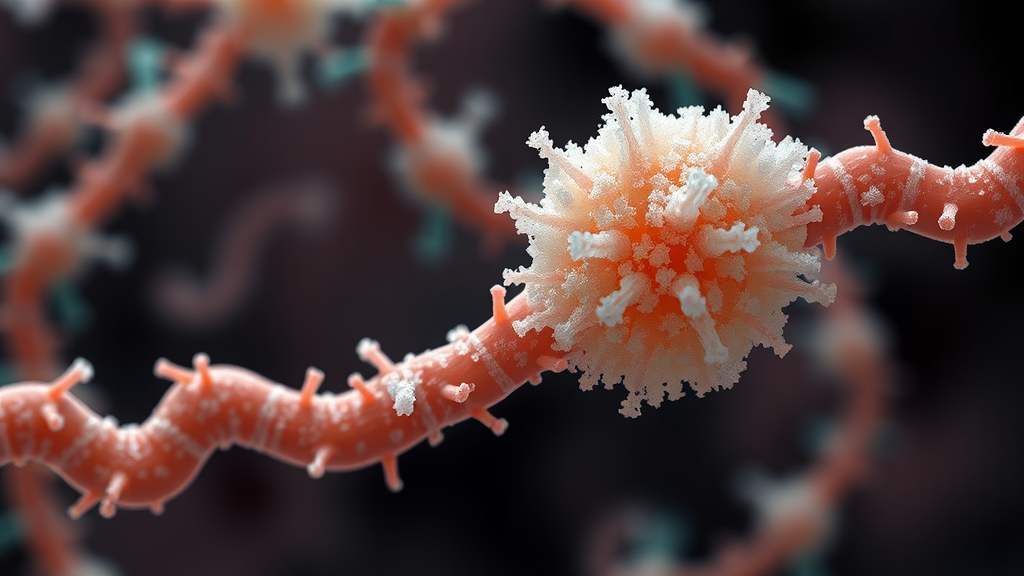
Cancer vaccines have long promised a way to teach the immune system to hunt down tumors, yet in clinical practice they have consistently underdelivered. The central problem is that most vaccine platforms fail to generate a sufficiently potent army of CD8-positive T cells, the cytotoxic soldiers responsible for destroying malignant cells. Now, a research team writing in Materials Today Bio reports a strikingly elegant solution drawn from an unexpected source: the sugar molecules, or exopolysaccharides, that lactic acid bacteria naturally produce. By screening twenty bacterial exopolysaccharides, the researchers identified one, named EPS233 and isolated from Lacticaseibacillus paracasei, that can simultaneously ferry a tumor antigen and a powerful immune-stimulating drug into the body’s immune command centers, acting as both a delivery vehicle and an immune adjuvant in a single, self-assembling nanoparticle.
The appeal of this approach lies in its minimalism. Conventional nanovaccine platforms built from liposomes or PLGA polymers typically require additional targeting modifications, and even then they often lack intrinsic ability to awaken the innate immune system. The microbiota-derived exopolysaccharide sidesteps these problems entirely. Because it is amphiphilic, meaning it carries both water-loving and water-fearing regions, EPS233 spontaneously folds into spherical nanoparticles roughly 27 nanometers in diameter when dispersed in water. That size falls squarely within the range that drains efficiently into lymph nodes, the anatomical hubs where immune responses are orchestrated. Structural analysis revealed a mean molecular mass of about 77.6 kilodaltons and a backbone rich in mannose residues, a feature that would later prove central to its immunological activity.
To build the actual vaccine, the team combined EPS233 with two payloads: ovalbumin as a model tumor antigen and resiquimod, known as R848, a small-molecule agonist of the TLR7/8 innate immune receptors. Molecular docking simulations predicted spontaneous binding between the sugar and R848, with hydrogen bonds of 3.0 to 3.3 angstroms stabilizing the interaction, and hundred-nanosecond molecular dynamics simulations showed the three components coalescing into a stable nanocluster in water. The resulting formulation, EPS@R848/OVA, measured just over 37 nanometers in diameter and achieved encapsulation efficiencies of approximately 84 percent for both cargo types. Critically, release studies demonstrated pH-responsive behavior: at physiological pH the payloads stayed locked inside, but under the acidic conditions of cellular lysosomes more than half the antigen escaped within 24 hours, precisely where the vaccine needs to unload inside dendritic cells.
Safety concerns with R848 itself provided an early test of the platform’s value. Free R848 injected with antigen triggered a surge of circulating pro-inflammatory cytokines within six hours and temporary weight loss in mice, a warning sign of the systemic toxicity that has hampered TLR agonists in the clinic. The nanovaccine version produced no such storm, apparently because the sugar matrix retained the drug locally and released it gradually. In vitro tests confirmed negligible cytotoxicity toward dendritic cells and fibroblasts at therapeutic concentrations, and hemolysis assays showed the formulation was as gentle on red blood cells as saline.
Inside dendritic cells, the nanovaccine performed a coordinated ballet. Confocal microscopy tracked rapid internalization within four hours, followed by progressive escape from lysosomes between eight and twelve hours, a crucial step because antigens trapped in lysosomes are degraded rather than presented. Flow cytometry then showed markedly elevated surface expression of MHC-I molecules loaded with antigen fragments, along with the costimulatory molecules CD40, CD80, and CD86, and robust secretion of interferon-beta, IL-6, TNF-alpha, and IL-12p70. Western blotting revealed the underlying mechanism: the exopolysaccharide engages the C-type lectin receptor Dectin-2, activating the Syk-CARD9 signaling axis, while R848 simultaneously ignites the TLR7-MyD88-IRF7 pathway. These two routes converge synergistically to drive type I interferon production, which amplifies antigen cross-presentation to CD8-positive T cells. Transcriptomic profiling confirmed upregulation of Irf8 and Batf3, transcription factors that drive the differentiation of the cross-presenting dendritic cell subset essential for antitumor immunity.
In vivo imaging showed the nanovaccine lingering at the injection site for over 120 hours and arriving in draining lymph nodes within six hours, where it was preferentially swallowed by dendritic cells, macrophages, and B cells. Most strikingly, it was avidly taken up by the rare CD103-positive CD11b-negative conventional dendritic cell subset, the population best equipped to prime cytotoxic T lymphocytes. A simple mixture of the same three components failed to replicate any of this, underscoring that co-assembly into a single nanoparticle, not the ingredients alone, drives the effect. Adoptive transfer experiments using transgenic OT-I mice confirmed that vaccinated animals mounted far larger populations of effector and multifunctional CD8-positive T cells secreting both interferon-gamma and TNF-alpha, alongside robust Th1-oriented CD4 responses, germinal center B cell expansion, and strong antigen-specific IgG and IgG2b antibody titers.
When put to the test against melanoma, the nanovaccine delivered on its immunological promise. In prophylactic models, vaccinated mice challenged with B16F10-OVA melanoma cells showed the slowest tumor growth and roughly 52 percent lower tumor weight than mice receiving the individual components. In therapeutic settings with established tumors, the nanovaccine cut mean tumor volume by roughly half compared with single-adjuvant controls, while analyses of the tumor microenvironment revealed a fundamental remodeling: more activated CD8 and CD4 T cells producing interferon-gamma, TNF-alpha, and granzyme B, and fewer immunosuppressive regulatory T cells and myeloid-derived suppressor cells. The platform also proved versatile, working with a peptide antigen, GP33, to sharply reduce lung metastatic nodules in a metastatic melanoma model, suggesting applicability beyond any single tumor type.
The most clinically consequential result emerged from combining the nanovaccine with anti-PD-1 checkpoint blockade. Checkpoint inhibitors revolutionized oncology, but most patients with so-called cold tumors do not respond. In orthotopic B16F10-GP33 melanoma, the combination of EPS@R848/GP33 with anti-PD-1 antibody achieved near-complete tumor elimination, a 98.1 percent reduction in tumor weight, and extended median survival to 41 days versus 32 days with antibody alone. In the lung metastasis model, the combination inhibited tumor burden by 88.1 percent and prolonged survival to 33 days versus 25 days. The vaccine appears to convert immunologically quiet tumors into inflamed ones, providing the activated T cell infiltrate that PD-1 blockade needs to work, while simultaneously reducing T cell exhaustion markers and building systemic memory T cell populations that could guard against recurrence.
Throughout the study, safety data were reassuring. Repeated dosing produced no histopathological abnormalities in heart, liver, spleen, lung, or kidney, serum biochemistry remained normal, and long-term follow-up four weeks after the final immunization showed intact organ architecture. The authors acknowledge that the work so far rests on surrogate antigens in melanoma models, and that testing with true tumor-associated antigens and personalized neoantigens will be the decisive next step. Even so, the study establishes a compelling proof of concept: a sugar made by a probiotic bacterium, requiring no chemical conjugation, no synthetic polymer, and no external targeting ligand, can serve as a complete, self-adjuvanting vaccine platform. As cancer vaccines move toward individually tailored neoantigens, a simple, scalable carrier that integrates delivery and innate activation in one molecule could become a foundational tool for the next generation of immunotherapy.
Subject of Research: A microbiota-derived exopolysaccharide nanovaccine that co-delivers tumor antigen and a TLR7 agonist to boost antitumor immunity
Article Title: Microbiota-derived self-adjuvanting exopolysaccharide-based codelivery system for potent cancer immunotherapy
Article References: Microbiota-derived self-adjuvanting exopolysaccharide-based codelivery system for potent cancer immunotherapy. (n.d.). https://doi.org/10.1016/j.mtbio.2026.103677
Image Credits: AI Generated
DOI: 10.1016/j.mtbio.2026.103677
Keywords: cancer immunotherapy, nanovaccine, exopolysaccharide, microbiota, dendritic cells, TLR7 agonist, R848, anti-PD-1, melanoma, CD8 T cells, lymph node targeting, drug delivery
Cite Scienmag News
Nathaniel Bowman. (September 21, 2026). Gut Bacteria Sugar Turns Itself Into a Cancer Vaccine Supercharger. Scienmag. https://scienmag.com/gut-bacteria-sugar-turns-itself-into-a-cancer-vaccine-supercharger/
Nathaniel Bowman. "Gut Bacteria Sugar Turns Itself Into a Cancer Vaccine Supercharger." Scienmag, 21 September 2026, https://scienmag.com/gut-bacteria-sugar-turns-itself-into-a-cancer-vaccine-supercharger/. Accessed 21 September 2026.
Nathaniel Bowman. "Gut Bacteria Sugar Turns Itself Into a Cancer Vaccine Supercharger." Scienmag. September 21, 2026. https://scienmag.com/gut-bacteria-sugar-turns-itself-into-a-cancer-vaccine-supercharger/


