


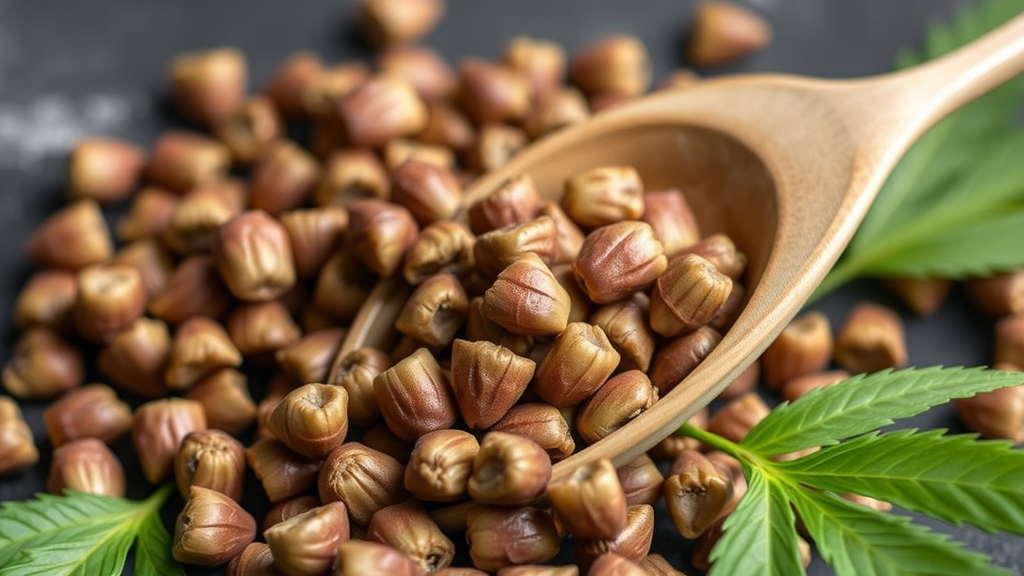
Soil salinity is one of the most stubborn enemies of agriculture, quietly strangling seedlings before they ever get a fair start in life. When salts accumulate in the soil solution, they raise the osmotic pressure around germinating seeds, making it harder for water to flow into embryonic tissues, while sodium ions elbow aside potassium and calcium at uptake sites and disrupt nutrient absorption. For a plant valued as much for its ecological services as for its pharmaceutical chemistry, this is a problem worth solving. A new study published in Discover Plants reports that a simple, inexpensive molecule—salicylic acid, better known to many as the plant hormone behind fever-bark aspirin lore—can substantially rescue seed germination in Chinese hemp (Apocynum venetum) even under punishing salt stress, and that the dose makes all the difference.
The research team, led by John K. Ahiakpa and Haiqiang Dong with colleagues at Yulin University and partner institutions in China, set out to fill a conspicuous knowledge gap. Although salicylic acid (SA) has been shown to blunt salt damage in a wide range of species, from zinnia and cauliflower to patchouli and cucumber, its concentration-dependent effects on A. venetum had not been systematically tested. This is no trivial gap. Chinese hemp is a salt-tolerant pioneer species whose widespread cultivation can actively improve saline soils, and it carries considerable ecological and medicinal importance. Understanding how to coax its seeds through the most vulnerable phase of its life cycle could help bring degraded, saline-alkali land back into productive use.
The experimental design was rigorous and deliberately harsh. Seeds of the cultivated cultivar Zhengjun, supplied by Ningxia Ningmiao Ecological Construction Group and stored under refrigeration, were surface-sterilized and placed in Petri dishes, fifty seeds per dish, with three replicates per treatment. A preliminary dose-response assay exposed seeds to sodium chloride concentrations ranging from 0 to 600 millimolar; germination fell steeply above 100 mM and dropped to roughly a quarter of the unstressed control at 300 mM. The team therefore adopted 300 mM NaCl—a stress approaching the salinity of seawater and far more severe than most agricultural soils—as a stringent screening condition that would clearly discriminate among treatments without killing germination outright. Fourteen treatment combinations were tested, pairing distilled water or salt with salicylic acid at concentrations from 0.1 to 0.75 millimolar, and dishes were incubated at 25 degrees Celsius under a 16-hour light, 8-hour dark photoperiod for ten days.
The results were striking. Under salt stress alone, germination collapsed: the germination count fell to 14.3 percent of treated seeds, radicles barely extended to 0.73 centimeters, and plumules reached only 0.35 centimeters. Many radicles emerged but then failed to elongate, producing seedlings that were effectively non-viable. But when 0.3 millimolar salicylic acid was added alongside the salt, the picture changed dramatically. Germination count nearly doubled to 27.7 percent, radicle length climbed to 1.27 centimeters, and plumule length more than doubled to 0.89 centimeters. Seedlings at this dose displayed the healthiest morphology among all salt-stressed groups, with vigorous shoots and elongating roots. Just as importantly, applying SA to unstressed seeds had no significant effect on any germination parameter, confirming that the hormone’s benefits are specifically deployed under stress rather than acting as a general growth stimulant.
What happens above the optimal dose is a cautionary tale in plant physiology. As SA concentrations rose past 0.3 millimolar, the benefits steadily eroded. At 0.75 millimolar, the alleviation of salt stress was no longer statistically distinguishable from the lower-dose treatments in a meaningful way, and some parameters declined toward salt-only levels. This biphasic pattern—helpful at moderate doses, useless or harmful at high ones—mirrors findings across the plant kingdom, where optimal SA concentrations vary by species: roughly 1.0 millimolar for wheat, 0.5 for sorghum, and 2.0 for Dracocephalum moldavica. The lesson is that salicylic acid is not a fertilizer to be piled on but a signaling molecule whose regulatory effects demand empirical calibration for each crop and each stress.
The biochemical story behind the rescue is where the study gets technically rich. Salt stress typically floods plant cells with reactive oxygen species, which attack membranes and trigger lipid peroxidation, measurable as elevated malondialdehyde (MDA). In the salt-only treatment, MDA soared to 66.61 nanomoles per gram, a clear signature of oxidative membrane damage. Salicylic acid at 0.3 millimolar turned the antioxidant machinery up to its highest observed setting: superoxide dismutase activity reached 117.2 units per gram, peroxidase 118.46, and catalase 202.89, with SOD and POD running approximately 20 and 62 percent higher, respectively, than under salt alone. Meanwhile MDA dropped by 19.4 percent to 53.7 nanomoles per gram, indicating substantially preserved membrane integrity. Beyond the optimum, enzyme activities declined again and MDA crept back up, approaching salt-only levels at the highest dose.
Osmotic adjustment provided the second pillar of protection. Salt-stressed seeds treated with 0.3 millimolar SA accumulated soluble sugars at 32.84 milligrams per gram and soluble proteins at 34.77 milligrams per gram—95 and 63 percent higher, respectively, than salt-only seeds. These compatible solutes act as cellular antifreeze of sorts, maintaining turgor pressure and protecting macromolecules so that water can still be drawn from a salty soil solution. Chlorophyll content, which had crashed from 1.45 to 0.77 milligrams per gram under salt stress, was restored to as much as 1.42 milligrams per gram with SA treatment, preserving the photosynthetic apparatus that seedlings will need the moment their cotyledons open to the light. The authors suggest these effects likely flow through SA-induced expression of genes governing osmolyte biosynthesis and chlorophyll metabolism, consistent with transcriptomic work in other species showing SA-driven upregulation of stress-responsive transcription factors.
The multivariate analyses knitted these threads together elegantly. Pearson correlations showed that germination count, radicle length, plumule length, and chlorophyll content rose and fell together (correlation coefficients above 0.77), while all four were strongly and negatively correlated with antioxidant enzyme activities and MDA, with coefficients between minus 0.60 and minus 0.98. Soluble sugar and protein tracked the antioxidant enzymes closely, suggesting osmolyte accumulation and oxidative stress responses are co-induced under salinity. Principal component analysis separated unstressed from salt-stressed samples along the first axis, which accounted for 72 percent of the variance and represented a stress-to-growth gradient, while the second axis, at 14 percent, reflected the modulating influence of SA concentration. A membership function analysis, which compresses multiple physiological indicators into a single score, crowned 0.3 millimolar SA as the best salt-stressed treatment with a value of 0.213, against 0.106 for salt alone and 0.992 for the unstressed control.
The practical implications extend well beyond one species. As the authors note, exogenous salicylic acid is a cost-effective and technically simple intervention that resource-limited farmers could readily adopt, and enhancing germination-phase salt tolerance in a halophytic pioneer like A. venetum could help establish vegetation on marginal saline-alkali soils where little else will grow. The team is candid about the caveats: the 300 millimolar stress imposed in the laboratory is far more severe than typical field salinity and was chosen as a screening tool, so the concentration-dependent responses must be validated under the moderate, fluctuating salt levels of real soils before firm agronomic recommendations follow. Still, the study delivers a clear proof of concept that a single, precisely dosed signaling molecule can simultaneously fortify antioxidant defenses, tune osmotic adjustment, and preserve photosynthetic pigments during the most fragile days of a plant’s life. The authors call for transcriptomic and proteomic follow-up to map the regulatory networks involved, work that could ultimately turn a humble aspirin precursor into a practical tool for reclaiming the world’s salt-damaged land.
Subject of Research: Exogenous salicylic acid application to enhance salt-stressed seed germination in Apocynum venetum
Article Title: Exogenous application of salicylic acid enhances seed germination in Apocynum venetum under salinity conditions
Article References: Ahiakpa, J. K., Pan, G., Wu, Z., Bai, L., Zheng, C., & Dong, H. (2026). Exogenous application of salicylic acid enhances seed germination in Apocynum venetum under salinity conditions. Discover Plants, 3(1), Article 413. https://doi.org/10.1007/s44372-026-00880-x
Image Credits: AI Generated
DOI: 10.1007/s44372-026-00880-x
Keywords: salicylic acid, Apocynum venetum, Chinese hemp, salt stress, seed germination, antioxidant enzymes, osmolytes, malondialdehyde, chlorophyll, salinity, plant physiology, osmotic adjustment
Cite Scienmag News
Alan Morgan. (September 20, 2026). Salicylic Acid Helps Chinese Hemp Seeds Germinate Under Salt Stress. Scienmag. https://scienmag.com/salicylic-acid-helps-chinese-hemp-seeds-germinate-under-salt-stress/
Alan Morgan. "Salicylic Acid Helps Chinese Hemp Seeds Germinate Under Salt Stress." Scienmag, 20 September 2026, https://scienmag.com/salicylic-acid-helps-chinese-hemp-seeds-germinate-under-salt-stress/. Accessed 20 September 2026.
Alan Morgan. "Salicylic Acid Helps Chinese Hemp Seeds Germinate Under Salt Stress." Scienmag. September 20, 2026. https://scienmag.com/salicylic-acid-helps-chinese-hemp-seeds-germinate-under-salt-stress/


