


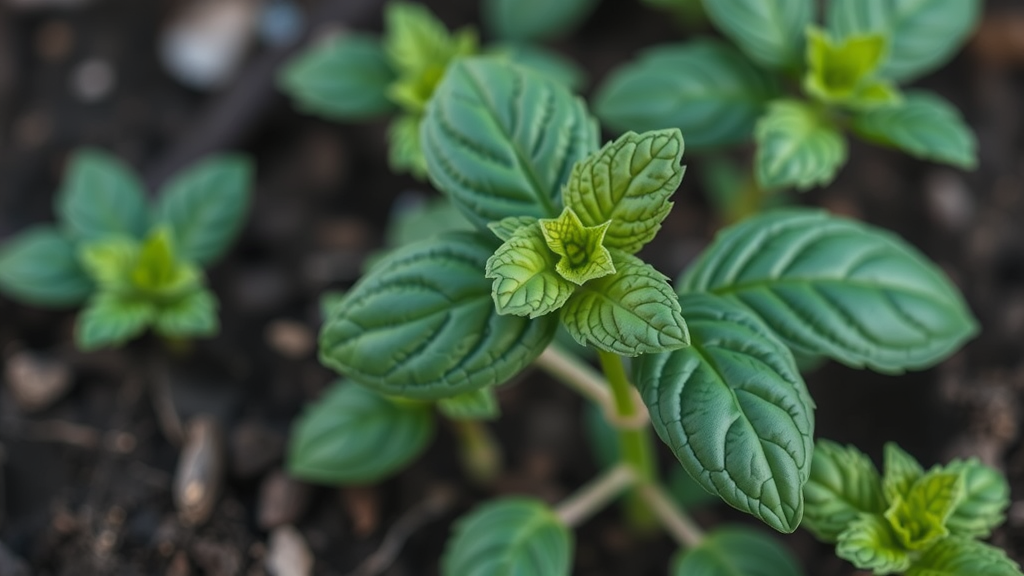
Drought is one of the most punishing stresses a plant can face, and few crops feel that pressure more acutely than basil, a medicinal and aromatic herb whose essential oils, pigments, and delicate foliage depend on a steady water supply. As climate volatility intensifies across the Mediterranean and other basil-growing regions, researchers are searching for low-cost, environmentally responsible tools that can help crops hold their ground when water becomes scarce. A new study published in BMC Plant Biology offers a striking candidate: nanoparticles of zinc oxide and iron oxide, synthesized not with industrial chemicals but with a simple sage leaf extract, and sprayed directly onto basil leaves at agronomically realistic concentrations.
The research, led by Ibrahim Selvikaya and Abdurrahim Yilmaz at Bolu Abant Izzet Baysal University in Türkiye, together with colleagues at Atatürk University, Kocaeli University, Igdir University, and Recep Tayyip Erdogan University, set out to test whether foliar nano-micronutrition could fortify basil (Ocimum basilicum L.) against water deficit. The team chose a greenhouse factorial design that crossed two irrigation regimes—full watering at 100 percent field capacity and severe deficit at 50 percent field capacity—with four foliar treatments: an untreated control, zinc oxide nanoparticles at 100 milligrams per liter, iron oxide nanoparticles at 100 milligrams per liter, and a combined zinc-plus-iron spray delivering 50 plus 50 milligrams per liter. These doses were deliberately selected to reflect concentrations that could plausibly be applied in the field rather than the exaggerated levels sometimes used in laboratory proofs of concept.
A defining feature of the work is the green synthesis route. Instead of relying on synthetic reducing and stabilizing agents, the researchers used an aqueous extract of common sage (Salvia officinalis) to convert metal salt precursors into zinc oxide and iron oxide nanoparticles. Plant extracts are rich in polyphenols, flavonoids, and other biomolecules that can both reduce metal ions and cap the growing particles, making the process cleaner, cheaper, and more compatible with sustainable agriculture. The resulting nanoparticles were characterized using scanning electron microscopy paired with energy dispersive X-ray spectroscopy, which confirmed particle morphology and elemental composition, ensuring that what reached the basil leaves were genuine nano-scale zinc and iron oxide materials rather than aggregated bulk powders.
The growth results were unambiguous. Under the 50 percent field capacity regime, untreated basil plants suffered the expected stunting and tissue loss, but nanoparticle supplementation substantially mitigated the damage. Compared with drought-stressed controls, nanoparticle-treated plants grew up to 26.7 percent taller, produced 30.6 percent more leaves, and accumulated 22.6 percent more biomass. Those are not marginal effects; they represent a meaningful recovery of canopy and yield potential in plants enduring nearly half their normal water allocation. For a high-value herb marketed on leaf quality and aromatic intensity, preserving leaf number and biomass under deficit irrigation has direct agronomic and economic significance.
Beneath the visible growth rescue lies a detailed biochemical story about reactive oxygen species. When stomata close to conserve water, photosynthetic electron transport becomes unbalanced and chloroplasts, mitochondria, and peroxisomes leak electrons onto oxygen, generating superoxide radicals and hydrogen peroxide. Left unchecked, these molecules attack membranes and produce malondialdehyde, a canonical marker of lipid peroxidation. In the nanoparticle-treated drought plants, the oxidative burden dropped dramatically: malondialdehyde and hydrogen peroxide levels each fell by nearly 50 percent relative to untreated drought controls, evidence that the sprays had re-equilibrated the plant’s redox state rather than merely masking stress symptoms.
The mechanism behind that protection differed between the two metals, and this is where the study makes its most interesting contribution. Zinc primarily strengthened the non-enzymatic antioxidant arm of the defense system. Zn-treated plants showed a 135 percent increase in cupric reducing antioxidant capacity, a 48 percent increase in ferric reducing antioxidant power, and a 17 percent increase in DPPH radical-scavenging activity compared with drought controls. These assays collectively indicate an expanded pool of small-molecule antioxidants—phenolics, flavonoids, and related compounds—that can chemically neutralize radicals before they damage cells. Consistent with that, the combined zinc-plus-iron treatment lifted total phenolic content by 53 percent and flavonoid content by 48 percent, effectively arming basil with a denser chemical shield.
Iron, by contrast, emerged as the enzyme specialist. Fe-treated plants recorded a 27 percent increase in superoxide dismutase activity, the front-line enzyme that dismutates superoxide radicals into hydrogen peroxide. Meanwhile, the combined treatment produced the most dramatic enzymatic activation of all: catalase activity surged by 204 percent and ascorbate peroxidase by 86 percent relative to drought controls. Catalase and ascorbate peroxidase are precisely the enzymes responsible for detoxifying the hydrogen peroxide that superoxide dismutase generates, so the combined spray appears to have coordinated a complete detoxification pipeline—converting dangerous radicals into hydrogen peroxide and then efficiently splitting that peroxide into water and oxygen. The two nutrients thus act on complementary arms of the antioxidant system rather than redundantly.
Statistical analysis reinforced this interpretation. Correlation analysis revealed strong positive associations among antioxidant capacity, photosynthetic pigment levels, and growth traits, suggesting that plants with the most robust redox buffering also preserved their chlorophyll and built the most biomass. Principal component analysis separated the treatment groups in multivariate space, with zinc-plus-iron-treated plants clustering distinctly within an antioxidant-rich, high-biomass region. That clustering pattern is the statistical fingerprint of coordinated redox regulation: rather than a scattered collection of independent biochemical changes, the nanoparticle treatments triggered an integrated physiological program linking pigment stability, antioxidant mobilization, and growth maintenance.
The practical implications extend beyond basil. Zinc and iron are essential plant micronutrients whose deficiency is widespread in agricultural soils worldwide, and foliar delivery of them as nanoparticles offers dual benefits: correcting micronutrient nutrition and priming stress defenses in a single intervention. The green synthesis route adds another layer of appeal, since sage extract is inexpensive, non-toxic, and readily available, and the process avoids the hazardous solvents associated with conventional nanomaterial manufacture. The concentrations tested—100 milligrams per liter for single-metal sprays and a 50 plus 50 split for the combination—are within ranges already considered field-applicable, which lowers the barrier to eventual on-farm trials.
Caveats remain, as the authors themselves frame the work as greenhouse-scale evidence rather than a finished field prescription. Open questions include how nanoparticle sprays behave under open-field UV and rainfall, how repeated applications affect soil microbial communities, whether nanoparticles accumulate in the harvested leaves and at what levels, and how the treatment interacts with the essential oil profile that gives basil its market value. Nonetheless, the study provides rigorous physiological and biochemical evidence that nanoparticle-mediated modulation of stress responses is real, measurable, and mechanistically coherent. As droughts deepen and water for irrigation grows scarcer, the idea that a few milligrams of sage-made zinc and iron, misted onto leaves, can cut a plant’s oxidative damage in half while boosting its antioxidant machinery by double digits is precisely the kind of elegant, testable solution that modern stress physiology has been looking for—and it suggests that the future of drought resilience may be not only in the genome, but in a spray bottle.
Subject of Research: Green-synthesized zinc and iron oxide nanoparticles enhancing drought tolerance in basil through antioxidant regulation
Article Title: Green-synthesized zinc and iron nanoparticles enhance basil drought tolerance via antioxidant regulation
Article References: Selvikaya, I., Karataş, R., Karakuş, M., Yilmaz, H., Demirel, F., Güler, E., Tutar, Y., & Yilmaz, A. (2026). Green-synthesized zinc and iron nanoparticles enhance basil drought tolerance via antioxidant regulation. BMC Plant Biology. https://doi.org/10.1186/s12870-026-09935-3
Image Credits: AI Generated
DOI: 10.1186/s12870-026-09935-3
Keywords: basil, drought stress, green synthesis, zinc oxide nanoparticles, iron oxide nanoparticles, antioxidant defense, catalase, superoxide dismutase, foliar application, Ocimum basilicum, redox regulation, stress physiology
Cite Scienmag News
Alan Morgan. (September 13, 2026). Sage-Made Zinc and Iron Nanoparticles Help Basil Survive Drought. Scienmag. https://scienmag.com/sage-made-zinc-and-iron-nanoparticles-help-basil-survive-drought/
Alan Morgan. "Sage-Made Zinc and Iron Nanoparticles Help Basil Survive Drought." Scienmag, 13 September 2026, https://scienmag.com/sage-made-zinc-and-iron-nanoparticles-help-basil-survive-drought/. Accessed 13 September 2026.
Alan Morgan. "Sage-Made Zinc and Iron Nanoparticles Help Basil Survive Drought." Scienmag. September 13, 2026. https://scienmag.com/sage-made-zinc-and-iron-nanoparticles-help-basil-survive-drought/


