


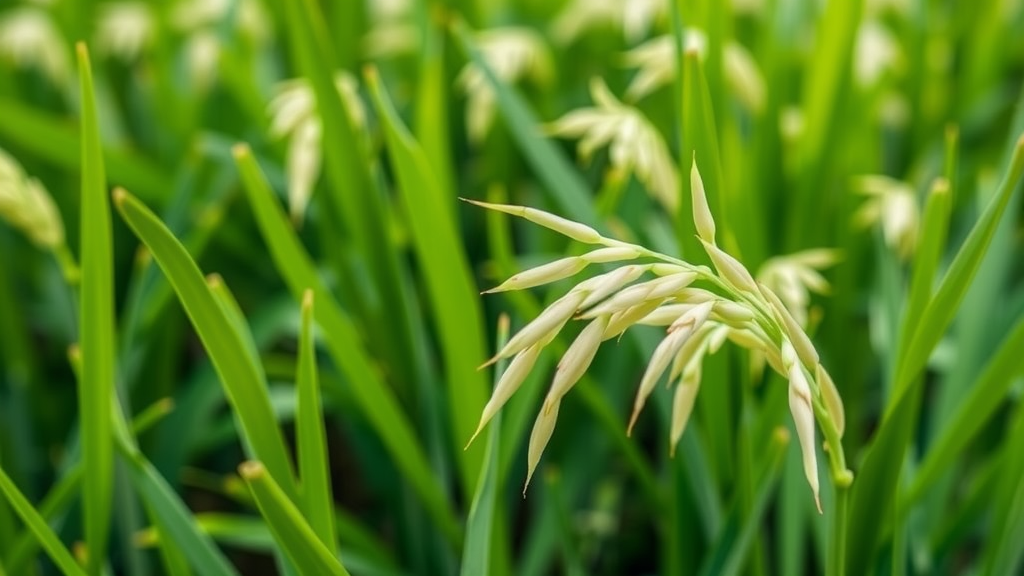
A new high-yielding, aromatic rice hybrid developed by scientists at the ICAR–Indian Agricultural Research Institute (ICAR-IARI) in New Delhi has been formally identified for release in the eastern Indian states of Bihar and Uttar Pradesh, offering farmers in the Indo-Gangetic plains a rare combination of early maturity, premium grain quality and substantially higher productivity. The variety, named Pusa Rice Hybrid 60 and tested in trials under the designation IET 28965, was developed at the institute’s Division of Genetics and represents a significant advance in India’s two-line hybrid rice breeding programme. Its formal notification in 2025, following identification for release in 2024, marks the culmination of a multi-year evaluation effort spanning three growing seasons across two of the country’s most important rice-producing states.
What sets Pusa Rice Hybrid 60 apart from the majority of commercial rice hybrids is its genetic architecture. The hybrid was created by crossing Pusa 1S, a thermo-sensitive genic male sterile line, with PRR 418, an aromatic rice genotype. Thermo-sensitive genic male sterility, commonly abbreviated as TGMS, is a genetic system in which the male parent becomes sterile under certain temperature conditions, allowing breeders to produce hybrid seed without the need for a separate maintainer line. This is the defining feature of two-line hybrid rice technology, which simplifies seed production considerably compared with the conventional three-line system that relies on a sterile line, a maintainer line and a restorer line. By eliminating one parent from the seed multiplication chain, the two-line approach reduces the cost and complexity of producing hybrid seed, a factor that can translate directly into more affordable seed for farmers and faster commercial scaling for seed producers.
The agronomic credentials of the new hybrid are substantial. Across three years of evaluation in Bihar and Uttar Pradesh, Pusa Rice Hybrid 60 recorded an average grain yield of 59.24 quintals per hectare, a figure that places it among the more productive short-duration options available to farmers in the region. In comparative trials conducted under the All India Coordinated Research Project on Rice, the hybrid outperformed the national hybrid check US 314 by 11.6 percent, demonstrating that its advantage extends beyond comparison with inbred varieties and holds up against established commercial hybrids. Against the national varietal check CO 51, a widely grown cultivar, the hybrid delivered a 25.3 percent yield advantage. Most strikingly, it showed a 40.8 percent superiority over the zonal check in the coordinated trials, underscoring the magnitude of the genetic gain achieved by the ICAR-IARI breeding team.
Equally important for the eastern Indo-Gangetic plains is the hybrid’s maturity duration. Pusa Rice Hybrid 60 matures in approximately 120 days, placing it firmly in the short-duration category. This characteristic carries profound implications for cropping intensity, a critical consideration in a region where land holdings are small and farmers depend on squeezing multiple harvests from the same plot each year. A rice crop that matures early can be harvested in time for a timely sowing of the following wheat crop, preserving the integrity of the rice-wheat rotation that dominates agriculture across Bihar and Uttar Pradesh. Early maturity also reduces the crop’s exposure to late-season pests and terminal heat stress, and it can lower irrigation requirements by shortening the period over which the crop must be maintained in the field.
Yield alone rarely determines the commercial success of a rice variety in India, where grain quality commands a decisive premium in the market. Here too, the new hybrid performs impressively. Pusa Rice Hybrid 60 produces long-slender grains, a grain type strongly preferred by consumers in much of northern and eastern India, and it combines this with aromatic quality inherited from the PRR 418 parent. The hybrid achieved a milling recovery of 69.8 percent and a head rice recovery of 61.6 percent, both indicators of a grain that withstands processing without excessive breakage. Head rice recovery in particular is a measure of the proportion of intact kernels remaining after milling, and higher values translate into better prices for millers and, ultimately, for farmers. The hybrid also possesses intermediate amylose content, a starch characteristic associated with grains that cook to a tender, non-sticky texture, and the breeders report excellent overall cooking and eating quality.
Disease and pest reactions are a further dimension of the hybrid’s evaluation profile. In testing, Pusa Rice Hybrid 60 exhibited reactions to major insect pests that were comparable to those of standard checks, meaning that it does not carry unusual susceptibility that would require farmers to depart from established pest management practices. While the hybrid is not described as carrying specific resistance genes, parity with existing checks ensures that it can be integrated into current crop protection routines without added risk, an important practical consideration for the smallholder farmers who dominate rice cultivation in the target states.
The development of the hybrid reflects a coordinated effort across multiple ICAR-IARI stations and partner institutions. M. Nagarajan, based at the Rice Breeding and Genetics Research Centre at Aduthurai, is the lead developer of the hybrid, working alongside co-developers including Gopala Krishnan Subbaiyan and A. K. Singh of the Division of Genetics in New Delhi. The team’s division of labour illustrates the technical depth behind a modern variety release: Nagarajan and Subbaiyan drove the development of the TGMS line, while K. K. Vinod participated in the evaluation of both the sterile lines and the resulting hybrids. Data analysis was handled by Vinod, P. K. Bhowmick, Haritha Bollinedi and Ranjith K. Ellur, Rajeev Rathour of CSHPKVV Palampur contributed to the characterization and multiplication of the TGMS line, and Rakesh Seth at the institute’s Karnal regional station carried out the distinctness, uniformity and stability characterization required for formal registration. The work was published in the Indian Journal of Genetics and Plant Breeding as part of a report on varietal notification and germplasm registration.
The significance of the release extends beyond the performance figures themselves. India’s hybrid rice programme has historically been dominated by three-line systems, and the adoption of two-line technology has been slower than in China, where two-line hybrids occupy a large share of the hybrid rice area. Each successful Indian two-line hybrid strengthens the case for the approach, demonstrating that TGMS-based systems can deliver competitive yields and superior grain quality under Indian conditions. The registration of the Pusa 1S TGMS line and its deployment in a notified commercial hybrid also adds to the publicly available germplasm base, giving other breeding programmes access to proven genetic material for their own hybrid development pipelines. In a period when rice research worldwide is grappling with the twin pressures of shrinking land and water resources and rising demand, hybrids that combine early maturity with quality traits are increasingly viewed as a strategic asset.
For farmers in Bihar and Uttar Pradesh, the practical arithmetic is straightforward. A hybrid that yields roughly a quarter more grain than the leading varietal check, matures early enough to protect the following wheat crop, produces aromatic long-slender grain that fetches premium prices, and can be propagated through a simplified two-line seed system addresses nearly every major constraint in the region’s rice economy. The combination of high productivity, profitability and the potential for increased cropping intensity is precisely the package that agricultural planners have sought for the eastern Indo-Gangetic plains, a region that lags the northwestern states in productivity but holds vast untapped potential. As seed production of Pusa Rice Hybrid 60 scales up following its notification, the hybrid is positioned to become a promising cultivar for millions of rice farmers, and a showcase for what advanced two-line hybrid breeding can achieve in one of the world’s most important rice-growing regions.
Subject of Research: Development and evaluation of the two-line aromatic rice hybrid Pusa Rice Hybrid 60 for release in eastern India
Article Title: Pusa Rice Hybrid 60
Article References: Nagarajan, M., Subbaiyan, G. K., Vinod, K. K., Bhowmick, P. K., Bollinedi, H., Ellur, R. K., Seth, R., Rathour, R., & Singh, A. K. (2026). Pusa Rice Hybrid 60. Indian Journal of Genetics and Plant Breeding, 86(3), 381-382. https://doi.org/10.1007/s44489-026-00035-y
Image Credits: AI Generated
DOI: 10.1007/s44489-026-00035-y
Keywords: Pusa Rice Hybrid 60, hybrid rice, TGMS, two-line hybrid technology, ICAR-IARI, rice breeding, aromatic rice, grain yield, Bihar, Uttar Pradesh, short-duration rice, Indo-Gangetic plains
Cite Scienmag News
Alan Morgan. (September 12, 2026). New Aromatic Hybrid Rice Pusa 60 Delivers Big Yields in Just 120 Days. Scienmag. https://scienmag.com/new-aromatic-hybrid-rice-pusa-60-delivers-big-yields-in-just-120-days/
Alan Morgan. "New Aromatic Hybrid Rice Pusa 60 Delivers Big Yields in Just 120 Days." Scienmag, 12 September 2026, https://scienmag.com/new-aromatic-hybrid-rice-pusa-60-delivers-big-yields-in-just-120-days/. Accessed 12 September 2026.
Alan Morgan. "New Aromatic Hybrid Rice Pusa 60 Delivers Big Yields in Just 120 Days." Scienmag. September 12, 2026. https://scienmag.com/new-aromatic-hybrid-rice-pusa-60-delivers-big-yields-in-just-120-days/


