


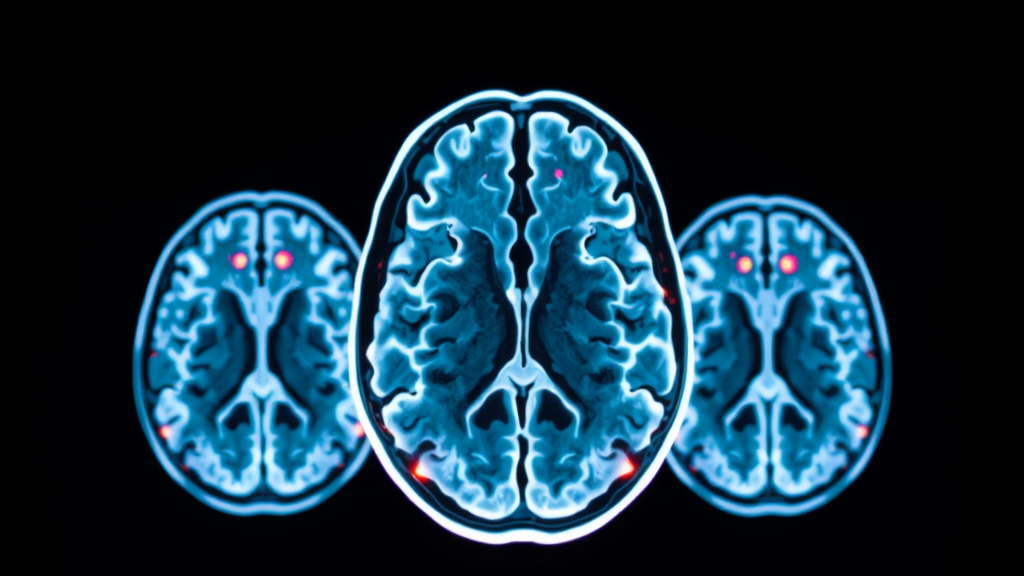
A team of researchers has unveiled a compact deep learning architecture that can classify two of the world’s most burdensome neurological conditions—Alzheimer’s disease and brain tumors—directly from magnetic resonance imaging scans, achieving accuracy of 96.8 percent on an Alzheimer’s dataset and 98.5 percent on a benchmark brain tumor collection. The study, published in the journal Cognitive Computation, describes a four-block residual attention network that is dramatically smaller than the heavyweight models that dominate medical image analysis, yet outperforms many of them. With only 115 layers and 6.3 million parameters packed into 22.17 megabytes, the model is a fraction of the size of giants such as DenseNet201, ResNet101, and NasNetLarge, which carry tens or even hundreds of millions of parameters and footprints measured in hundreds of megabytes. That efficiency matters, because the future of artificial intelligence in medicine depends less on raw accuracy alone and more on whether accurate models can actually run inside clinics, on ordinary hardware, and alongside time-pressed radiologists.
The clinical backdrop is sobering. Alzheimer’s disease accounts for roughly 60 to 70 percent of all dementia cases, and the World Health Organization estimates there were around 57 million people living with dementia globally in 2021, with nearly 10 million new cases diagnosed each year and projections suggesting 82 million cases by 2030. Brain tumors, meanwhile, remain a formidable oncological challenge: approximately 29,000 new cases are detected in the United States annually, with about 13,000 deaths, and brain and central nervous system cancers ranked as the nineteenth most common malignancy worldwide in the latest GLOBOCAN 2022 estimates. Despite these numbers, the diagnostic toolkit is limited. Confirming Alzheimer’s pathology typically requires either an expensive PET scan or an invasive lumbar puncture, while interpretation of MRI scans remains a manual, laborious, and error-prone process that stalls when radiologists are unavailable.
The new architecture, developed by Wardah Ibrar, Muhammad Attique Khan, Syeda Aimal Naqvi, Zain Hussain, Latifah Almuqren, Amina Hussain, Mohammad Alhefdi, and senior author Yunyoung Nam, is built on the idea that a network should not treat every pixel and every feature channel of an MRI equally. Instead, the model embeds two complementary attention mechanisms into each of its four residual blocks: a channel attention module, abbreviated CAMB, and a spatial attention module, abbreviated SAMB. Channel attention asks which feature channels—the abstract patterns the network has learned to detect—matter most for a given scan, while spatial attention asks where in the image the informative regions lie. Together they let the network dynamically amplify relevant signals and suppress noise, a critical capability when the distinguishing signatures of gliomas, meningiomas, pituitary tumors, and Alzheimer’s-related atrophy are subtle and frequently overlapping.
Technically, the channel attention module begins with global average pooling and global max pooling applied in parallel to the convolutional feature maps, feeding both into a shared multilayer perceptron with fully connected layers of 64 and then 32 filters, followed by a sigmoid activation that produces per-channel weights. The spatial module concatenates the average-pooled and max-pooled maps, passes them through a 7-by-7 convolution and a sigmoid, and returns a spatial importance map that is multiplied back onto the features. Each block follows a residual design—pairs of convolutional layers with ReLU activation and batch normalization, with depths stepping up from 32 to 64, then 128, 256, and finally 512—so that the attention-refined features are added back to the original inputs, easing gradient flow and improving generalization. A final 1024-depth convolution, a GELU activation, global average pooling, and a softmax classifier complete the pipeline, which is trained with categorical cross-entropy loss.
Notably, the team refused to guess its own hyperparameters. Learning rate, momentum, optimizer, epochs, and batch size were all selected through Bayesian optimization, a technique that treats training as a black-box function to be maximized using a Gaussian process surrogate and an expected improvement acquisition function. The search settled on an initial learning rate of 0.000206, a momentum of 0.710, thirty epochs, a batch size of 128, and the ADAM optimizer. Training and testing were performed in MATLAB 2025b on a workstation equipped with a 32-gigabyte graphics card and 128 gigabytes of RAM, using a 70:30 train-test split and ten-fold cross-validation on both datasets.
The evaluation relied on two widely used public collections. The Figshare brain tumor dataset contains 3,064 T1-contrast-enhanced MR images from 233 patients, covering three tumor types—1,426 glioma, 708 meningioma, and 930 pituitary images—acquired in coronal, axial, and sagittal planes at Nanfang Hospital in Guangzhou and Tianjin Medical University Hospital in China. The Alzheimer’s MRI dataset, drawn from Kaggle, comprises 6,400 images across four classes: non-demented, very mildly demented, mildly demented, and moderately demented. Because medical datasets of this kind are chronically imbalanced, the researchers applied augmentation only to training samples, rotating, flipping, zooming, cropping, and translating images to synthesize new views and rebalance the classes, before resizing everything to 227 by 227 pixels.
The results were decisive. On the Figshare dataset, the softmax classifier achieved 98.5 percent accuracy with 98.5 percent sensitivity, 98.36 percent precision, an area under the curve of 0.9954, and an F1 score of 98.43 percent; wide, narrow, bi-layered, and tri-layered neural network classifiers applied to extracted deep features followed closely, scoring between 97.2 and 98.4 percent. On the Alzheimer’s data, softmax again led with 96.8 percent accuracy, 96.77 percent precision, and an AUC of 0.9973. Ablation studies confirmed that four blocks were the optimal depth—models with two, three, or five blocks trained less efficiently—and that the attention modules are genuinely complementary: the baseline network without attention scored 94.21 percent on Figshare, rising to 95.95 percent with channel attention alone, 96.15 percent with spatial attention alone, and 98.53 percent with both, a gain of more than four percentage points over the baseline.
Head-to-head comparisons reinforced the point. GoogleNet managed only 83.0 and 88.9 percent on the Alzheimer’s and Figshare datasets respectively, ResNet101 scored 86.0 and 89.0 percent, DenseNet201 reached 89.9 and 91.6 percent, and NasNetLarge topped out at 92.0 and 93.0 percent—while carrying parameters and file sizes far exceeding the proposed network. Recent specialized competitors, including an attention-enhanced vision transformer at 94.2 percent, a hybrid network at 96.01 percent, and an inverted self-attention model at 96.1 percent, were also surpassed. Crucially for clinical trust, the team used Grad-CAM and Grad-CAM++ visualizations to show exactly which regions of each scan drove the model’s predictions, with the richer Grad-CAM++ maps offering clearer insight into disease-relevant anatomy.
The authors envision the system as a second-opinion tool embedded in real clinical workflows: a suspected patient’s MRI would be resized, normalized, and fed to the model, which would return a predicted class—glioma, meningioma, or pituitary tumor; or one of four dementia stages—together with a confidence score and attention-based visualizations. Agreement with the radiologist would strengthen diagnostic confidence, while disagreement would flag the case for expert review. Thanks to its small parameter count and 22.17 megabyte footprint, the network is lightweight enough for prototype integration into clinical decision-support systems on modest hardware. The team notes that future work will replace the attention blocks with state-space modules and validate the architecture on additional MRI datasets, but the current results already sketch a compelling vision: hospital-grade diagnostic AI that fits in a few dozen megabytes yet sees the brain with expert-level precision.
Subject of Research: Deep learning classification of Alzheimer's disease and brain tumors from MRI scans using a channel-spatial residual attention network
Article Title: A Novel Channel-Spatial Deep Residual Attention Network for the Classification of Neurodegenerative Diseases from MRI Scans
Article References: A Novel Channel-Spatial Deep Residual Attention Network for the Classification of Neurodegenerative Diseases from MRI Scans. (n.d.). https://doi.org/10.1007/s12559-026-10652-0
Image Credits: AI Generated
DOI: 10.1007/s12559-026-10652-0
Keywords: deep learning, Alzheimer's disease, brain tumor, MRI classification, attention mechanism, residual network, channel attention, spatial attention, Bayesian optimization, computer-aided diagnosis, Grad-CAM, medical imaging
Cite Scienmag News
Cassandra Pierce. (September 12, 2026). Lightweight AI Network Reads Brain Scans to Spot Alzheimer’s and Tumors With Striking Accuracy. Scienmag. https://scienmag.com/lightweight-ai-network-reads-brain-scans-to-spot-alzheimers-and-tumors-with-striking-accuracy/
Cassandra Pierce. "Lightweight AI Network Reads Brain Scans to Spot Alzheimer’s and Tumors With Striking Accuracy." Scienmag, 12 September 2026, https://scienmag.com/lightweight-ai-network-reads-brain-scans-to-spot-alzheimers-and-tumors-with-striking-accuracy/. Accessed 12 September 2026.
Cassandra Pierce. "Lightweight AI Network Reads Brain Scans to Spot Alzheimer’s and Tumors With Striking Accuracy." Scienmag. September 12, 2026. https://scienmag.com/lightweight-ai-network-reads-brain-scans-to-spot-alzheimers-and-tumors-with-striking-accuracy/


