


Misplacing your keys, glasses, wallet or phone is one of those small domestic frustrations that almost everyone knows intimately. But for millions of older adults, and especially for people living with dementia, losing track of everyday objects is far more than an annoyance. It can erode independence, trigger distress, burden family caregivers, and even serve as an early warning sign of cognitive decline. A new scoping review published in the Journal of Ambient Intelligence and Humanized Computing has now mapped, for the first time in a systematic way, the landscape of technologies designed to help people locate misplaced objects in their own homes — and the picture it paints is one of enormous promise undermined by glaring gaps in usability, privacy and real-world testing.
The review, led by Bing Ye of the University of Toronto’s Department of Occupational Science and Occupational Therapy, together with James McDonough, Cynthia Chui and Alex Mihailidis, and spanning institutions including the KITE Toronto Rehabilitation Institute, McMaster University and University Health Network, set out to answer a deceptively simple question: what technologies exist to help people find things they have lost at home, and how well do they actually work for the people who need them? An information specialist conducted a broad search across seven major databases — MEDLINE, Embase, Web of Science Core Collection, Compendex, Inspec, IEEE Xplore and the ACM Digital Library — ultimately including 23 records in the review.
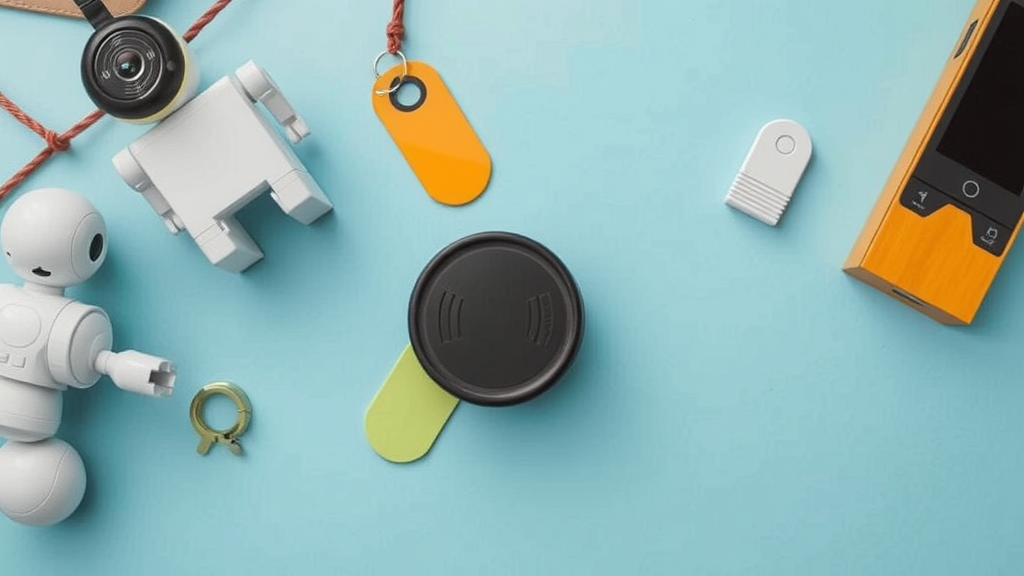
What the team found is that the field is dominated by one approach above all others: robot-assisted technology. Home robots equipped with cameras and computer vision systems can be asked, in natural language, to search a living space for a missing item, recognize it visually, and either retrieve it or guide the user to it. Some systems go further, building what researchers call episodic memory models — computational analogues of the way humans remember where they last saw an object. A companion robot that observes its user placing a phone on a kitchen counter, for example, can later answer the question “where is my phone?” by recalling that stored observation. Other robotic platforms combine semantic localization with conversational skills, allowing an older adult to simply ask for help and receive a spoken answer rather than interacting with a screen.
Beyond robots, the review catalogued a diverse ecosystem of tagging and sensing technologies. Bluetooth Low Energy tags attached to frequently misplaced items allow a robot or smartphone to home in on the object’s radio signal even when it is hidden from view inside a drawer or under a cushion. Radio-frequency identification and Zigbee-based systems offer similar functionality with passive or low-power tags. Acoustic approaches such as ChirpTracker use sound signals and a single smartphone to pinpoint the precise location of a tagged object, while HyperEar demonstrated that indoor remote object finding can be achieved with audio cues alone. Wearable camera systems like GO-Finder take a different tack entirely: instead of requiring users to tag their belongings, the device passively observes hand-held object interactions and builds a searchable visual history of where items were last seen.
The way these systems communicate their findings to users emerged as a crucial design dimension. The most common retrieval feedback modality was visual, but the most common combination paired visual and audio feedback — for instance, a robot that points to or photographs the found object while announcing its location verbally. Multimodal feedback matters because users vary widely in sensory ability, cognitive status and personal preference, and the review’s usability findings confirmed that people strongly prefer systems offering multiple feedback channels and personalization options. Performance accuracy also proved central: a retrieval system that fails to find the object, or worse, reports a wrong location, quickly loses the trust of its user.
Yet the review’s most striking conclusions concern what the technology has not yet achieved. Retrieval technology, the authors conclude, remains in its early phase of development, which signals rich research opportunities but also means most systems never leave the laboratory. Usability and privacy, the two factors most likely to determine whether real people adopt these devices, are simply not yet researchers’ priorities. The usability evidence that does exist points to the importance of training support — older adults need structured onboarding to gain confidence with new devices — and to the value of designs that accommodate prior experience and age-related changes in perception and cognition. The authors argue pointedly that usability education should begin early in university curricula, so that the next generation of engineers and designers internalizes the critical role of usability before they ever ship a product.
Privacy looms as an equally urgent concern. Many of the most capable retrieval systems rely on continuous camera monitoring of the home environment, raising obvious questions about surveillance, data storage and consent — particularly sensitive for people with dementia who may not be able to give informed permission. The review identified suggestions for privacy preservation drawn from the literature, including a focus on protecting algorithms rather than raw data, distributed approaches to artificial intelligence that keep processing on local edge devices, and careful attention to the documented privacy and security concerns that shape whether older adults accept Internet of Things technologies in their homes at all. User-centered design processes such as the co-conception approach used in the TROUVE project, which developed a tracking device for older adults with cognitive impairment alongside its intended users, offer one model for reconciling capability with acceptability.
The review also issues a clear methodological challenge to the field: longitudinal studies conducted in real homes. Most existing evaluations are short, laboratory-based demonstrations with small samples, which cannot reveal how systems perform over weeks and months in cluttered, dynamically changing domestic environments, nor how users’ skills, trust and frustration evolve over time. Moving emerging technologies beyond the lab and into the real world is described as essential. The authors further highlight the essential role of policymakers, arguing that collaboration between researchers and policymakers during technology design and development — not after products are finished — is needed to address equitable access to assistive technology, a concern echoed by global health organizations and by Canadian policy research on access to assistive devices.
The stakes of this research are grounded in a substantial clinical literature. Misplacing objects is documented as one of the earliest and most prevalent symptoms of Alzheimer’s disease, and studies of people with mild to moderate Alzheimer’s have characterized the symptom in detail through clinical trials and online tracking tools. Research on normal aging shows that memory for item-location associations declines with age even in healthy adults, and surveys of psychogeriatric nursing home residents and their caregivers confirm that losing items is a persistent daily challenge. Caregiver burden, hoarding and hiding behaviors, and the emotional distress associated with lost belongings all amplify the human cost. Because the population over 65 is growing rapidly worldwide, technologies that preserve independence for people with memory deficits have enormous potential public health value.
Ultimately, the review is both a progress report and a call to arms. It demonstrates that the technical building blocks — object recognition, indoor localization, human-robot interaction, wearable sensing and voice interfaces powered by large language models — have advanced remarkably. Systems can now find keys hidden in drawers, answer spoken questions about an object’s whereabouts, and learn from observing daily routines. What remains missing is the human-centered engineering that turns these demonstrations into dependable daily companions: rigorous usability evaluation, privacy by design, long-term home trials, and policy frameworks that ensure the benefits reach the older adults and people with dementia who stand to gain the most. The authors advocate sustained attention and ongoing research in this field, arguing that the seemingly mundane act of helping someone find their glasses may prove to be one of the most meaningful applications of ambient intelligence in the aging home.
Subject of Research: Assistive technologies for locating misplaced household objects, particularly for older adults and people with dementia
Article Title: Help me find it!: a scoping review on technology assisting in locating misplaced objects in a home
Article References: Ye, B., McDonough, J., Chui, C., & Mihailidis, A. (2026). Help me find it!: a scoping review on technology assisting in locating misplaced objects in a home. Journal of Ambient Intelligence and Humanized Computing. https://doi.org/10.1007/s12652-026-05122-2
Image Credits: AI Generated
DOI: 10.1007/s12652-026-05122-2
Keywords: assistive technology, object retrieval, dementia, home robots, Bluetooth tags, usability, privacy, aging in place, computer vision, memory aids, scoping review, smart home
Cite Scienmag News
Denise Maddox. (September 12, 2026). Robots, Tags and Apps: New Review Maps the Technology Helping Us Find Lost Household Items. Scienmag. https://scienmag.com/robots-tags-and-apps-new-review-maps-the-technology-helping-us-find-lost-household-items/
Denise Maddox. "Robots, Tags and Apps: New Review Maps the Technology Helping Us Find Lost Household Items." Scienmag, 12 September 2026, https://scienmag.com/robots-tags-and-apps-new-review-maps-the-technology-helping-us-find-lost-household-items/. Accessed 12 September 2026.
Denise Maddox. "Robots, Tags and Apps: New Review Maps the Technology Helping Us Find Lost Household Items." Scienmag. September 12, 2026. https://scienmag.com/robots-tags-and-apps-new-review-maps-the-technology-helping-us-find-lost-household-items/


