


People with aphasia help design a browser extension to break down web barriers
An Australian experience-based co-design study documented how post-stroke aphasia creates barriers to web access and established priorities for building a ...
An Australian experience-based co-design study documented how post-stroke aphasia creates barriers to web access and established priorities for building a ...
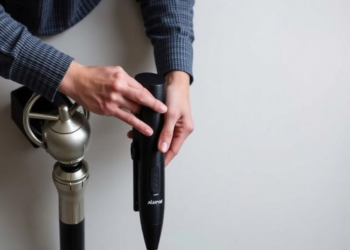
A multi-sited ethnography of amputees in France, the Netherlands and Germany shows that users routinely modify, fabricate and repurpose their ...

A new taxonomy disaggregates dementia caregiver distress into eight distinct domains and maps them against existing technologies, exposing persistent gaps ...

A French qualitative study of 15 families and 15 professionals shows visually impaired young people repurposing mainstream technologies like smartphones ...
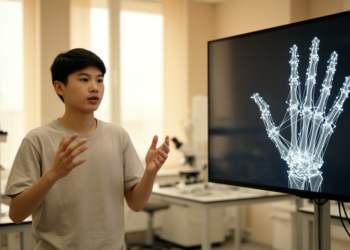
Kazakh researchers built a 3.5-million-parameter multi-branch Transformer that recognizes Kazakh Sign Language gestures from unseen signers, outperforming three baselines under ...
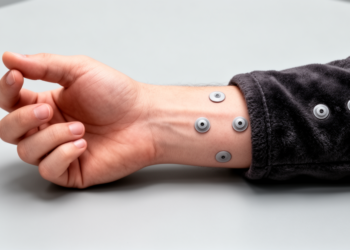
A custom one-dimensional convolutional neural network classified nine individual and combined finger movements from surface EMG signals with 90.1 percent ...
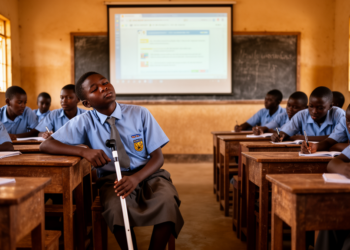
A qualitative single-case study of 12 students and four academic staff with visual impairments at the Open University of Tanzania ...

A comparative policy analysis of Austria, Croatia and Iceland finds that inclusive digital education remains unevenly developed despite substantial investment ...

Researchers at the University of Tübingen and Carl Zeiss Vision have built a real-time AI system that detects anomalous gaze ...

A decade-long scoping review of 93 AI health studies finds that only 12.9 percent implemented concrete equity measures and just ...


Embark on a thrilling journey of discovery with Scienmag.com—your ultimate source for cutting-edge breakthroughs. Immerse yourself in a world where curiosity knows no limits and tomorrow’s possibilities become today’s reality!