


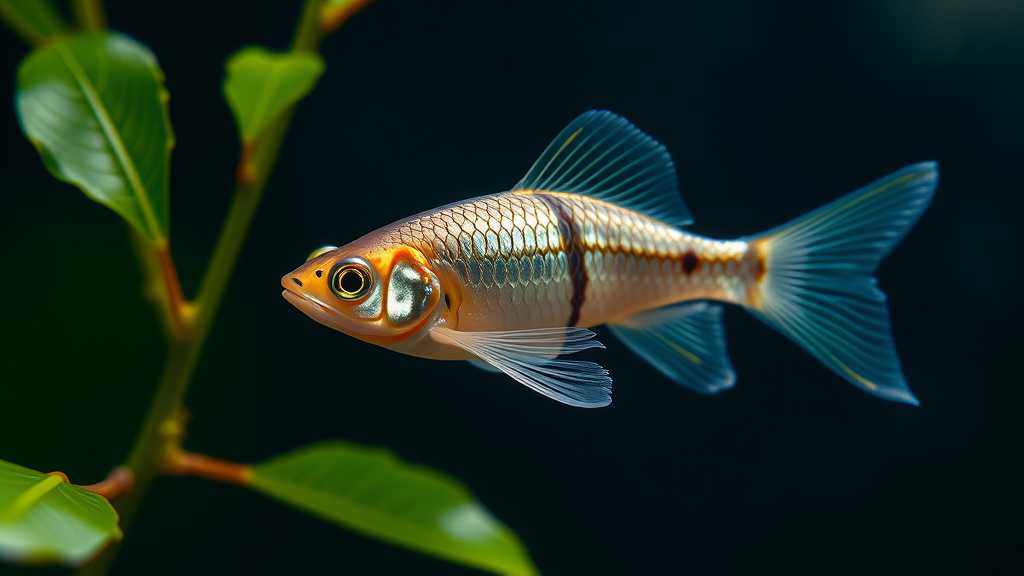
A leaf extract from the grey mangrove, Avicennia marina, can strongly ramp up a key anti-inflammatory immune pathway in fish, but the same extract damages delicate gill tissue when doses climb too high, according to a new study published in the journal Blue Biotechnology. The research, led by Darshine Thirukkumaran and colleagues at Saveetha Institute of Medical and Technical Sciences in Chennai, India, offers one of the most detailed looks yet at the double-edged nature of mangrove-derived bioactive compounds in aquaculture, a sector desperately searching for alternatives to antibiotics as drug resistance spreads among fish pathogens.
The team chose zebrafish (Danio rerio) as their model organism, a small freshwater fish that has become a workhorse of modern biomedical research. Zebrafish share a striking degree of genetic similarity with humans, develop rapidly, and respond to waterborne chemicals in ways that are easy to monitor. Crucially, their gills—organs responsible for gas exchange, osmoregulation, and excretion—are in constant, direct contact with the surrounding water, making them exquisitely sensitive barometers of aquatic toxicity. Structural changes in gill tissue, such as epithelial lifting and the fusion of lamellae, are widely recognized biomarkers of sublethal stress.
To prepare the test material, the researchers harvested fresh Avicennia marina leaves from the Kalpakkam coast in Tamil Nadu, India. The leaves were shade-dried for up to ten days, ground into a fine powder, and soaked in 70 percent ethanol on an orbital shaker for 48 hours. After filtration and concentration in a water bath, the procedure yielded 2.47 grams of crude extract from 20 grams of starting material—a yield of roughly 12 percent. The extract was then dissolved into working concentrations of 0.5, 1.0, and 2.0 milligrams per liter for the fish exposure experiments.
Before the animal work, the team chemically profiled the extract. Fourier transform infrared spectroscopy revealed a rich palette of functional groups: a broad O–H stretching band at 3334.9 wavenumbers pointing to alcohols and phenolic compounds, aliphatic C–H stretches at 2924.5 and 2852.7 suggesting long-chain hydrocarbons and terpenoids, a carbonyl band at 1708 indicating aldehydes, ketones, or carboxylic acids, and aromatic C=C stretches at 1609 and 1515.1 consistent with flavonoids and other polyphenols. Additional bands assigned to C–O stretching of esters, alcohols, and carbohydrates rounded out a fingerprint typical of a phytochemically complex mixture.
The antioxidant credentials of the extract proved impressive in vitro. In the DPPH free radical scavenging assay, the extract neutralized more than 90 percent of radicals at the highest tested concentration of 125 micrograms per milliliter, closely matching the performance of a standard reference antioxidant. A parallel phosphomolybdenum assay for total antioxidant capacity showed the same concentration-dependent trend, with activity rising steadily across the tested range. The authors attribute this redox behavior to the extract’s abundant phenolics, flavonoids, tannins, and other electron-rich secondary metabolites, consistent with earlier reports of high total phenolic content in A. marina leaf extracts.
For the in vivo experiment, sixty healthy adult zebrafish, aged three to four months, were acclimated for two weeks under controlled conditions of 26 degrees Celsius, neutral pH, and a 14-hour light cycle. The fish were then randomly divided into four groups of fifteen: an untreated control and three treatment groups exposed to 0.5, 1.0, or 2.0 milligrams per liter of the extract for seven consecutive days in a static renewal system, with 80 percent of the water replaced daily. At the end of the exposure period, fish were humanely euthanized and their gill tissues dissected for histopathology and molecular analysis.
The histological findings told a cautionary story. Control gills displayed normal architecture with well-organized primary and secondary lamellae. At the lowest dose, 0.5 milligrams per liter, the changes were mild—slight epithelial lifting and minimal hyperplasia. At 1.0 milligrams per liter, moderate lamellar fusion and increased epithelial proliferation appeared. At the highest dose, 2.0 milligrams per liter, the damage became pronounced: extensive lamellar fusion, widespread epithelial lifting, hyperplasia, and partial loss of secondary lamellae. Lesion scores at this dose were significantly higher than in controls, and the pattern of injury resembles that seen in fish exposed to pesticides, detergents, and industrial effluents.
Molecular analysis, however, revealed a different dimension of the extract’s activity. Using quantitative real-time PCR with beta-actin as the housekeeping gene, the team measured expression of interleukin-10, a cytokine central to controlling inflammation. Compared with the control level of 1.0-fold, IL-10 expression dipped slightly to 0.7-fold at 0.5 milligrams per liter, but then rose significantly to 2.0-fold at 1.0 milligrams per liter and approximately 3.4-fold at 2.0 milligrams per liter. The dose-dependent upregulation indicates that moderate to high concentrations of the extract activate anti-inflammatory signaling pathways in gill tissue, likely through modulation of regulatory networks involving NF-kappaB and MAPK signaling.
The juxtaposition of strong IL-10 induction with visible tissue injury at the highest dose is the study’s most thought-provoking result. The authors suggest that even a robust anti-inflammatory response was insufficient to counteract direct phytochemical damage to the gill epithelium once concentrations exceeded a critical threshold. They note a parallel with quercetin, a flavonoid that enhances antioxidant defenses and suppresses pro-inflammatory cytokines in zebrafish at low doses but reverses these benefits at high doses. Many phytochemicals, in other words, are biphasic: beneficial within a therapeutic window, harmful beyond it. Excessive IL-10 itself carries risks, potentially suppressing host defenses and increasing susceptibility to secondary infections.
The study concludes that Avicennia marina leaf ethanolic extract holds genuine promise as a phytogenic immunostimulant for aquaculture, but only with careful dose optimization. The authors call for future work to isolate and characterize the specific bioactive constituents responsible for the observed effects, to conduct long-term toxicity studies across different developmental stages and environmental conditions, and to test efficacy against common aquatic pathogens in commercially important species beyond zebrafish. If those steps succeed, mangrove-derived compounds could eventually find their way into aquafeeds or water treatments as eco-friendly tools for fish health management—provided the fine line between immunostimulation and tissue damage is respected.
Subject of Research: Dose-dependent effects of Avicennia marina leaf ethanolic extract on IL-10 gene expression and gill histopathology in zebrafish
Article Title: Histopathological evaluation and gene expression of IL-10 in zebrafish (Danio rerio) gills exposed to Avicennia marina (Grey Mangrove) leaf ethanolic extract
Article References: Thirukkumaran, D., Santhosh, K., Ganapathy, D., & Sivaperumal, P. (2026). Histopathological evaluation and gene expression of IL-10 in zebrafish (Danio rerio) gills exposed to Avicennia marina (Grey Mangrove) leaf ethanolic extract. Blue Biotechnology, 3(1), Article 5. https://doi.org/10.1186/s44315-026-00056-y
Image Credits: AI Generated
DOI: 10.1186/s44315-026-00056-y
Keywords: Avicennia marina, zebrafish, IL-10, mangrove extract, histopathology, antioxidant, immunostimulant, aquaculture, gill tissue, qRT-PCR, anti-inflammatory, phytochemicals
Cite Scienmag News
Kristina Jarvis. (September 12, 2026). Mangrove Leaf Extract Boosts Anti-Inflammatory Immunity in Zebrafish But Damages Gills at High Doses. Scienmag. https://scienmag.com/mangrove-leaf-extract-boosts-anti-inflammatory-immunity-in-zebrafish-but-damages-gills-at-high-doses/
Kristina Jarvis. "Mangrove Leaf Extract Boosts Anti-Inflammatory Immunity in Zebrafish But Damages Gills at High Doses." Scienmag, 12 September 2026, https://scienmag.com/mangrove-leaf-extract-boosts-anti-inflammatory-immunity-in-zebrafish-but-damages-gills-at-high-doses/. Accessed 12 September 2026.
Kristina Jarvis. "Mangrove Leaf Extract Boosts Anti-Inflammatory Immunity in Zebrafish But Damages Gills at High Doses." Scienmag. September 12, 2026. https://scienmag.com/mangrove-leaf-extract-boosts-anti-inflammatory-immunity-in-zebrafish-but-damages-gills-at-high-doses/


