


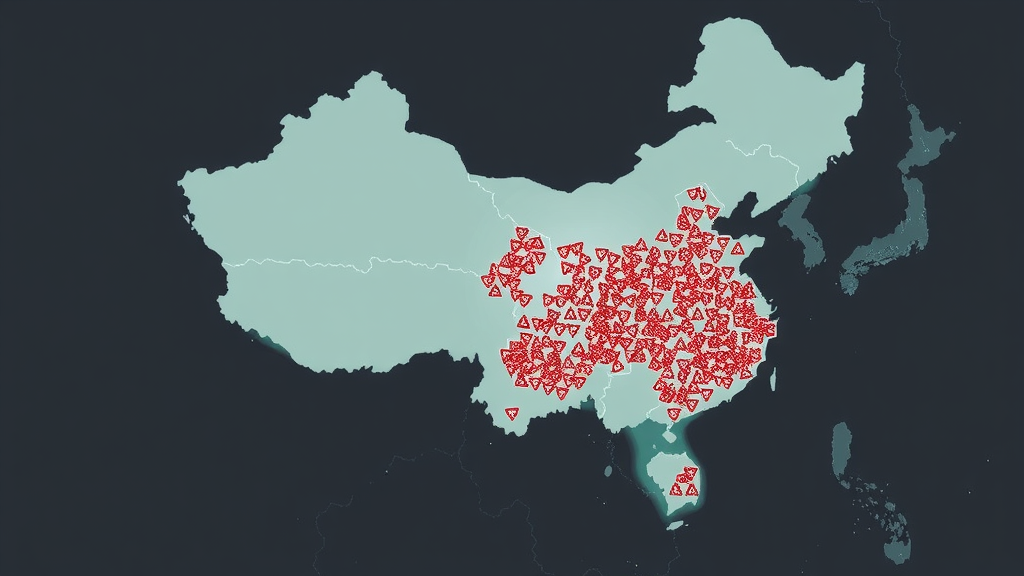
A single HIV-1 recombinant strain first detected in China more than a decade ago has woven itself into a dense, cross-regional web of transmission, and new genomic analysis has now mapped that web in unprecedented detail. Researchers at the Hangzhou Center for Disease Control and Prevention, working with colleagues at the Zhejiang Key Laboratory of Multi-Omics in Infection and Immunity, have reconstructed the origin, expansion, and migration pathways of HIV-1 CRF67_01B, a circulating recombinant form identified in 2013 that has since appeared in multiple Chinese provinces. Their findings, published in Virology Journal, show that the outbreak in Hangzhou is not an isolated local event but one node in an interconnected epidemic spanning Jiangsu, Zhejiang, Anhui, and Guangdong, driven overwhelmingly by transmission among men who have sex with men.
Circulating recombinant forms, or CRFs, arise when two different HIV-1 subtypes recombine within a coinfected host, producing a mosaic genome that can then propagate through a population. CRF67_01B is one such mosaic, and its emergence illustrates a recurring problem in HIV control: once a recombinant strain establishes a foothold, its subsequent spread can escape the attention of surveillance systems that operate within provincial boundaries. Because each region sequences and reports viral genomes largely in isolation, the true geography of transmission can remain hidden until someone stitches the fragments back together. That is precisely what the Hangzhou team set out to do, drawing on viral genetic data that carry within them a record of who infected whom, when lineages diverged, and how the virus moved across the map.
The study assembled 183 CRF67_01B pol gene sequences sampled between 2011 and 2024 across six provinces. The researchers combined sequences generated locally in Hangzhou with publicly available sequences retrieved from the Los Alamos National Laboratory HIV Sequence Database, one of the largest repositories of HIV genetic data in the world. The pol gene, which encodes the virus’s essential enzymes and is routinely sequenced for drug-resistance testing, serves as a convenient and information-rich marker for molecular epidemiology. By comparing these sequences, the team could identify viruses that were so genetically similar that their carriers were likely connected directly or through a short chain of intermediate infections.
To construct those connections, the researchers built a distance-based molecular network, a technique in which each viral sequence becomes a node and pairs of sequences separated by fewer genetic differences than a chosen threshold are joined by edges. At a genetic distance threshold of 0.6 percent, the network resolved the 183 sequences into 24 putative transmission clusters, and 99 of the 183 sequences, an entry rate of 54.1 percent, fell into one of those clusters. That is a striking figure: it means that more than half of the people carrying this strain in the dataset are genetically linked to at least one other person in the network, indicating active and recent chains of transmission rather than scattered, independent introductions. The demographic pattern within those clusters was even more pronounced. Men who have sex with men accounted for 91.9 percent of the clustered individuals, confirming that this recombinant form has become firmly embedded in that community across the sampled provinces.
When the researchers examined the links that crossed provincial boundaries, one pairing stood out above all others: connections between Jiangsu Province and Hangzhou dominated the interprovincial portion of the network. This observation immediately suggested a direction of flow, with the virus moving from an established epidemic center in Jiangsu into the Zhejiang provincial capital and beyond. But a molecular network alone can only show that two viruses are related; it cannot say which lineage came first or reconstruct the historical routes the virus took. For that, the team turned to Bayesian phylogeography, a family of statistical methods that treats the geographic locations of viral ancestors as unknown variables to be inferred from the tree of genetic relationships.
The phylogeographic analysis, combined with a technique known as Bayesian stochastic search variable selection, or BSSVS, allowed the researchers to test which migration pathways between provinces were supported by the data rather than merely plausible. BSSVS works by allowing the model to switch migration rates on and off across the phylogenetic tree and retaining only the connections that measurably improve the explanation of the observed sampling locations. From this inference, the team estimated the time to the most recent common ancestor of the sampled CRF67_01B sequences, arriving at an origin in Jiangsu Province around 2007, roughly six years before the strain was first formally identified in China. The lag between true emergence and first detection is a familiar lesson of viral genomics, and it underscores how much transmission can occur before a novel recombinant attracts scientific attention.
The reconstruction also captured the epidemic’s tempo. After its origin around 2007, CRF67_01B entered a phase of exponential growth between 2009 and 2011, the classic signature of a lineage exploiting an under-saturated network of susceptible hosts. Growth then slowed, declined between 2017 and 2020, and subsequently leveled off into a plateau. That plateau does not mean the strain has been contained; rather, it suggests that the epidemic has reached a kind of equilibrium within its host population, with ongoing transmission balanced by the natural depletion of uninfected contacts, treatment-driven reductions in infectiousness, and behavioral changes. The inferred migration pathways tell a complementary story of movement: from Jiangsu into Hangzhou, from Hangzhou onward into Anhui, and from Jiangsu, Hangzhou, Anhui, and Ningbo converging into Guangdong, a province whose economic gravity draws large numbers of internal migrants.
Technically, the study demonstrates the value of combining two complementary molecular epidemiological tools. Distance-based networks are computationally inexpensive, transparent, and well suited to identifying recent transmission pairs and clusters, but they are blind to direction and time. Bayesian phylogeography is far more computationally demanding and depends on modeling assumptions, yet it recovers the temporal depth and directional flow that networks cannot. Used together, the two approaches allowed the authors to show not only that CRF67_01B sequences from Hangzhou cluster with those from Jiangsu, but that the common ancestor of the whole lineage most likely lived in Jiangsu around 2007 and that the branching order of migrations follows a coherent historical narrative matching the growth phases visible in the skyline plot of effective population size.
The public health implications are clear. An emerging recombinant strain circulating across provincial lines within a highly connected sexual network cannot be controlled by any single jurisdiction acting alone. The authors argue that their findings call for cross-regional joint prevention and control strategies, with interventions targeted at hub cities that serve as sources and conduits of viral spread, and at the high-risk MSM populations in which the strain is concentrated. In practical terms, this means coordinated partner notification across provincial boundaries, harmonized surveillance that shares sequence data in near real time, and prevention services, including testing, pre-exposure prophylaxis, and rapid treatment initiation, concentrated in the urban nodes the phylogeography identifies as transmission hubs. Hangzhou’s epidemic, on this reading, is best understood as epidemiologically linked to surrounding and earlier epicenters, and any strategy that treats it as a local problem will miss the upstream reservoirs that continually seed new infections.
The research also highlights the necessity of open genetic data. A substantial fraction of the sequences in this analysis came from a public database rather than from the authors’ own laboratory, and the cross-provincial picture would have been impossible without that shared resource. As HIV-1 continues to generate new recombinant forms worldwide, the combination of open sequence repositories, molecular network analysis, and Bayesian phylodynamic inference offers health authorities a way to see epidemics as they truly are: continuous, connected, and indifferent to administrative borders. For CRF67_01B, the genetic record now shows a lineage born in Jiangsu around 2007, exploding within the MSM community early in the following decade, and weaving an enduring web of transmission from the Yangtze delta to the south of China. The task that remains is to translate that molecular cartography into prevention that moves as fast and as far as the virus does.
Subject of Research: Spatiotemporal dynamics and cross-regional transmission of HIV-1 CRF67_01B in China
Article Title: Spatiotemporal dynamics and cross-regional transmission network of HIV-1 CRF67_01B in six provinces in China
Article References: Ye, L., Xu, K., Luo, W., Wu, S., Zhu, M., Zhang, X., & Sun, Z. (2026). Spatiotemporal dynamics and cross-regional transmission network of HIV-1 CRF67_01B in six provinces in China. Virology Journal. https://doi.org/10.1186/s12985-026-03302-2
Image Credits: AI Generated
DOI: 10.1186/s12985-026-03302-2
Keywords: HIV-1, CRF67_01B, circulating recombinant form, molecular transmission network, Bayesian phylogeography, cross-regional transmission, MSM, China, phylodynamics, viral epidemiology, Jiangsu, Hangzhou
Cite Scienmag News
Juliet Wilcox. (September 12, 2026). Tracing the Hidden Spread of HIV-1 CRF67_01B Across Six Chinese Provinces. Scienmag. https://scienmag.com/tracing-the-hidden-spread-of-hiv-1-crf67_01b-across-six-chinese-provinces/
Juliet Wilcox. "Tracing the Hidden Spread of HIV-1 CRF67_01B Across Six Chinese Provinces." Scienmag, 12 September 2026, https://scienmag.com/tracing-the-hidden-spread-of-hiv-1-crf67_01b-across-six-chinese-provinces/. Accessed 5 October 2026.
Juliet Wilcox. "Tracing the Hidden Spread of HIV-1 CRF67_01B Across Six Chinese Provinces." Scienmag. September 12, 2026. https://scienmag.com/tracing-the-hidden-spread-of-hiv-1-crf67_01b-across-six-chinese-provinces/


