


The global campaign to eliminate bisphenol A from consumer products has produced an ever-expanding family of chemical substitutes, and a new study suggests that at least one of these replacements may be worse for freshwater ecosystems than the compounds it was designed to displace. Tetramethyl Bisphenol F, or TMBPF, is an alternative increasingly marketed for food-contact coatings and other applications where bisphenol A has fallen out of regulatory favor. Yet a team of Chinese researchers has now shown that, in standardized aquatic toxicity assays, TMBPF outperforms not only the infamous original but several widely used analogues in its capacity to harm a keystone freshwater invertebrate. The work, conducted by scientists affiliated with Yangtze University, the Nanjing Institute of Environmental Sciences under China’s Ministry of Ecology and Environment, and the Solid Waste and Chemicals Management Center, was published in Archives of Environmental Contamination and Toxicology and combines classical toxicology with modern transcriptomics to build a multi-layered picture of chemical harm.
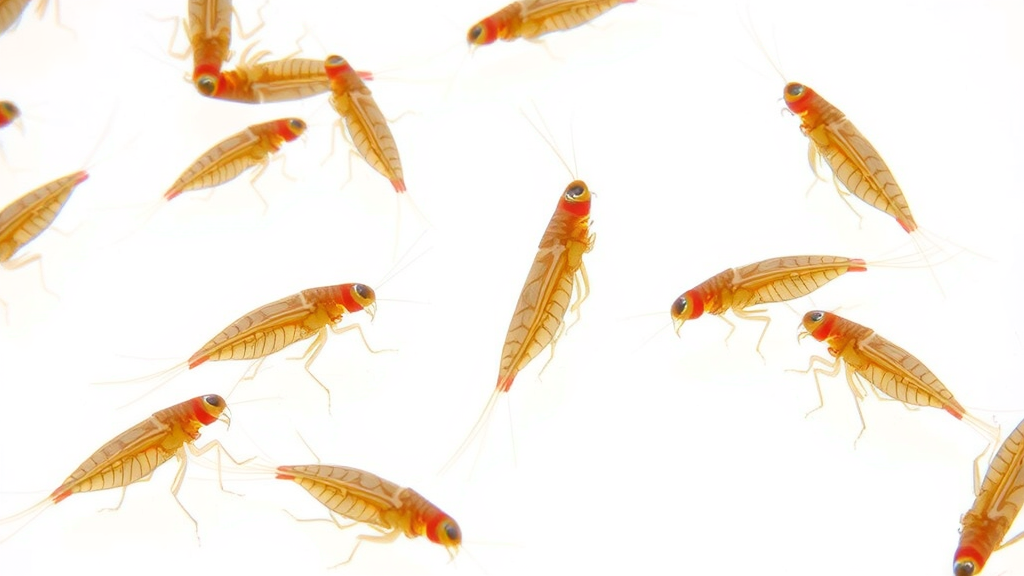
The test organism was Daphnia magna, the translucent water flea that has served as the workhorse of aquatic ecotoxicology for decades. Daphnia occupy a pivotal position in freshwater food webs, grazing on algae and in turn feeding fish, which means that any impairment of their growth, reproduction, or swimming behavior propagates upward through the ecosystem. The species is also favored because it reproduces parthenogenetically, allowing clonal lines to be exposed under tightly controlled conditions, and because international testing guidelines from the Organisation for Economic Co-operation and Development provide standardized protocols for measuring both acute immobilization and chronic reproductive effects. In this study, the researchers followed OECD Test Guideline 202 for acute exposure and Test Guideline 211 for the twenty-one-day chronic reproduction assay, providing results that can be directly compared with the broader toxicological literature on bisphenol compounds.
The headline finding from acute testing is stark: the forty-eight-hour EC50, the concentration at which half of the exposed animals lost mobility, was 1.30 milligrams per liter for TMBPF. That figure is lower, meaning more toxic, than the corresponding values reported for bisphenol A itself and for the common alternatives bisphenol F, bisphenol S, and bisphenol AF. In the crowded field of bisphenol substitutes, where compounds are frequently promoted on the assumption of reduced hazard, TMBPF now stands out as a chemical with pronounced acute potency toward aquatic invertebrates. The result echoes what some earlier studies on other organisms had hinted at. Work in zebrafish larvae has linked TMBPF to neurotoxicity, oxidative stress, and disruption of dopamine neurons, while research in nematodes and mammalian fibroblast cells compared the toxicities of several bisphenols and found TMBPF to be far from benign, and recent studies on ovarian cells and mouse ovaries pointed to endocrine and reproductive targets.
Chronic exposure told an equally consequential story. Over a twenty-one-day assay, the no-observed-effect concentration for reproduction was 0.20 milligrams per liter, a threshold the researchers used to classify TMBPF as a Category 2 chronic aquatic toxicant under the Globally Harmonized System of classification and labelling. In practical terms, animals exposed at or above this level suffered measurable impairment of their brood output, which is the single most ecologically sensitive life-history trait in a species whose populations depend on rapid, iterative clonal reproduction. The classification matters beyond the laboratory bench: GHS Category 2 chronic aquatic toxicity is the kind of designation that feeds directly into regulatory hazard communication, chemical prioritization, and environmental risk assessment frameworks around the world. A chemical carrying this label in one of its flagship applications, food-contact can coatings, raises the uncomfortable possibility of what toxicologists call regrettable substitution, the cycle in which a replacement chemical proves as hazardous as, or more hazardous than, the one it replaced.
To understand how these whole-organism effects arise, the team turned to transcriptomics, the systematic measurement of gene-expression changes across the animal’s genome. Daphnia exposed to 0.2 milligrams per liter of TMBPF showed enrichment of pathways related to carbohydrate metabolism and lysosomal function, suggesting that even at the concentration that spares reproduction on average, cells are already remodeling their energy management and waste-processing machinery. Lysosomes are the cellular recycling centers, and their involvement hints at either increased turnover of damaged components or an attempt to process the foreign compound itself, while shifts in carbohydrate metabolism indicate that energy allocation is being perturbed in ways that could eventually divert resources away from growth and egg production. These subtle molecular adjustments at low doses represent the early-warning layer of the toxicity cascade, occurring before any visible phenotype emerges.
At the higher test concentration of 0.4 milligrams per liter, the transcriptional disruption became extensive and qualitatively different. The researchers observed perturbation of RNA polymerase machinery, which sits at the heart of gene transcription itself, alongside altered signaling in neuroactive ligand-receptor interaction pathways, which govern communication between nerve cells. Xenobiotic metabolism genes, the cellular first responders that chemically modify foreign compounds for excretion, were recruited, as were pathways associated with oxidative stress and inflammation. The breadth of this response at the higher concentration indicates that TMBPF does not act on a single molecular target but instead imposes systemic stress that animals attempt to counteract across multiple fronts simultaneously. Oxidative stress, in particular, is a recurring theme in bisphenol toxicity across species, arising when the balance between reactive oxygen species production and antioxidant defenses tips toward damage to lipids, proteins, and DNA.
Critically, the study did not stop at molecular signatures; it connected them to observable harm. The transcriptomic changes corresponded with measurable impairment of growth, reproduction, and swimming behavior. Locomotor behavior is an especially informative endpoint in Daphnia because swimming depends on coordinated neuromuscular function, and alterations in movement patterns reduce feeding efficiency and escape ability, directly affecting fitness. The observed behavioral disruption is consistent with the neuroactive ligand-receptor pathway changes seen in the transcriptome and with earlier findings in zebrafish that TMBPF damages dopamine neurons and central nervous system development. It also parallels prior work showing that acetylcholinesterase inhibition can drive swimming changes in Daphnia under other toxicant exposures, reinforcing the general principle that behavioral endpoints serve as sensitive, ecologically meaningful readouts of sublethal neurotoxicity. By triangulating among molecular, life-history, and behavioral evidence, the study assembles an adverse outcome pathway-style narrative that regulators increasingly demand: molecular initiating events, cellular responses, and population-relevant effects linked in a coherent chain.
The comparative dimension of the work carries the most urgent message. If TMBPF is acutely more potent than BPA, BPF, BPS, and BPAF in Daphnia, then the assumption underlying its commercial adoption deserves immediate scrutiny. The bisphenol family illustrates a broader pattern in industrial chemistry: structural analogues share reactive phenolic frameworks, and swapping substituents may alter potency in unpredictable directions rather than uniformly reducing it. Reviews of bisphenol analogues have documented their environmental occurrence and human exposure, and food-contact coating studies have identified TMBPF migrants from metal cans, meaning that both environmental and dietary release pathways plausibly exist. Combined-toxicity research further complicates the picture, since organisms in real water bodies encounter mixtures of endocrine-disrupting chemicals whose interactions can exceed the sum of individual effects. The authors argue that emerging bisphenol substitutes require cautious evaluation and regulatory consideration before widespread environmental application, a conclusion that this study’s integrative evidence strongly supports.
For freshwater ecosystems, the implications extend beyond one compound. Daphnia-based assays are powerful bioindicators precisely because they integrate molecular, physiological, and population-level responses, and this study demonstrates how combining them with transcriptomics can reveal mechanisms that single-endpoint tests miss. As TMBPF production scales with demand for BPA-free products, the concentrations that harmed reproduction and swimming in the laboratory, fractions of a milligram per liter, define the exposure levels that environmental monitoring programs should watch for in surface waters receiving industrial effluent or coating-related discharges. The research was supported by Central Scientific Research Projects for Public Welfare Research Institutes and the Innovation Fund of the Nanjing Institute of Environmental Science. Its publication adds TMBPF to the growing list of replacement chemicals whose safety profiles were assumed rather than demonstrated, and it offers regulators a concrete, quantitative basis for deciding whether the era of regrettable substitution is repeating itself with yet another bisphenol.
Subject of Research: Acute and chronic toxicity of the bisphenol A substitute TMBPF to the freshwater invertebrate Daphnia magna
Article Title: Effects of Tetramethyl Bisphenol F Exposure on Daphnia magna Growth, Reproduction, Locomotor Behavior and Transcriptomic Responses
Article References: Yang, X., Wang, Z., Zhang, M., Liu, H., Liang, M., Zhang, C., Wang, L., & Li, S. (2026). Effects of Tetramethyl Bisphenol F Exposure on Daphnia magna Growth, Reproduction, Locomotor Behavior and Transcriptomic Responses. Archives of Environmental Contamination and Toxicology, 91(3), Article 18. https://doi.org/10.1007/s00244-026-01218-0
Image Credits: AI Generated
DOI: 10.1007/s00244-026-01218-0
Keywords: TMBPF, bisphenol analogues, Daphnia magna, ecotoxicology, chronic toxicity, transcriptomics, aquatic toxicology, reproductive toxicity, locomotor behavior, oxidative stress, BPA alternatives, chemical regulation
Cite Scienmag News
Sloane Callahan. (September 12, 2026). BPA Substitute TMBPF Proves More Toxic Than Known Bisphenols in Water Fleas. Scienmag. https://scienmag.com/bpa-substitute-tmbpf-proves-more-toxic-than-known-bisphenols-in-water-fleas/
Sloane Callahan. "BPA Substitute TMBPF Proves More Toxic Than Known Bisphenols in Water Fleas." Scienmag, 12 September 2026, https://scienmag.com/bpa-substitute-tmbpf-proves-more-toxic-than-known-bisphenols-in-water-fleas/. Accessed 12 September 2026.
Sloane Callahan. "BPA Substitute TMBPF Proves More Toxic Than Known Bisphenols in Water Fleas." Scienmag. September 12, 2026. https://scienmag.com/bpa-substitute-tmbpf-proves-more-toxic-than-known-bisphenols-in-water-fleas/


