


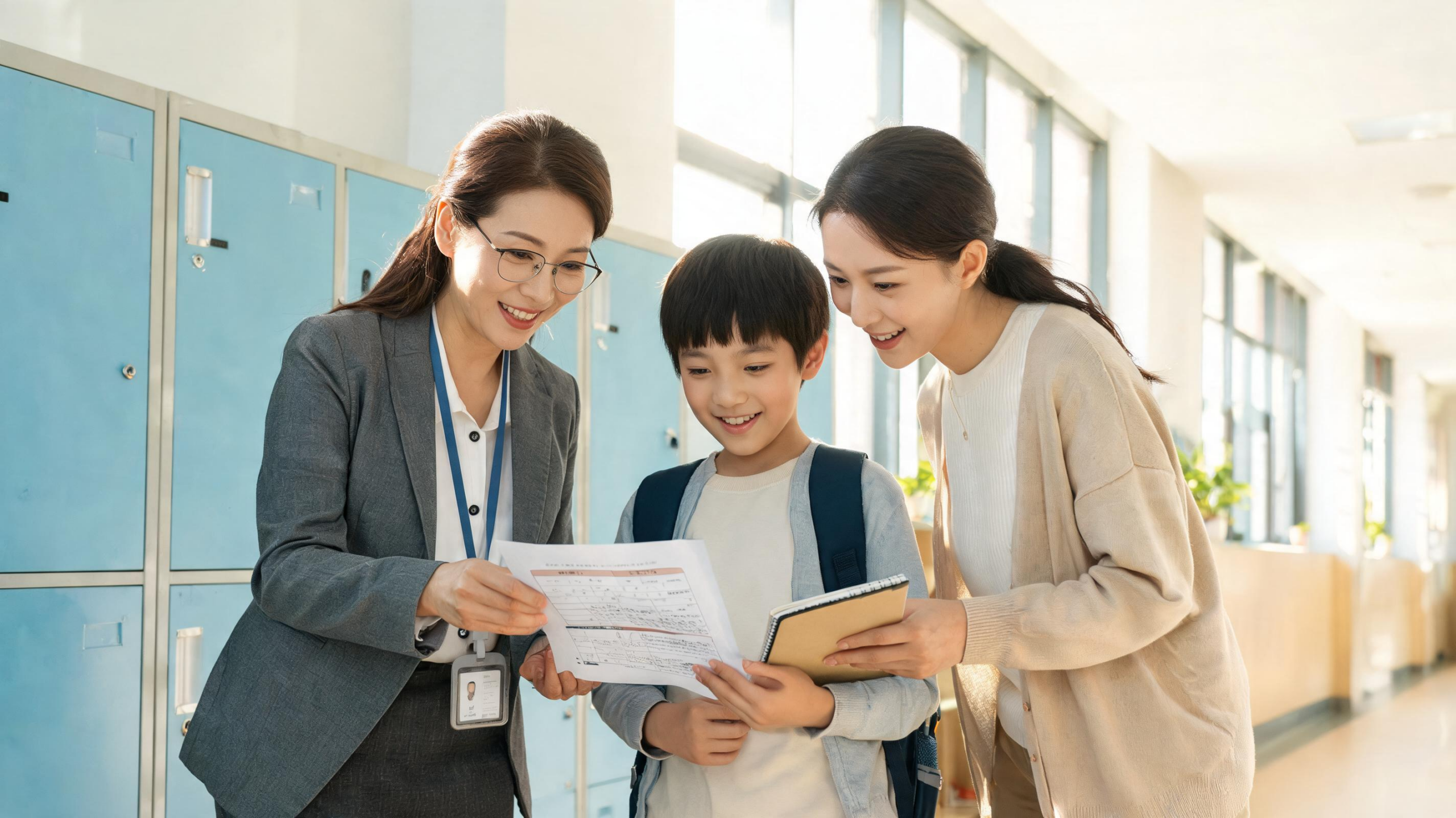
What actually drives a child’s success at school? For decades, researchers have pointed to two powerful forces: the way schools are led and the way families stand behind their children’s learning. A new large-scale study from Spain now brings these forces together in a single statistical model, and its conclusion is striking. Educational leadership does not only act directly on students, it also works through families, strengthening the support children receive at home and, through that channel, boosting both academic performance and the broader skills students need for the twenty-first century.
The research, published in the Journal of New Approaches in Educational Research, was conducted by a team at the University of Zaragoza that surveyed 1,369 families whose children attend public and state-assisted schools across different Spanish regions. Rather than examining leadership, family involvement, competences and grades in isolation, the researchers built a Structural Equation Model, a sophisticated statistical framework that allows scientists to test how multiple latent constructs, variables that cannot be observed directly, relate to one another simultaneously. The four constructs at the heart of the model were democratic educational leadership, family accompaniment, students’ transversal competences and academic performance as perceived by families.
The leadership construct was deliberately framed in democratic terms. Instead of measuring organisational efficiency or instructional supervision alone, the study captured a relational style of leadership grounded in participation, trust, empathy and transparent communication. Families rated school leaders on indicators such as the ability to communicate confidently, motivate staff, foster a positive climate of coexistence, empathise with the needs of families, teachers and students, and address difficult situations with openness and positivity. This operationalisation reflects a body of theory that distinguishes democratic leadership from transformational, instructional and distributed models, emphasising equity of participation and the active involvement of all stakeholders, including families, in school decision-making.
Family accompaniment, the second pillar of the model, went well beyond conventional notions of parental involvement. It encompassed supporting children’s autonomous learning, attending meetings and tutorials with teachers, encouraging the development of competences, fostering positive attitudes towards learning and promoting study skills at home. Transversal competences, often described as twenty-first-century skills, covered collaboration, autonomy, leadership, technology use, creativity, critical thinking, communication and adaptability. Academic performance, finally, was measured through families’ perceptions of students’ overall achievement, evaluations, marks and progress at school. All indicators were scored on an eleven-point Likert scale running from zero to ten, a format the researchers chose for its sensitivity and its familiarity to families accustomed to standard grading systems.
The technical rigour of the study is considerable. Before testing their theoretical model, the researchers ran confirmatory factor analyses to verify that the measurement structure held together. The combined four-factor model showed strong fit to the data, with a comparative fit index of 0.96, a root mean square error of approximation of 0.05 and a standardised root mean square residual of just 0.03. Internal consistency was high, with Cronbach’s alpha values ranging from 0.84 for family accompaniment to 0.98 for educational leadership. The team also applied robust maximum likelihood estimation with Satorra-Bentler corrections to guard against non-normality in the data, and compared their four-factor model against a single-factor alternative to rule out common-method variance, a statistical artefact that can arise when all data come from the same informants. The multidimensional model fit far better, supporting the validity of the findings.
When the structural model itself was tested, the results were unambiguous. Educational leadership showed a strong positive effect on students’ academic performance, with a standardised coefficient of 0.54, and an even stronger effect on transversal competences, at 0.73, both statistically significant at the highest threshold. Leadership also predicted family accompaniment, with a coefficient of 0.37, confirming that when school leaders communicate openly and build trust, families become more engaged in their children’s education. In turn, family accompaniment predicted both academic performance and competence development, with coefficients of 0.17 and 0.11 respectively. All five hypotheses of the study were supported by the data.
Perhaps the most intriguing finding lay in the mediation analysis. The researchers demonstrated that family accompaniment significantly mediated the relationship between educational leadership and both outcome variables. In practical terms, this means that part of a school leader’s influence on student success travels through the family: leadership practices that lower barriers between schools and homes create formal and informal opportunities for family involvement, which then reinforces motivation, study habits and engagement in children. Although the indirect effects were modest in magnitude, their statistical significance suggests that even small relational improvements, accumulated across years of school-family interaction, can meaningfully shape educational trajectories. This positions democratic leadership not merely as an administrative function but as a relational process that connects classroom practice with family life.
The descriptive data add nuance to this headline result. Families rated leadership most highly for fostering a positive climate and confident communication, but gave lower marks for empathy towards family needs and for the direct, honest transmission of problems to staff, suggesting a gap in the more demanding empathic dimensions of leadership. Family involvement scored highest for attending meetings with teachers and encouraging positive attitudes, while promoting study habits at home lagged behind. Among transversal competences, autonomy, collaboration and technology skills scored well, but leadership, critical thinking and creativity, the higher-order skills most valued in a rapidly changing economy, remained comparatively weak. Older family members perceived leadership and performance less favourably, while university-educated families reported more positive views of their own accompaniment, and perceptions of competence development dipped in larger schools.
The authors are careful about the limits of their evidence. The cross-sectional design captures associations at a single point in time and cannot establish causation, and the convenience sampling strategy, with voluntary participation, may have attracted more engaged families, potentially inflating positive perceptions. All variables were family-reported rather than drawn from objective academic records, and the study was conducted exclusively in the Spanish context, where cultural expectations about school-family relations may differ from those elsewhere. Yet the sample’s size and heterogeneity, the robustness of the statistical procedures and the consistency of the findings with decades of international research on leadership and parental involvement lend the conclusions considerable weight.
The practical implications are hard to ignore. For policymakers, the study argues for leadership training programmes focused on communication, participation and community engagement rather than managerial technique alone. For school leaders, it recommends creating structured opportunities for family participation, improving communication channels and offering concrete guidance to parents on how to support learning at home. And for families, the message is that their accompaniment is not a peripheral supplement to schooling but an active mechanism through which school quality translates into student achievement. In an era when education systems worldwide are searching for levers to build the skills the future demands, this research suggests that the most powerful lever may be the connection itself, the deliberate, empathetic bridge between those who lead schools and those who raise children.
Beyond its immediate findings, the study sits within a broader international conversation about how school quality should be defined. Global frameworks, including the United Nations Sustainable Development Goals, have pushed education systems to look beyond narrow achievement metrics and to consider whether schools cultivate adaptable, critically minded citizens. Transversal competences occupy a central place in this agenda because they are the capacities that transfer across subjects, jobs and life circumstances. By modelling competence development alongside academic performance, the Spanish research team aligned their work with this wider shift in how educational success is conceptualised and measured.
The mediating role of family accompaniment also carries theoretical weight. Leadership research has long debated whether the influence of school leaders on students is direct or indirect, with several influential reviews suggesting that leaders affect learning primarily by shaping conditions around teaching, such as climate, collaboration and community ties. The present findings fit that indirect-effects perspective: leadership appears to matter partly because it opens relational channels that draw families into the educational process. This reframes family engagement not as an optional add-on but as a mechanism that leadership actively activates or neglects.
The descriptive patterns deserve attention from practitioners. The weaker scores for empathy towards family needs and for candid communication about problems hint that schools may excel at routine, pleasant interactions while struggling with the harder relational work of acknowledging difficulties. Similarly, the lag in home-based study habits suggests that families readily attend formal meetings but find it harder to sustain day-to-day learning support, an area where targeted guidance from schools could prove especially valuable.
Future research could build on these results in several directions. Longitudinal designs would help establish whether leadership practices precede family engagement over time, strengthening causal claims that cross-sectional data cannot deliver. Objective measures of achievement, drawn from school records or standardised assessments, would complement family perceptions. Comparative studies across countries and cultures could test whether the leadership-family pathway holds where expectations about parental roles differ. Qualitative work might also illuminate the concrete interactions, a conversation at pickup, a well-timed phone call, through which democratic leadership translates into family action.
For now, the study’s central contribution is its integrated view. Leadership, families, competences and achievement are not separate levers to be pulled independently; they form a connected system in which the quality of relationships between schools and homes helps determine how effectively everything else works.
Subject of Research: The relationship between democratic educational leadership, family accompaniment, transversal competences and academic performance in school students.
Article Title: Educational leadership for improving transversal competences and academic performance: the mediator role of family accompaniment
Article References: Latorre-Cosculluela, C., Mairal-Llebot, M., Vázquez-Toledo, S., & Rivera-Torres, P. (2026). Educational leadership for improving transversal competences and academic performance: the mediator role of family accompaniment. Journal of New Approaches in Educational Research, 15(1), Article 21. https://doi.org/10.1007/s44322-026-00071-2
Image Credits: AI Generated
DOI: 10.1007/s44322-026-00071-2
Keywords: educational leadership, family accompaniment, transversal competences, academic performance, structural equation modelling, democratic leadership, parental involvement, school improvement, 21st-century skills, education research, school-family collaboration, student outcomes
Cite Scienmag News
Courtney Benton. (September 10, 2026). How School Leaders and Families Together Shape Student Success, Study Finds. Scienmag. https://scienmag.com/how-school-leaders-and-families-together-shape-student-success-study-finds/
Courtney Benton. "How School Leaders and Families Together Shape Student Success, Study Finds." Scienmag, 10 September 2026, https://scienmag.com/how-school-leaders-and-families-together-shape-student-success-study-finds/. Accessed 10 September 2026.
Courtney Benton. "How School Leaders and Families Together Shape Student Success, Study Finds." Scienmag. September 10, 2026. https://scienmag.com/how-school-leaders-and-families-together-shape-student-success-study-finds/


