


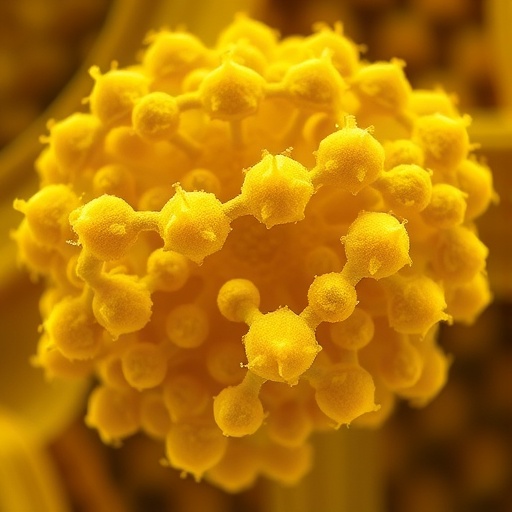
In a discovery that could reshape how industries break down stubborn biological waste, researchers at Ghent University have identified a single enzyme from a deep-sea hyperthermophilic archaeon that can degrade chitin, chitosan, cellulose, and β-1,3-glucan — four structurally distinct polysaccharides that normally require separate enzymes to dismantle. The protein, named TcChi, comes from Thermococcus chitonophagus, a microorganism known for thriving at extreme temperatures, and its unusual multidomain architecture has turned out to encode far more functional versatility than anyone anticipated.
The study, published in Biotechnology for Biofuels and Bioproducts by Alex Windels, Shari Dhaene, and Tom Desmet of the Centre for Synthetic Biology, began not with a new organism but with a new way of looking at old data. The team systematically re-examined archaeal enzymes belonging to glycoside hydrolase family 18 (GH18), a well-characterized family of chitin-degrading enzymes, using a domain annotation pipeline called CANDy. Rather than searching for entirely novel sequences, they searched for unusual domain arrangements within known families — an underexplored strategy that treats enzyme architecture itself as a clue to hidden functionality.
That strategy paid off when CANDy flagged a chitinase from T. chitonophagus that did not look like a typical GH18 enzyme at all. Instead of a single catalytic domain, TcChi carries two: a GH12 domain, normally associated with cellulose degradation, fused to a GH18 chitinase domain, along with two carbohydrate-binding modules that likely help the enzyme anchor itself to insoluble polysaccharide surfaces. The researchers hypothesized that this composite assembly might have evolved a broader functional range than either domain alone — a hypothesis their biochemical assays confirmed in striking fashion.
To test what each part of the protein could actually do, the team constructed truncated versions of TcChi containing the individual catalytic domains and measured their activity against a panel of polysaccharide substrates. The GH18 domain, the “chitinase” half of the protein, did what its family assignment predicted and hydrolyzed chitin, the tough structural polymer found in crustacean shells and fungal cell walls. But it also degraded chitosan, a deacetylated derivative of chitin, and — most remarkably — β-1,3-glucan, a glucose polymer that forms structural elements in fungi and algae. This β-1,3-glucanase activity corresponds to enzyme commission number EC 3.2.1.58, and the study marks the first time this activity has ever been reported in a GH18 chitinase.
The GH12 domain proved equally surprising. As expected from its family membership, it showed strong cellulase activity, breaking down cellulose, the dominant structural polymer in plant biomass. But it also displayed chitosanase activity (EC 3.2.1.132), a function not previously associated with GH12 enzymes, extending the known catalytic range of this family in the opposite direction. In other words, each half of TcChi exceeds the functional repertoire of its assigned family, and together they cover a polysaccharide spectrum spanning marine, fungal, and plant biomass in one protein scaffold.
A key practical property of both domains is their thermostability. T. chitonophagus is a hyperthermophile, an organism adapted to life at very high temperatures, and its enzymes inherit this resilience. Thermostable biocatalysts are prized in industrial biotechnology because they tolerate the elevated temperatures that improve substrate solubility, accelerate reaction rates, and reduce contamination risk in large-scale bioreactors. TcChi’s robustness at high temperatures, consistent with its origin, makes it an attractive candidate for harsh industrial settings where mesophilic enzymes would denature.
The implications for biomass valorization are considerable. Lignocellulosic plant matter, crustacean shell waste, and fungal cell walls each represent enormous, underused streams of renewable carbon. Chitin, in particular, is one of the most abundant biopolymers on Earth thanks to the seafood processing industry, yet its crystalline structure resists degradation. A single enzyme capable of attacking chitin, chitosan, cellulose, and β-1,3-glucan simultaneously could simplify “consolidated biomass deconstruction” — the long-sought goal of converting mixed feedstocks into fermentable sugars in one pot — by replacing multiple enzyme preparations with one multifunctional catalyst. That reduces cost, complexity, and the need to match specific enzyme cocktails to specific substrates.
Beyond its immediate application potential, the study makes a broader methodological argument. Glycoside hydrolases — often called CAZymes, for carbohydrate-active enzymes — are among the most extensively cataloged enzyme classes in biology, organized into families based on sequence, structure, and catalytic mechanism. The conventional assumption is that family membership largely predicts function. TcChi demonstrates that this assumption can blind researchers to real diversity: two domains residing in “well-characterized” families each turn out to do something their families were not known to do. The Ghent team’s domain-centric approach — using computational annotation to systematically hunt for unusual multidomain assemblies across thousands of characterized sequences — offers a scalable template for finding similar surprises.
There is also an evolutionary dimension worth noting. T. chitonophagus encodes dedicated standalone cellulases and chitinases in addition to the fused TcChi, raising the question of why it maintains a multifunctional hybrid at all. The authors suggest the multidomain architecture may have evolved under selective pressure to exploit mixed polysaccharide substrates efficiently, with the carbohydrate-binding modules helping the enzyme process heterogeneous material. The fusion of a chitinase domain with a cellulase domain in one scaffold is an elegant natural solution to the same engineering problem that biotechnologists pursue when they artificially fuse enzyme domains — but here it arrived ready-made, honed by evolution in a hot marine environment.
For the bioeconomy, enzymes like TcChi arrive at a moment of growing urgency. Converting waste biomass — shrimp shells, fungal mycelium, agricultural residues — into sugars, platform chemicals, and biofuels depends on affordable, stable, and versatile biocatalysts. Multifunctional, thermostable enzymes that degrade several recalcitrant polysaccharides from a single protein could meaningfully lower the enzymatic cost of these processes. The research was supported by the FWO Bioeconomy Research Project “MyCOS” and funding from the European Union’s NextGenerationEU program, reflecting the strategic priority European funders place on biobased valorization of renewable feedstocks.
The work is unlikely to remain an isolated case. As domain annotation tools like CANDy are applied across the rapidly expanding databases of archaeal and bacterial genomes, other multidomain CAZymes with unexpected substrate ranges are likely to surface. TcChi is a reminder that even the most familiar enzyme families still hold unexplored chemistry — and that sometimes the fastest route to a novel biocatalyst is not discovering a new organism, but reading the domain architecture of a known one more carefully.
Cite Scienmag News
Drew Townsend. (September 9, 2026). Novel bifunctional chitinase–cellulase enzyme found in Thermococcus chitonophagus. Scienmag. https://scienmag.com/novel-bifunctional-chitinase-cellulase-enzyme-found-in-thermococcus-chitonophagus/
Drew Townsend. "Novel bifunctional chitinase–cellulase enzyme found in Thermococcus chitonophagus." Scienmag, 9 September 2026, https://scienmag.com/novel-bifunctional-chitinase-cellulase-enzyme-found-in-thermococcus-chitonophagus/. Accessed 9 September 2026.
Drew Townsend. "Novel bifunctional chitinase–cellulase enzyme found in Thermococcus chitonophagus." Scienmag. September 9, 2026. https://scienmag.com/novel-bifunctional-chitinase-cellulase-enzyme-found-in-thermococcus-chitonophagus/


