


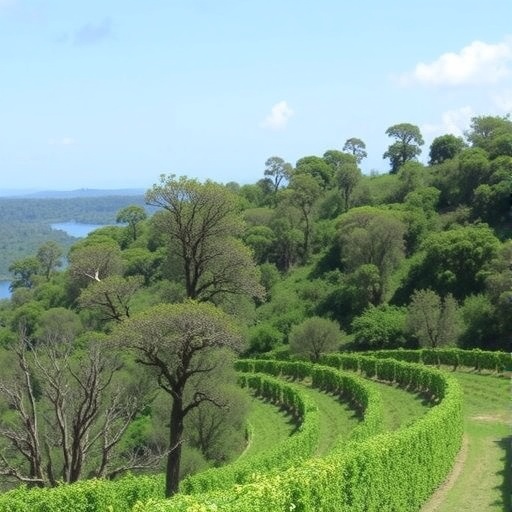
Ethiopia’s woody plants may be the quiet workhorses of climate action in East Africa, and a new systematic review shows just how much they matter. By pulling together 75 peer-reviewed studies spanning highland forests, dry woodlands, church groves, grazing exclosures, and farmers’ homegardens, a team of Ethiopian and South African researchers has built the most comprehensive national picture yet of how the country’s trees and shrubs are faring—and, in many places, quietly recovering. Their synthesis, published in the journal Discover Forests, reveals that where land is protected, whether by law, custom, or religion, woody species richness, forest structure, natural regeneration, and carbon storage all climb in tandem.
Ethiopia is a striking case study in the tension between people and plants. Its landscapes stretch from arid lowlands to moist Afromontane and montane forests, and this topographic diversity harbors an enormous range of woody species that support carbon sequestration, soil fertility, microclimate regulation, and hydrological stability, alongside supplying fuelwood, construction timber, medicine, and non-timber forest products. Yet decades of rapid population growth, agricultural expansion, fuelwood extraction, overgrazing, and unsustainable land management have driven extensive deforestation and habitat fragmentation. The conversion of natural forestland to cultivated fields and grazing areas has disrupted ecological processes, eroded species diversity, and undermined the ability of forests to regrow on their own.
To make sense of this sprawling, fragmented literature, the researchers conducted a rigorous systematic review. They searched Google Scholar, Scopus, and the Web of Science, supplemented by institutional repositories and grey literature including theses and government reports, applying clearly defined inclusion criteria: studies had to be conducted in Ethiopia and report empirical field data on woody species diversity, structure, or regeneration across land uses. Of some 400 initial records, 150 were screened out at title and abstract stage, and after full-text assessment 175 more were excluded for insufficient methodological detail, a narrow focus on non-woody vegetation, or reliance on remote sensing without field validation. The final pool of 75 studies was mined with a standardized data template capturing diversity indices such as Shannon and Simpson measures, species richness, stem density, basal area, regeneration status, and where available environmental variables like altitude, soil characteristics, and disturbance regimes.
The geographic picture that emerges is itself a finding. Research has clustered heavily in the northern and central highlands—Tigray, Amhara, and Oromia—while lowland regions such as Afar, Benishangul-Gumuz, and Somali remain strikingly underrepresented. Temporally, the literature has shifted from largely descriptive early accounts to quantitative assessments of diversity indices, vegetation structure, and carbon stocks, a trend the authors link to national initiatives including the Green Legacy Program and the Sustainable Land Management Project. Major institutions such as Mekelle University, Wondo Genet College of Forestry, and Bahir Dar University have anchored much of the empirical work. But the uneven coverage means the country’s dry lowland woodlands and bushlands, which support pastoral livelihoods and unique species assemblages, remain ecological blind spots.
Across ecosystems, a consistent hierarchy emerges. Afromontane forests show the highest woody species richness and structural complexity, with well-developed canopy and understory layers; studies from South Wollo demonstrate that long-term protection maintains high diversity even within fragmented forest patches. Sacred groves in northern Ethiopia retain substantial richness and serve as refuges for endemic and threatened taxa, underscoring the power of cultural protection. Church forests—often the last remnants of natural vegetation embedded within intensively cultivated agricultural land—harbor rare and endemic trees and show well-developed regeneration despite their small size. In the drier zones, exclosures, which restrict grazing and human interference to let vegetation recover, consistently show higher species richness, basal area, and seedling recruitment than adjacent open grazing lands. Agroforestry homegardens in southern and northern Ethiopia blend native and exotic species, providing both ecological function and household livelihoods.
Structurally, the review reveals telling patterns in how forests are built. Many protected and restored sites display inverted J-shaped diameter distributions—a hallmark of healthy forests, with many small-diameter individuals and progressively fewer large trees—signaling continuous recruitment and stable population dynamics. Height class distributions often mirror this pattern, with abundant individuals in lower classes and fewer trees reaching the upper canopy. By contrast, forests under intensive land use, subject to grazing pressure and agricultural expansion, frequently show truncated diameter and height distributions: fewer large trees, fewer young ones, and a demographic squeeze that signals regeneration failure. Where logging, fuelwood collection, overgrazing, or farmland expansion dominate, larger trees are selectively removed and seedling establishment is suppressed, simplifying stand structure and increasing vulnerability to further degradation.
The regeneration story is perhaps the most hopeful. Exclosures—areas fenced off from grazing and cultivation—show clear multi-aged population structures, indicating that once disturbance is removed, succession proceeds and seedlings recruit continuously. Older exclosures generally support higher species richness and more complex stand structures than younger sites, evidence that recovery is a time-dependent process requiring sustained protection. Environmental factors mediate these outcomes: seedling establishment depends on light availability, soil moisture, and altitude, while soil fertility and water availability further shape recruitment, especially in dry Afromontane and semi-arid ecosystems where moisture is often the binding constraint. But these favorable conditions are frequently overridden by anthropogenic pressures—grazing and biomass extraction repeatedly emerge as the decisive limits on natural regeneration in open-access lands.
The review also quantifies the biodiversity-carbon link, and the relationship is strikingly consistent. Ecosystems with higher species richness—protected forests, church forests, mature exclosures, and diverse agroforestry systems—exhibit greater basal area, stem density, and structural heterogeneity, all of which translate into elevated aboveground carbon storage. Regional studies show that species-rich sites consistently store more carbon than degraded or monoculture lands, and multi-aged stands with well-developed vertical structure support ongoing regeneration that stabilizes carbon stocks against disturbance. Exclosures and forests on moderate slopes at favorable altitudes accumulate more aboveground carbon, while steep, eroded, or degraded sites store less because of sparse vegetation and limited regeneration. The authors situate these findings in a global context, citing comparable evidence from Kenya, Uganda, northeast India, and Europe, where diverse tree plantings in agroforestry and woodland systems have been shown to increase both soil and aboveground carbon pools.
For Ethiopia’s policymakers, the practical implications are layered. The review argues that no single conservation tool is sufficient. Natural and protected forests serve as core biodiversity reservoirs; exclosures complement them by promoting regeneration in degraded lands and increasing carbon accumulation over time; sacred and church forests act as small but vital refugia and seed sources, maintaining landscape connectivity; and agroforestry systems buffer pressure on remnant forests while integrating native species with crops and sustaining livelihoods. Community-based management and traditional institutions—local governance, religious practices, communal regulations—play a crucial role in enforcing protection and monitoring resource use. Active restoration interventions such as assisted natural regeneration, enrichment planting, and soil and water conservation measures, particularly in degraded dryland areas, further strengthen resilience. Together, the authors contend, these approaches form a landscape-level framework that balances conservation, restoration, and sustainable use, and can be aligned with climate-smart and low-carbon development goals.
The synthesis is candid about what remains unknown. Long-term monitoring data are scarce, making it difficult to track temporal trends in species composition, population dynamics, and carbon sequestration. Lowland and arid zones remain understudied despite their unique ecological challenges and susceptibility to degradation. Links between woody diversity and ecosystem services—including carbon storage, soil fertility, and water regulation—remain insufficiently quantified, and few studies have integrated socio-economic and ecological data to explain how livelihoods and governance interact with ecological outcomes. No comprehensive meta-analysis of the carbon-diversity relationship exists for Ethiopia, and the impacts of climate change on regeneration and forest recovery are largely unaddressed despite their critical role in shaping future landscape resilience.
What the review ultimately delivers is a scientific foundation for integrated, multi-scale management in Ethiopia and comparable regions. The evidence suggests that promoting species-rich plantings, protecting natural regeneration, maintaining exclosures, and managing agroforestry systems are effective strategies to conserve biodiversity while enhancing carbon sequestration—actions that directly support climate adaptation and mitigation objectives, particularly in degraded and semi-arid regions where woody species recovery shapes carbon dynamics. For a country that has invested heavily in landscape restoration, the message is clear: protection works, diversity pays, and the trees left standing are among Ethiopia’s most valuable assets in the fight against land degradation and climate change.
Cite Scienmag News
Margaret Porter. (September 6, 2026). Woody plant diversity and carbon storage in Ethiopian forest and agroforestry systems. Scienmag. https://scienmag.com/woody-plant-diversity-and-carbon-storage-in-ethiopian-forest-and-agroforestry-systems/
Margaret Porter. "Woody plant diversity and carbon storage in Ethiopian forest and agroforestry systems." Scienmag, 6 September 2026, https://scienmag.com/woody-plant-diversity-and-carbon-storage-in-ethiopian-forest-and-agroforestry-systems/. Accessed 6 September 2026.
Margaret Porter. "Woody plant diversity and carbon storage in Ethiopian forest and agroforestry systems." Scienmag. September 6, 2026. https://scienmag.com/woody-plant-diversity-and-carbon-storage-in-ethiopian-forest-and-agroforestry-systems/


