


One Waste Stream, Four Products: Fungus and Hot Water Turn Hemp Oil Pomace Into Enzymes, Protein, Fuel and Fertilizer
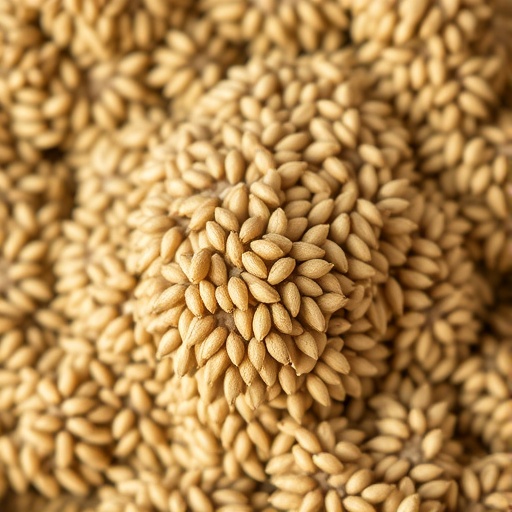
For mills cold-pressing hemp seeds, the pressing is only half the story. What remains — a dense, fibrous residue called hempseed oil pomace — is typically sold off as low-grade animal feed or simply discarded, a cost on the balance sheet and a burden on the environment. Now a research collaboration spanning Croatia, Slovenia and Serbia reports a way to convert this overlooked byproduct into four distinct value-added products at once: two industrial enzymes, a nutritionally enriched fungal biomass, a coal-like solid fuel and a liquid plant nutrient stream. The study, accepted after peer review on 12 August 2026 and published on 29 August 2026 in the open-access journal Biotechnology for Biofuels and Bioproducts, chains together two seemingly mismatched processes — biological fermentation and high-pressure hot-water chemistry — into a single sequential flowsheet that extracts value from the same handful of biomass several times over. According to its authors, it is the first integrated demonstration of its kind on any oilseed pomace.
The team was led by Marina Tišma of the Faculty of Food Technology Osijek at Josip Juraj Strossmayer University of Osijek in Croatia, working with corresponding author Aleksandra Petrovič of the University of Maribor in Slovenia and colleagues from the Ruđer Bošković Institute and the University of Zagreb in Croatia and the University of Novi Sad in Serbia. The collaboration drew on fermentation expertise in Osijek, NMR facilities in Zagreb and process engineering in Maribor, a division of labor typical of modern European biorefinery projects. Their starting material was hempseed oil pomace, the cake left after hemp seeds are mechanically pressed to release their oil. Far from inert, the residue still carries residual lipids, proteins and a substantial lignocellulosic fraction — the cellulose, hemicellulose and lignin framework that stiffens plant cell walls. With hempseed oil enjoying renewed popularity in foods and cosmetics, pomace volumes are rising in step, and so is the incentive to treat it as more than filler for animal rations. The question the researchers posed was deceptively simple: could one cheap feedstock support several product streams at once, without each processing step sabotaging the next?
The first stage was solid-state fermentation, or SSF, a cultivation technique in which microorganisms grow on moist solid material with little or no free-flowing water — closer in spirit to controlled composting than to the broth-filled tanks familiar from antibiotic production. The approach mirrors natural decomposition on a forest floor, except that a single cultivated species does the work under controlled, low-water conditions that demand little input and generate minimal wastewater. The researchers inoculated the pomace with Thermomyces lanuginosus, a thermophilic filamentous fungus celebrated in industry for the lipases it secretes, and let it colonize the substrate for ten days, sampling daily. As fungal hyphae penetrated the cake, they secreted enzymes outward to dismantle insoluble polymers into soluble nutrients, releasing two catalysts of commercial interest along the way: a lipase that attacks fats and oils, and a xylanase that cleaves xylan, the principal hemicellulosic sugar chain in many plant cell walls. Enzyme activities were monitored every single day of the run.
The yields were striking for such a crude substrate. Lipase activity reached up to 0.29 units per milliliter, while xylanase activity climbed to a peak of 79.34 units per milliliter — a unit corresponding to the amount of enzyme that liberates one micromole of product per minute under the assay conditions. Both enzymes emerged from the same fungal culture growing on the same waste cake, with no purified sugars or defined media, which is exactly the cost structure that industrial enzyme manufacturing has long chased. As green catalysts, such enzymes also let industry replace harsh acids and solvents with reactions that run in water at mild temperatures. The applications are broad. Lipases drive the fat-splitting and transesterification reactions behind detergent formulations, food processing, pharmaceutical intermediates and biodiesel synthesis. Xylanases are workhorses of the pulp and paper industry, where they reduce the chemicals needed for bleaching, and of animal feed and baking, where they break down viscous arabinoxylans that would otherwise trap nutrients and degrade texture.
Crucially, the fermentation did not merely export enzymes; it upgraded the remaining solid as well. After ten days the pomace had become a mycelium-based product permeated with fungal biomass, and its nutritional profile had measurably improved. The fermented material proved markedly enriched in free amino acids, with glutamic acid and aspartic acid the most abundant of all — each exceeding 5,000 micrograms per gram. Glutamic acid is the compound behind the savory umami taste prized in food chemistry, while aspartic acid occupies a central position in nitrogen metabolism and amino acid biosynthesis. Mycelium-based products are attracting growing attention as sustainable protein sources, and an enrichment pattern like this suggests the fermented pomace could find a second life as a feed ingredient or, further down the regulatory road, a functional food component — pending the safety assessments any such product must clear. In effect, the fungus converted part of the residue into protein while simultaneously secreting the enzymes the team wanted to harvest.
Understanding what the fungus had actually done to the lignocellulosic matrix required heavy analytical artillery. The team probed fermented and unfermented pomace with cross-polarization magic-angle spinning nuclear magnetic resonance to track the carbon skeleton of the material, Fourier-transform infrared spectroscopy to read out its functional groups, and scanning electron microscopy coupled with energy-dispersive X-ray spectroscopy to visualize surface architecture and map elemental composition. Together, the techniques revealed substantial structural modification and partial degradation of the lignocellulosic framework after fermentation — precisely what one expects when fungal enzymes systematically cleave hemicellulose and loosen the tightly interwoven cellulose–lignin network. Electron imaging tracked how fungal colonization reshaped the material’s morphology at the microscale. That characterization matters because the degree of degradation shapes how the biomass behaves downstream, both as a fuel precursor and as a potential feed material. This biological pre-digestion is not a side effect; it deliberately restructures the substrate’s chemistry ahead of the next, entirely non-biological stage of the flowsheet.
That next stage was hydrothermal carbonization, or HTC, in which wet biomass is sealed with water and heated under pressure — conditions that keep water liquid far above its normal boiling point and drive a cascade of dehydration, decarboxylation and condensation reactions often likened to artificial coalification. Carbon concentrates into a dense, porous solid called hydrochar, while a nutrient-bearing process water, the liquid fraction, collects separately. HTC’s great advantage is its tolerance of moisture, which matters here because freshly fermented pomace is wet; conventional thermal routes would demand a costly drying step in between. The researchers carbonized pomace sampled after 4, 7 and 10 days of fermentation and compared the products with hydrochar from unfermented material. The fermented feedstock yielded hydrochar with calorific values between 28.9 and 29.7 megajoules per kilogram — essentially on par with hydrochar from non-fermented pomace, and squarely within the range expected of quality solid fuels. Material of this kind is eyed not only for combustion and co-firing but for soil-oriented uses, since its carbon resists rapid microbial breakdown.
Fermentation also left fingerprints on the fuel chemistry. The solid-state fermentation stage affected energy yield, volatile matter and the carbon and ash contents of the resulting hydrochars, and — most usefully — raised the fixed carbon fraction while improving the fuel ratio, the ratio of fixed carbon to volatile matter that describes how steadily, cleanly and persistently a solid fuel burns. Volatile matter and ash behavior are the details fuel engineers watch closely, because they govern slagging, emissions and burnout in real boilers. In plain terms, the fungus pre-removed the most labile, smoke-prone components during its ten-day residence on the pomace, nudging the material toward a denser, more carbon-rich fuel without sacrificing heating value. For a biorefinery it is an elegant trade: the biological stage produces enzymes and enriched biomass upstream, then hands a subtly improved feedstock to the thermochemical stage downstream — no drying, no waste, no loss of fuel quality.
The liquid fraction told its own story. Process waters from hydrothermal carbonization are often phytotoxic, loaded with phenolics, organic acids and salts that can injure plants. Yet the liquor produced from fermented pomace showed reduced toxicity alongside elevated concentrations of organic acids, total nitrogen and potassium — three assets in a fertilizer, where nitrogen drives vegetative growth and potassium governs water regulation and stress tolerance. The team characterized the liquors through parameters such as chemical oxygen demand, total organic carbon, total phenolic compounds and volatile fatty acids, and probed their fertilizer-oriented potential in seed-growth assays using indicators including the Munoo–Liisa vitality index and the root length index. Both the hydrochar and the liquid fraction emerged with potential for fertilizer-oriented applications: the hydrochar as a stable, carbon-rich soil amendment, the liquor as a nutrient carrier. The caveat is concentration — before any practical use, the liquid fraction would require appropriate dilution or post-treatment.
To the authors’ knowledge, the integrated use of Thermomyces lanuginosus to co-produce lipase and xylanase and then generate hydrochar and biofertilizer from hempseed oil pomace — or from any other oilseed pomace — has not previously been reported, a claim that underlines how much of the oilseed processing landscape remains unmapped for sequential valorization. The work was supported by the Croatian Science Foundation, the Slovenian Research and Innovation Agency, the Ministry of Science, Technological Development and Innovation of the Republic of Serbia and the European Regional Development Fund, with the authors pointing to life-cycle and techno-economic assessments as the necessary bridge between laboratory flowsheet and industrial reality. But the conceptual payoff is already visible. In a circular bioeconomy, the difference between waste and feedstock is a matter of process design: with one fungus, one pressurized reactor and ten days of patience, a discarded press cake became an enzyme factory, a protein-enriched biomass, a solid fuel and a plant feed — four products, one residue, zero landfill.
Cite Scienmag News
Alan Morgan. (August 30, 2026). Two-step process turns hempseed oil pomace into enzymes and hydrochar. Scienmag. https://scienmag.com/two-step-process-turns-hempseed-oil-pomace-into-enzymes-and-hydrochar/
Alan Morgan. "Two-step process turns hempseed oil pomace into enzymes and hydrochar." Scienmag, 30 August 2026, https://scienmag.com/two-step-process-turns-hempseed-oil-pomace-into-enzymes-and-hydrochar/. Accessed 30 August 2026.
Alan Morgan. "Two-step process turns hempseed oil pomace into enzymes and hydrochar." Scienmag. August 30, 2026. https://scienmag.com/two-step-process-turns-hempseed-oil-pomace-into-enzymes-and-hydrochar/


