


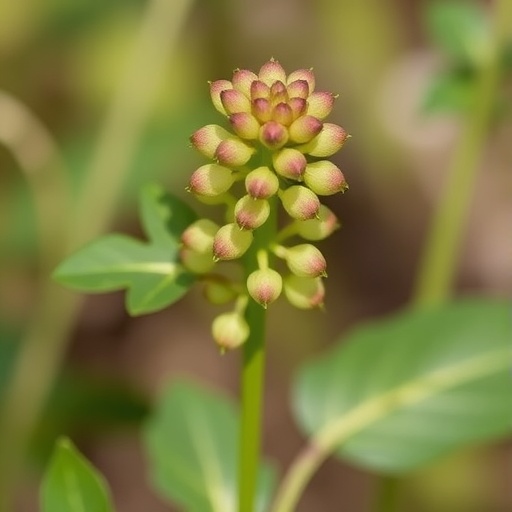
A wild relative of cacao has yielded a remarkably complete genetic blueprint that could help scientists understand how tropical trees withstand drought, evolve new chromosome structures and produce medically interesting plant compounds. In a study published in Plant Cell Reports, researchers report the first telomere-to-telomere, chromosome-level genome assembly of Guazuma ulmifolia, a Malvaceae species known by names including West Indian elm and guácima. The 311.31-million-base-pair genome offers an unusually detailed view of a plant lineage that is ecologically valuable, used in traditional medicine and closely related to Theobroma cacao, the tree responsible for chocolate. As climate change intensifies drought risk in cacao-growing regions, the genome could become a foundation for identifying genetic features associated with stress tolerance in cacao and other crops.
The scale of the achievement lies in the completeness of the assembly. Rather than stitching together a genome that still contains numerous unresolved gaps, the researchers produced a telomere-to-telomere, or T2T, reference genome designed to represent chromosome sequences from one end to the other. Telomeres are repetitive DNA structures that protect chromosome ends, while centromeres are specialized regions involved in chromosome movement during cell division. Both regions are difficult to sequence and assemble because they often contain long, repetitive stretches of DNA. The new assembly reaches a contig N50 of 35.19 million base pairs, a measure indicating that relatively long continuous DNA segments make up the assembly, and achieves 98.70 percent BUSCO completeness. BUSCO assesses whether a genome contains a standardized collection of genes expected to be conserved in a particular lineage, making the result a strong indication that most of the organism’s core genetic content has been captured.
The genome also reveals that repetitive DNA occupies 27.43 percent of G. ulmifolia. The largest contribution comes from long terminal repeat retrotransposons, a class of mobile genetic elements that can copy themselves through an RNA intermediate and insert the copy elsewhere in the genome. These elements are sometimes described as genomic parasites, but they can also influence genome structure, gene regulation and evolutionary change. Their accumulation can expand genome size, alter the spacing between genes and contribute to chromosome rearrangements. By comparing G. ulmifolia with other members of the Malvaceae, the researchers found that differences in genome size are associated with two evolutionary forces: the history of polyploidization and the activity of transposable elements. Polyploidization occurs when an organism acquires additional complete sets of chromosomes, while transposable-element dynamics can add or remove large quantities of DNA over time.
That comparison places the cacao relatives within a broader history of genomic expansion and contraction. In plants, polyploid genomes may later undergo diploidization, a long process in which duplicated genes are lost, silenced or reorganized until the genome behaves more like a diploid one. Repeated cycles of duplication and restructuring can leave behind duplicated genes and altered chromosome relationships. Transposable elements add another layer of change by moving through the genome and generating mutations or large-scale rearrangements. A high-quality assembly makes it possible to distinguish these processes more accurately than a fragmented draft genome would. Instead of seeing isolated sequences, scientists can examine how genes and repeats are positioned along entire chromosomes and compare those arrangements across related species.
One of the most striking findings concerns chromosome evolution. Using comparative genomic analyses and ancestral karyotype reconstruction, the team identified five lineage-specific chromosome fusion events that distinguish G. ulmifolia from T. cacao. A chromosome fusion occurs when two ancestral chromosomes become joined into one, changing the number and organization of chromosomes without necessarily destroying the genes they carry. Such events can affect meiotic pairing, gene linkage and the inheritance of traits. Reconstructing them is similar to comparing the layouts of related genomes and tracing which segments were joined, separated or rearranged during evolution. The result offers a clearer explanation of how the chromosomes of this wild cacao relative came to differ from those of cultivated cacao and provides a framework for interpreting structural variation within the group.
The study’s practical importance centers on drought adaptation. Climate change is already placing pressure on tropical agriculture, and cacao is particularly vulnerable because its production depends on stable moisture and temperature conditions. The researchers identified tandem duplication-associated expansions in two stress-related gene families: late embryogenesis abundant, or LEA, genes and glutathione S-transferase, or GST, genes. Tandem duplication occurs when a DNA segment is copied and the resulting gene copies remain adjacent on the same chromosome. Over evolutionary time, duplicated copies can retain the original function, divide the original function between them or acquire new roles. LEA proteins are commonly associated with protection against cellular dehydration, while GST enzymes participate in detoxification and help plants manage reactive molecules generated during environmental stress.
The presence of expanded LEA and GST families does not by itself prove that these genes make G. ulmifolia drought tolerant. Establishing that connection will require experiments in which plants are exposed to controlled water limitation and the activity of individual genes is measured alongside physiological traits such as water use, photosynthesis, membrane stability and recovery after rewatering. Nevertheless, the genomic pattern gives researchers a shortlist of candidates for such tests. Because the species is a wild relative of cacao, its stress-associated genes could eventually inform comparative breeding or genetic engineering strategies. The immediate value is as a discovery resource: scientists can now investigate whether particular versions or arrangements of LEA and GST genes are associated with survival in dry environments.
The genome also sheds light on flavonoid biosynthesis, the metabolic pathway that produces a diverse family of plant compounds involved in pigmentation, defense and protection from ultraviolet radiation. Flavonoids include molecules with antioxidant properties, although activity observed in chemical or cell-based assays should not automatically be interpreted as a clinical benefit in humans. In G. ulmifolia, genes involved in flavonoid production were largely conserved in copy number rather than dramatically expanded. Their activity, however, varied among tissues, indicating that the plant regulates the pathway according to biological context. A gene expressed strongly in leaves may contribute to protection from sunlight or herbivores, whereas activity in bark or other tissues could reflect different defensive or developmental functions.
This distinction between gene copy number and gene expression is central to understanding plant chemistry. A pathway can produce different quantities or combinations of compounds without acquiring many additional genes, simply by switching existing genes on or off in different organs or at different stages of development. The researchers’ expression results therefore identify candidate genes for investigating the secondary metabolism of G. ulmifolia, a species already associated with tannins, proanthocyanidins and other phenolic compounds. Future work could connect tissue-specific expression with measured metabolite profiles, environmental conditions and biological activity. Such studies may clarify which genomic features control the plant’s chemical diversity, but the new genome itself is a starting point rather than evidence that extracts from the tree are safe or effective treatments.
The assembly was generated through a combination of modern genome-analysis approaches, including long-read sequencing, chromosome-scale organization and comparative computational analysis. Long reads are valuable because they can span repetitive regions that defeat short-read methods, while chromosome conformation data can reveal which DNA fragments physically interact inside the nucleus and therefore belong near one another. Gene prediction and functional annotation then match genomic sequences to likely coding regions and known protein families. The authors have deposited the raw sequencing data in the GenBank Sequence Read Archive under project PRJNA1279801, allowing other researchers to examine the underlying data. The work was funded by the National Natural Science Foundation of China and the Key Laboratory of Mass Spectrometry Imaging and Metabolomics at Minzu University of China.
For cacao researchers, the new reference genome could serve as a bridge between evolutionary biology and crop improvement. Wild relatives often contain genetic variation lost during domestication, including traits that help plants cope with pathogens, heat or water scarcity. A reference genome does not immediately create a drought-resistant cacao variety, but it enables more precise comparisons between species and populations. Researchers can search for conserved genes, detect structural differences, map candidate regions associated with stress responses and design molecular markers for breeding. The chromosome fusion history is equally important because large rearrangements can influence how easily genes are inherited together. With a complete genomic map in hand, scientists have a sharper tool for exploring the evolutionary innovations that allowed a tropical tree related to cacao to persist across changing environments—and for asking whether some of those innovations can help protect the future of chocolate.
Cite Scienmag News
Rosalind Whitmere. (August 28, 2026). Complete Guazuma ulmifolia Genome Reveals Evolution, Drought Adaptation, and Flavonoid Biosynthesis. Scienmag. https://scienmag.com/complete-guazuma-ulmifolia-genome-reveals-evolution-drought-adaptation-and-flavonoid-biosynthesis/
Rosalind Whitmere. "Complete Guazuma ulmifolia Genome Reveals Evolution, Drought Adaptation, and Flavonoid Biosynthesis." Scienmag, 28 August 2026, https://scienmag.com/complete-guazuma-ulmifolia-genome-reveals-evolution-drought-adaptation-and-flavonoid-biosynthesis/. Accessed 28 August 2026.
Rosalind Whitmere. "Complete Guazuma ulmifolia Genome Reveals Evolution, Drought Adaptation, and Flavonoid Biosynthesis." Scienmag. August 28, 2026. https://scienmag.com/complete-guazuma-ulmifolia-genome-reveals-evolution-drought-adaptation-and-flavonoid-biosynthesis/


