


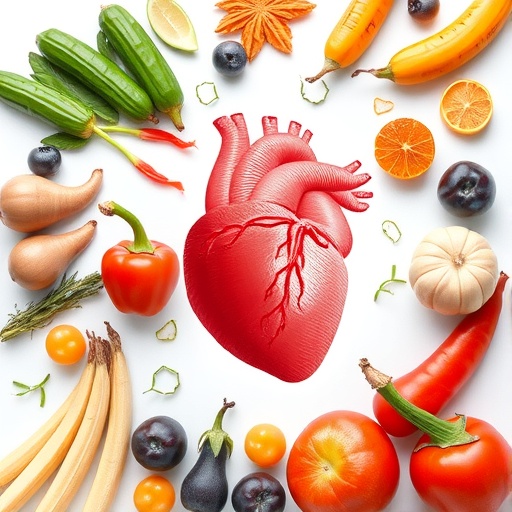
A plant-rich diet may help protect people from heart attacks, strokes and premature death even before full-blown cardiovascular disease develops, according to a large analysis spanning nearly 100,000 adults in the United Kingdom and United States. The study focused on people classified as having stages 0 through 3 of cardiovascular-kidney-metabolic (CKM) syndrome, a framework introduced by the American Heart Association to describe the biological links between excess weight, diabetes, kidney disease and cardiovascular damage. Participants who more closely followed either an alternative Mediterranean diet or a healthful plant-based diet generally had lower risks of major adverse cardiovascular events and mortality. By contrast, people whose diets scored as more inflammatory faced higher risks, particularly when their eating patterns were rich in red and processed meats and other foods associated with chronic inflammation.
The findings come from an observational study using two prospective population cohorts: 82,222 participants from the UK Biobank and 16,842 participants from the US National Health and Nutrition Examination Survey, or NHANES. The UK Biobank participants were drawn from dietary and health data collected between 2006 and 2010, while the NHANES analysis covered survey cycles from 2005 through 2018. Individuals with incomplete dietary information, missing outcome data, incomplete covariates or CKM stage 4—defined by established cardiovascular disease—were excluded. The researchers then followed participants through linked hospital and mortality records. Their primary cardiovascular endpoint, known as MACE, combined cardiovascular death, nonfatal myocardial infarction and stroke. All-cause mortality was also assessed, while NHANES analyses focused on mortality because reliable data on nonfatal cardiovascular events were unavailable.
CKM syndrome is designed to capture a continuum rather than a single diagnosis. Stage 0 describes people without recognized metabolic or kidney risk factors, while stage 1 includes elevated body mass index, increased waist circumference or prediabetes. Stage 2 incorporates conditions such as hypertension, diabetes, metabolic syndrome and moderate-to-high-risk chronic kidney disease. Stage 3 identifies people with very high-risk kidney disease or a predicted 10-year cardiovascular disease risk of at least 20 percent, even when overt cardiovascular disease has not yet been reported. This approach matters because metabolic dysfunction, kidney impairment and vascular injury often develop together for years before a heart attack or stroke occurs. Diet may influence that trajectory through several biological routes at once, including blood pressure, insulin sensitivity, lipid metabolism, oxidative stress and immune activation.
To measure diet quality, the investigators used different tools in the two cohorts because the available dietary data were not identical. The alternative Mediterranean diet, or AMED, score assessed nine components, rewarding higher intake of foods such as fruits, vegetables and whole grains while assigning reverse scores to red and processed meat and other less favorable components. The healthful plant-based diet index, or HPDI, divided foods into healthful plant foods, less healthful plant foods and animal-derived foods. Whole grains, fruits and vegetables received positive weights, whereas refined grains, sugary foods and animal foods received inverse weights. The researchers also calculated the Dietary Inflammatory Index, or DII, which estimates the inflammatory potential of a diet using as many as 45 food components. Positive scores indicate a more pro-inflammatory pattern, while negative scores indicate a more anti-inflammatory one. NHANES data allowed analysis of 28 components.
The associations were substantial but varied between measures and populations. In the UK Biobank, each standard-deviation increase in HPDI score was associated with a hazard ratio of 0.95 for MACE and 0.90 for all-cause mortality. For AMED, the corresponding hazard ratios were 0.93 for MACE and 0.90 for all-cause mortality. In practical terms, these estimates indicate roughly 5 to 10 percent lower relative risks for each standard-deviation improvement in the scores after adjustment for age, sex, ethnicity, education, socioeconomic status, smoking, alcohol use, physical activity, energy intake, body mass index and diabetes history. Compared with participants in the lowest score tertile, those in the highest HPDI and AMED tertiles had 11 percent and 13 percent lower risks of MACE, respectively. The study also linked higher HPDI scores to a 10 percent lower risk of cardiovascular death and a 6 percent lower risk of stroke, while higher AMED scores were associated with an 8 percent lower risk of cardiovascular death and a 9 percent lower risk of myocardial infarction.
The signal was especially clear for dietary inflammation. In NHANES, each standard-deviation increase in DII was associated with an 18 percent higher risk of both all-cause mortality and cardiovascular mortality. Compared with people in the lowest DII tertile, those in the highest had 38 percent higher all-cause mortality and 50 percent higher cardiovascular mortality. Conversely, each standard-deviation increase in AMED score was associated with a 12 percent reduction in all-cause mortality in NHANES. The researchers found no consistent nonlinear relationship between the dietary scores and mortality, myocardial infarction or cardiovascular death. However, HPDI showed an inverted U-shaped association with MACE, with scores above 60 linked to progressively lower risk, while AMED showed a U-shaped association with stroke. These patterns suggest that dietary effects may not increase in a simple straight line across the entire range of eating behaviors, although the study cannot determine an optimal score for individuals.
The analysis also examined individual vitamins and minerals, revealing a broad pattern of associations rather than a single “magic” nutrient. Higher intakes of alpha-carotene, beta-carotene and vitamin C were associated in both cohorts with lower risks of MACE, all-cause mortality and cardiovascular mortality. In the UK Biobank, participants in the highest alpha-carotene tertile had a 12 percent lower risk of stroke, while those with the highest beta-carotene intake had a 12 percent lower risk of myocardial infarction. Higher vitamin C intake was associated with a 20 percent reduction in cardiovascular mortality. In NHANES, greater intake of niacin, or vitamin B3, and folate, or vitamin B9, was associated with lower risks of all-cause and cardiovascular death. Vitamin E was associated with 9 percent lower all-cause mortality and 23 percent lower cardiovascular mortality for each standard-deviation increase in intake. Among minerals, higher copper, iron and magnesium intake was consistently associated with lower risks of MACE and mortality, with hazard ratios ranging from 0.63 to 0.89 when the highest and lowest intake tertiles were compared. Magnesium and copper were also linked to lower myocardial infarction risk, while zinc was associated with lower stroke risk.
The biological analyses offered clues about how diet might influence CKM outcomes. The researchers tested whether oxidative stress, inflammatory blood markers and phenotypic aging—an estimate of biological aging based on multiple biomarkers—could statistically mediate the diet-outcome associations. In the UK Biobank, phenotypic aging accounted for as much as 29.5 percent of the association between HPDI and MACE and 20.4 percent of the association between AMED and MACE. Oxidative stress measures, including uric acid and the uric-acid-to-HDL cholesterol ratio, accounted for portions ranging from 5.7 to 14.9 percent. White blood cell counts, neutrophils, lymphocytes and C-reactive protein also contributed to the statistical mediation, with proportions generally between 1.3 and 17 percent. In NHANES, uric acid, the uric-acid-to-HDL ratio and neutrophil counts partially mediated the relationships between AMED or DII and cardiovascular mortality. These results are compatible with the idea that plant-rich diets may reduce vascular risk partly by dampening chronic inflammation and oxidative damage while slowing biological aging, but mediation analysis in an observational study does not prove that these pathways are causal.
The researchers caution that the findings should be interpreted as evidence about dietary patterns and whole foods, not as a prescription for high-dose supplements. Nutrients are consumed together, and people who eat more fruits, vegetables, legumes and whole grains may also exercise more, smoke less, have greater access to health care or consume fewer ultra-processed foods. Although the statistical models adjusted for many of these factors, the study could not account for ultra-processed food intake, and the dietary assessments captured baseline habits rather than changes over time. Multiple vitamin and mineral comparisons were exploratory and were not formally corrected for multiple testing, raising the possibility that some associations occurred by chance. Dietary instruments also differed between the UK Biobank and NHANES, and NHANES participants who were excluded for missing information could have introduced selection bias. The analysis did not provide stage-specific guidance for CKM stages 0, 1, 2 and 3, and its participants came from two predominantly Western cohorts. Randomized dietary trials, especially those tracking inflammatory and aging biomarkers, will be needed to determine whether changing diet directly reduces cardiovascular events. For now, the evidence points toward a familiar but increasingly measurable strategy: emphasizing minimally processed plant foods, healthy fats, whole grains and nutrient-dense produce while limiting pro-inflammatory red and processed meat-based eating patterns may help interrupt CKM syndrome before it culminates in irreversible cardiovascular disease.
Cite Scienmag News
Violet Ashdown. (August 28, 2026). Diet and micronutrients linked to cardiovascular events, mortality in CKM syndrome. Scienmag. https://scienmag.com/diet-and-micronutrients-linked-to-cardiovascular-events-mortality-in-ckm-syndrome/
Violet Ashdown. "Diet and micronutrients linked to cardiovascular events, mortality in CKM syndrome." Scienmag, 28 August 2026, https://scienmag.com/diet-and-micronutrients-linked-to-cardiovascular-events-mortality-in-ckm-syndrome/. Accessed 28 August 2026.
Violet Ashdown. "Diet and micronutrients linked to cardiovascular events, mortality in CKM syndrome." Scienmag. August 28, 2026. https://scienmag.com/diet-and-micronutrients-linked-to-cardiovascular-events-mortality-in-ckm-syndrome/


