

A Finnish River Basin May Be Approaching Five Socio-Environmental Tipping Points
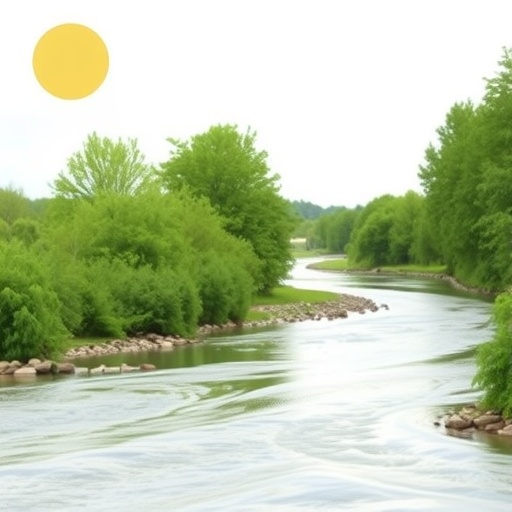
A river basin in northern Finland has become a real-world laboratory for a powerful but controversial idea: that small changes in human behavior, environmental conditions or governance can trigger rapid transformations across an entire social-ecological system. In a study published in Environmental Management, researchers identified five prospective socio-environmental tipping points in the 3,824-square-kilometer Kiiminkijoki River Basin. Some could accelerate ecological recovery, while others could deepen environmental degradation. The analysis suggests that the future of the river may depend not only on temperature, rainfall and nutrient pollution, but also on landowners’ perceptions, rural population trends, tourism and the existence of institutions capable of connecting people who manage different parts of the watershed.
Socio-environmental tipping points differ from the more familiar climate tipping points associated with melting ice sheets or collapsing ocean currents. They describe moments when a relatively small disturbance, intervention or shift in perception changes the future trajectory of a complex system. A feedback loop can amplify an initial change: successful restoration may encourage more landowners to restore their property, which improves water quality and produces further support for restoration. A cascade can transmit change through a network of connected elements, such as policies, businesses, ecosystems and communities. A nonlinear relationship can produce a threshold, beyond which a modest environmental change causes a disproportionately large response. In real landscapes, these mechanisms can overlap, making the precise location of a “tipping point” difficult to calculate.
The Kiiminkijoki basin illustrates why environmental management cannot be reduced to a single pollutant or land-use decision. Roughly half of the basin is peatland, and about 60 percent of those peatlands have been drained during the past century for forestry, agriculture and peat extraction. Drainage alters water tables and accelerates the movement of dissolved organic matter and nutrients into streams. Forestry operations and other nonpoint sources have contributed to uneven water quality, ranging from poor in some tributaries to excellent in the upper reaches. The ecological consequences include the disappearance of salmon and other migratory fish, species that carry cultural significance as well as ecological value for communities along the river.
The basin is also divided socially and administratively. Approximately 58 percent of the land is privately owned, generally by small landowners, while much of the remainder is managed by Metsähallitus, Finland’s state forest administration, alongside municipal and parish holdings. The territory crosses four municipalities and two regional administrative areas. Many private landowners are aging, and younger family members who inherit property increasingly live in cities, creating a growing population of remote landowners who may have limited involvement in daily land management. The resulting decisions about forests, peatlands and restoration are shaped by income, age, knowledge, local identity, regulation and trust—variables that can interact with hydrology and ecology in ways that are difficult to capture in conventional environmental models.
To make those interactions visible, Julie Shortridge of Virginia Tech, Aleksi Räsänen and Hannu Marttila of the University of Oulu organized a one-day workshop in January 2025. Seventeen researchers and practitioners from hydrology, ecology, anthropology, geography, engineering, government research institutes and regional administration took part. Participants first created an inventory of the basin using five categories: the elements present in the system, measurable state variables describing those elements, linkages between them, internal processes that local actors can influence, and exogenous forces such as climate change that are largely outside local control. They then examined the inventory for feedback loops, cascading linkages and nonlinear relationships that could produce rapid change.
The first prospective tipping point involves landowners’ perceptions of restoration and improved land management. Many residents support better river health, but disagreement often concerns which measures are practical and effective. A small number of visible, successful restoration projects could provide evidence that changes in forestry or peatland management deliver tangible benefits. If those results are shared through trusted peer networks, they could improve confidence among neighboring landowners. Financial incentives, technical assistance and policies that reduce the risk of experimentation could reinforce the process. In technical terms, the researchers envision a positive feedback loop in which adoption increases perceived feasibility, perceived feasibility increases adoption, and both generate stronger institutional support.
That loop could fail, however, because ecological benefits are often delayed. A restored peatland or forest buffer may reduce nutrient exports gradually, while basin-scale improvements in water color, turbidity or fish populations can take years to become obvious. If landowners do not see results, they may conclude that restoration is ineffective even when it has improved conditions relative to a worse alternative. The researchers therefore emphasize long-term monitoring, empirical demonstrations and communication that makes distant or delayed benefits visible. The workshop also highlighted a gap between scientific recommendations and local judgments: continuous-cover forestry, for example, may offer environmental advantages in some settings but was viewed by local stakeholders as infeasible under many conditions.
A second possible tipping point could arise from nature-based tourism if the Kiiminkijoki basin receives national recognition as a biodiversity hotspot. Increased visibility could attract visitors, create income and generate funds for conservation. Tourism revenue might then finance additional restoration, improving landscape quality and wildlife viewing and making the area even more attractive. But the same process could run in the opposite direction. More traffic, construction, erosion and disturbance could degrade habitats and scenic quality, reducing the visitor experience and undermining tourism. Finland’s “Everyman’s Rights,” which allow low-impact public access to many natural areas, make the basin widely accessible but also complicate efforts to prevent sensitive sites from being overused. The outcome would depend on visitor management, environmental education and whether tourism income is deliberately connected to protection and restoration.
A third tipping point concerns demographic change and livelihoods. Population loss in small villages can lead to declining public services, weaker infrastructure and fewer economic opportunities, creating conditions that encourage further outmigration. At the same time, urban-based heirs may own land without relying on forestry income for their livelihoods. That could make some owners more open to restoration than landowners whose immediate household income depends on maximizing production. Remote work could partially alter these patterns by allowing people to live in rural areas while working elsewhere, but it could also create tensions between newcomers and long-term residents. Whether demographic change reinforces decline or supports new forms of entrepreneurship, environmental stewardship and social innovation may depend on local trust and participation rather than economic growth alone.
The fourth tipping point is institutional: the creation of a basin coordinator. A coordinator could act as a hub linking municipalities, state agencies, private landowners, researchers and organizations that provide funding or technical expertise. By restructuring the network of relationships, the position could allow information and resources to travel across administrative boundaries that currently fragment decision-making. It could connect landowners interested in restoration with specialists able to design projects, monitor outcomes or identify financial support. A basin coordinator would not automatically trigger a transformation, but could strengthen the linkages needed for other positive changes to spread. In January 2025, the Finnish Forest Centre began developing a basin coordination structure for the area, offering an opportunity to test whether governance itself can become a leverage point.
The fifth prospective tipping point is environmental and potentially much less controllable. Participants identified threshold-like responses linked to climate-driven warming, altered precipitation and changing river flows. Salmonid fish are especially vulnerable when summer temperatures rise during periods of low discharge, because physiological stress increases sharply beyond critical temperature ranges. Peatlands can also respond abruptly when water tables move beyond levels that sustain characteristic vegetation and biogeochemical processes. Changes in these systems could affect biodiversity, carbon storage, nutrient transport, recreation and the public perception of river health. Yet the researchers warn against treating every ecological change as a neat threshold: biodiversity loss is often gradual, delayed and multidimensional rather than governed by a single measurable switch.
The study does not claim that the Kiiminkijoki is certain to cross any of these tipping points, nor does it calculate exact threshold values. The five possibilities emerged from expert elicitation in a workshop, and the participants were drawn largely from the researchers’ professional networks. Private and institutional landowners—among the actors most directly involved in land-use decisions—were not broadly represented. Only seven participants completed a post-workshop survey, so the feedback cannot be considered a formal evaluation. The authors also acknowledge that mapping all the relationships in a socio-environmental system can become overwhelming, and that different participants may identify different tipping points depending on their interests, knowledge and sense of agency.
Even with those limitations, the framework offers a practical way to turn the dramatic language of tipping points into research priorities. Instead of asking only whether water quality is improving, scientists could examine how restoration affects nutrient exports, how those results alter landowner attitudes, and which communication channels lead to replication. Researchers could combine hydrological measurements, ecological surveys, social research and computational models to identify causal pathways and estimate when interventions are most likely to produce system-wide effects. Citizen-science programs might further connect residents with monitoring and conservation, although the researchers note that local stakeholders often place greater trust in direct empirical evidence than in models alone.
The larger message is that river-basin management may hinge on leverage rather than efficiency. An efficiency-focused program might seek to restore the largest possible area with a limited budget. A tipping-point approach would also ask which project could change perceptions, build trust, connect institutions or create a self-sustaining cycle of adoption. That strategy could help Finland pursue climate mitigation, biodiversity protection and cleaner water simultaneously, but only if local communities help design and own the process. In the Kiiminkijoki basin, the next decisive shift may not begin with a dramatic flood or a single environmental collapse. It may begin with a successful restoration site, a new institutional connection, a carefully managed visitor economy—or a subtle change in how people imagine the future of their river.


