


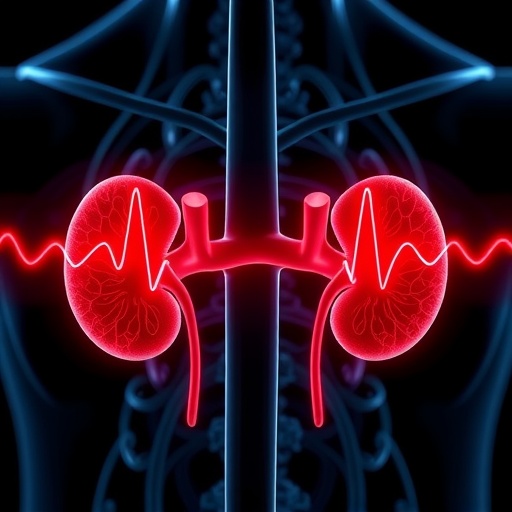
Atrial fibrillation is usually recognized as an electrical disorder of the heart, but new findings suggest that its biological footprint may extend into the kidney far earlier than conventional measures can detect. In a study of patients arriving at an emergency department with acute chest pain, investigators found that people presenting with atrial fibrillation had markedly higher urinary concentrations of two biomarkers associated with renal tubular injury than those in sinus rhythm. The findings, published in Clinical Research in Cardiology, point toward a close relationship between acute cardiac stress, abnormal rhythm, and subtle damage to the kidney’s filtering machinery. They also raise the possibility that a rapid urine test could one day help clinicians identify patients with atrial fibrillation who are experiencing cardiorenal stress, even when standard kidney-function measurements still appear relatively stable.
The research examined 601 patients evaluated for acute chest pain at University Hospital Regensburg in Germany. Among them, 68 were found to have atrial fibrillation, while 533 were in sinus rhythm, the normal coordinated rhythm generated by the heart’s electrical conduction system. The study was conducted in a real-world emergency-care setting rather than a narrowly selected clinical trial population, giving the results relevance to the complex patients commonly seen in acute cardiac assessment. Chest pain can arise from many causes, but it may also signal acute coronary syndrome, a group of conditions that includes unstable angina and myocardial infarction. In such situations, the heart and kidneys can become linked through changes in blood flow, pressure, inflammation, and neurohormonal activation—a process broadly known as cardiorenal syndrome.
The investigators focused on two urinary markers: N-acetyl-β-D-glucosaminidase, abbreviated uNAG, and kidney injury molecule 1, or uKIM. NAG is an enzyme located mainly inside the lysosomes of renal tubular cells. Because it is a relatively large molecule, it is normally present in urine at low levels; increased urinary activity can indicate that tubular cells are under stress or are releasing intracellular contents. KIM-1 is a membrane protein that becomes strongly expressed in injured proximal tubular cells. After renal injury, its extracellular portion can be shed into the urine, making uKIM a signal of tubular damage. These markers differ from creatinine and estimated glomerular filtration rate, or eGFR, which primarily reflect overall filtration performance rather than early structural injury in specific parts of the nephron.
The distinction is important because the kidney can sustain cellular stress before its filtration rate falls. Serum creatinine, the conventional laboratory marker used to assess acute kidney injury, may remain within an apparently acceptable range during the early stages of damage. eGFR is calculated from creatinine and other patient characteristics and is useful for estimating filtration, but it can also miss rapidly developing tubular injury. By contrast, biomarkers such as NAG and KIM-1 may detect biological disturbance at the level of renal tissue. Their elevation does not automatically prove that clinically significant acute kidney injury will follow, but it can provide an earlier indication that the kidneys are responding to an acute systemic insult.
In the Regensburg cohort, uNAG, uKIM, and NT-proBNP concentrations were all significantly higher in patients with atrial fibrillation than in those with sinus rhythm, with each comparison reaching a probability value below 0.001. NT-proBNP is released when cardiac muscle walls are stretched or exposed to increased pressure and is widely used as a marker of cardiac hemodynamic stress. The diagnostic performance of the urinary markers was measured using the area under the receiver operating characteristic curve, or AUC. uNAG reached an AUC of 0.730, indicating moderate ability to distinguish patients with atrial fibrillation from those in sinus rhythm. uKIM had a lower AUC of 0.634, suggesting a weaker, though still measurable, association. Neither result supports using these biomarkers alone to diagnose atrial fibrillation, but the pattern indicates that rhythm disturbance and renal tubular stress frequently coexist during acute chest-pain presentations.
The relationship became particularly notable among patients diagnosed with acute coronary syndrome. In this subgroup, individuals with atrial fibrillation again showed significantly higher concentrations of the measured biomarkers than those in sinus rhythm. Acute coronary syndrome can reduce the heart’s pumping efficiency, alter ventricular filling, and activate powerful stress responses involving the sympathetic nervous system and renin–angiotensin–aldosterone system. These changes may constrict renal blood vessels, modify intrarenal blood flow, and promote sodium and water retention. Atrial fibrillation can add another layer of hemodynamic instability because the irregular rhythm eliminates effective atrial contraction, shortens diastolic filling time when the heart rate is rapid, and produces beat-to-beat variation in ventricular output. Together, these effects may reduce the consistency of renal perfusion and increase susceptibility to tubular stress.
Venous congestion may be another important link. When the heart struggles to handle returning blood, pressure can rise in the central veins and be transmitted backward into the renal veins. Elevated renal venous pressure can oppose filtration, increase interstitial pressure within the kidney, and impair oxygen delivery to tubular cells. This mechanism is increasingly recognized as a major component of cardiorenal syndrome, sometimes more important than reduced arterial blood flow alone. Atrial fibrillation may worsen congestion through impaired cardiac filling, coexisting structural heart disease, or rapid ventricular rates. In this context, elevated uNAG and uKIM could represent the kidney’s response to a combination of altered perfusion, venous pressure, neurohormonal signaling, and systemic inflammation. However, the investigators emphasize that their observational data cannot determine which process comes first.
To examine whether the biomarkers were independently related to atrial fibrillation, the researchers used logistic regression, a statistical method that estimates the association between several variables and the probability of an outcome. The analysis showed that uNAG, NT-proBNP, and high-sensitivity cardiac troponin T were independent predictors of atrial fibrillation. Troponin T is released when cardiac muscle cells are injured and is a central marker in the evaluation of suspected myocardial infarction. The independent contribution of uNAG is especially notable because it suggests that the association between atrial fibrillation and tubular injury was not explained entirely by cardiac strain or myocardial injury as represented by NT-proBNP and troponin. By contrast, eGFR and uKIM were not independent predictors in the model. This difference may reflect the distinct biology and timing of the markers, or it may result from the relatively small number of patients with atrial fibrillation compared with those in sinus rhythm.
The results should be interpreted as a signal for further research rather than as a new diagnostic rule for emergency departments. The study measured urinary biomarkers in patients at a single institution and observed their relationship with rhythm status at presentation. It did not establish whether atrial fibrillation caused tubular injury, whether an underlying cardiac or renal condition produced both findings, or whether the biomarker elevations predicted later kidney failure, hospitalization, stroke, or death. Medication exposure, chronic kidney disease, heart failure, blood pressure, volume status, duration of atrial fibrillation, and the distinction between newly detected and previously known arrhythmia may all influence biomarker concentrations. In addition, NT-proBNP itself can be elevated in atrial fibrillation even without overt heart failure, complicating the interpretation of cardiac stress in this population.
Even with these limitations, the study adds to a growing body of evidence that the heart–kidney relationship is dynamic and detectable at the molecular level. Atrial fibrillation is not simply an irregular pulse; it can be a manifestation of broader cardiovascular dysfunction involving pressure overload, atrial remodeling, inflammation, and impaired circulation. The kidney, meanwhile, is highly sensitive to changes in blood flow and venous pressure because its tubular cells require substantial oxygen and energy to reabsorb filtered substances. The observation that uNAG was both elevated and independently associated with atrial fibrillation suggests that this enzyme may be a particularly promising marker for studying early cardiorenal interactions in acute chest pain. Future studies will need to follow patients over time, include larger and more diverse populations, measure biomarker changes serially, and determine whether combining uNAG with NT-proBNP, troponin, electrocardiography, and imaging improves clinical decisions. For now, the message is compelling but cautious: when atrial fibrillation appears during an acute cardiac event, the kidneys may already be sending out an alarm.
Cite Scienmag News
Ophelia Keating. (August 26, 2026). Atrial Fibrillation Associated With Kidney Tubular Injury; Three Biomarkers Predict Risk. Scienmag. https://scienmag.com/atrial-fibrillation-associated-with-kidney-tubular-injury-three-biomarkers-predict-risk/
Ophelia Keating. "Atrial Fibrillation Associated With Kidney Tubular Injury; Three Biomarkers Predict Risk." Scienmag, 26 August 2026, https://scienmag.com/atrial-fibrillation-associated-with-kidney-tubular-injury-three-biomarkers-predict-risk/. Accessed 3 September 2026.
Ophelia Keating. "Atrial Fibrillation Associated With Kidney Tubular Injury; Three Biomarkers Predict Risk." Scienmag. August 26, 2026. https://scienmag.com/atrial-fibrillation-associated-with-kidney-tubular-injury-three-biomarkers-predict-risk/


