


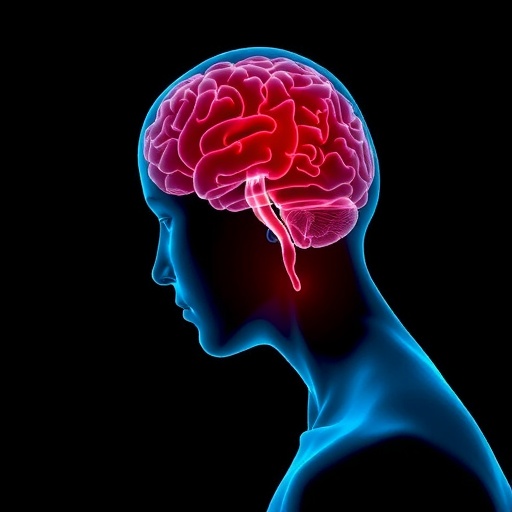
A new brain-mapping system designed to personalize treatment for post-traumatic stress disorder (PTSD) has received clearance from the U.S. Food and Drug Administration, potentially opening a new chapter in the treatment of a condition that affects millions of people. Developed by California-based Wave Neuroscience in collaboration with researchers at Texas A&M Health, the system combines electroencephalography, artificial intelligence and transcranial magnetic stimulation to identify abnormal patterns of brain activity and deliver individualized treatment protocols. The approach, known as Magnetic e-Resonance Therapy, or MeRT, is aimed at moving PTSD care beyond the traditional trial-and-error model of medication and psychotherapy. Researchers involved in the project say the technology could offer a more precise option for patients who do not respond adequately to existing treatments.
The need for new approaches is substantial. Approximately 17.5 veterans die by suicide every day in the United States, according to data cited by the U.S. Department of Veterans Affairs, while about 7 percent of veterans are diagnosed with PTSD each year. The disorder can emerge after exposure to combat, sexual or physical violence, serious accidents, natural disasters or other traumatic events that overwhelm a person’s ability to cope. Although PTSD is often associated with military service, it affects civilians as well, and lifetime prevalence in the general population is estimated at approximately 6 percent. Women and veterans experience the condition at higher rates than many other groups. Symptoms can include intrusive memories, nightmares, emotional numbness, hypervigilance, avoidance and persistent changes in mood or cognition.
Since PTSD became an official psychiatric diagnosis in 1980, the main treatment options have remained psychotherapy and medications, particularly selective serotonin reuptake inhibitors such as sertraline and fluoxetine. These interventions can be effective, but they do not work for everyone. A 2020 review of pharmacological treatments found that average improvements were modest, with patient-reported symptom reductions ranging from 6.8 to 10.1 points and remission rates reaching no more than 10.9 percent in the studies analyzed. Psychotherapy can also be highly beneficial, but trauma-focused treatments require sustained participation and may temporarily intensify anxiety. Some patients discontinue treatment because confronting traumatic memories is too distressing. The limited response to existing options has created an urgent demand for therapies that are both effective and better matched to individual biology.
MeRT attempts to address that problem by measuring the electrical behavior of the brain before treatment begins. During an electroencephalogram, or EEG, sensors positioned on the scalp detect fluctuations in electrical activity produced by networks of neurons. The resulting signal is not a direct image of individual neurons, but it provides information about the timing, frequency and coordination of activity across the brain. PTSD has been associated with disruptions in several aspects of neural regulation, including arousal, emotional processing and communication between brain regions. MeRT uses EEG data to generate a patient-specific profile, which is then analyzed by an algorithm designed to identify patterns that may be relevant to treatment. Instead of applying an identical stimulation protocol to every patient, clinicians use the profile to guide the frequency, timing and location of magnetic stimulation.
The treatment itself relies on transcranial magnetic stimulation, or TMS, a noninvasive technique that uses a coil placed against the scalp to generate rapidly changing magnetic fields. These fields pass through the skull and induce small electrical currents in targeted areas of the brain. TMS has already been cleared by the FDA for conditions including treatment-resistant depression, and it is also used in other neurological and psychiatric applications. In conventional TMS, treatment parameters are often selected according to standardized clinical protocols. MeRT adds EEG-based analysis and what Wave Neuroscience describes as an augmented, artificial-intelligence-derived multivariate algorithm. The purpose is not to replace clinical judgment, but to use measurable physiological information to refine stimulation for the individual receiving care.
According to Erik Won, Wave Neuroscience’s chief medical officer, the company’s FDA trial produced a 52 percent reduction in PTSD symptoms and a remission rate of 68 percent. Won characterized those findings as a more than fourfold increase in symptom improvement compared with the results of the 2020 medication review. The treatment course in the trial consisted of five sessions per week over five to six weeks, and researchers reported that beneficial effects appeared to persist after treatment ended. The findings have not yet been fully processed for public dissemination, and the reported outcomes should therefore be interpreted as preliminary until detailed trial data, including the study design, control conditions, sample size, statistical analysis and follow-up results, are available for independent evaluation. Nevertheless, the figures have generated intense interest because they suggest the possibility of a substantial response in a population that often struggles with incomplete recovery.
Texas A&M researchers played several roles in the project. Kenneth S. Ramos, a physician-scientist at the Texas A&M Health Institute of Biosciences and Technology, contributed expertise in precision medicine, a field that seeks to tailor prevention and treatment to the biological characteristics of individual patients. Ramos has compared conventional TMS to placing a tarp over a leaking roof: useful for addressing the immediate problem, but not necessarily targeted at the underlying source. In his analogy, MeRT is more like identifying the damaged shingles and replacing them directly. The comparison reflects the central premise of the technology—that differences in brain physiology may help determine which treatment parameters are most likely to produce a meaningful response. Even small biological variations between people can influence how psychiatric disorders develop and how patients respond to intervention.
Rick Silva, executive director of clinical trials at the Texas A&M institute, said the project moved from its beginnings during the COVID-19 pandemic to FDA clearance in slightly more than two years, a notably rapid timeline compared with the decade often required for medical devices to complete development, testing and regulatory review. MeRT received FDA breakthrough device designation in 2024, a program intended to accelerate the review of technologies that may provide more effective treatment for life-threatening or irreversibly debilitating conditions. Breakthrough designation does not eliminate the need for scientific evidence or safety evaluation, but it can facilitate communication between developers and regulators and help streamline aspects of the review process. The eventual clearance represents a significant regulatory milestone, although clearance is not the same as proof that a treatment will work for every patient or eliminate the need for clinical oversight.
Israel Liberzon, a distinguished professor of psychiatry and behavioral sciences at the Texas A&M Naresh K. Vashisht College of Medicine, served as the study’s lead psychiatrist and PTSD expert. He described the technology as an important addition to the treatment landscape because it provides a non-medication option alongside psychotherapy and existing drugs. At present, the FDA has approved two medications specifically for PTSD, both SSRIs, while psychotherapy remains a central component of clinical care. MeRT could be particularly relevant for patients who experience medication side effects, fail to respond to antidepressants or cannot complete trauma-focused therapy. However, the treatment still requires repeated visits, specialized equipment and trained clinicians. Access, insurance coverage and cost will determine whether the technology reaches the millions of people who might benefit from it rather than remaining concentrated in a limited number of treatment centers.
Wave Neuroscience has presented the clearance as part of a broader effort to make mental healthcare more objective and data-informed. Leslie S. Prichep, the company’s chief scientific officer, said the system builds on decades of research into electrophysiological biomarkers—measurable features of brain activity that may help characterize abnormal neural states and guide intervention. The company is also exploring potential applications in depression, anxiety and other conditions. Yet the scientific challenge remains significant: psychiatric disorders are biologically complex, symptoms can arise through multiple pathways, and EEG patterns may vary with sleep, medication, stress and other factors. Continued independent studies will be needed to determine how reliably the system identifies treatment targets, whether the reported benefits exceed placebo and nonspecific effects, how long improvements last, and which patients are most likely to respond.
For veterans and civilians living with PTSD, the arrival of a personalized neuromodulation system offers a reason for cautious optimism. A treatment that can measure brain activity, adjust stimulation and potentially reduce symptoms without medication could reshape expectations for people who have exhausted conventional options. At the same time, researchers emphasize that no single therapy should be regarded as a universal cure. PTSD remains a heterogeneous disorder requiring comprehensive assessment, informed consent and individualized clinical care. The collaboration between Texas A&M Health and Wave Neuroscience illustrates how precision medicine is moving from genetics and cancer treatment into psychiatry, where the brain’s electrical signals may provide a new route to personalization. If future trials confirm the early results, MeRT could become one of the most closely watched developments in PTSD care—and a highly visible test of whether brain-based precision medicine can deliver on its promise.
News Publication Date: Not provided in the source material.
Web References: https://www.waveneuro.com/mert ; https://www.accessdata.fda.gov/cdrh_docs/pdf26/K260402.pdf ; https://ibt.tamu.edu/ ; https://medicine.tamu.edu/faculty-listings/ramos.html
References: U.S. Department of Veterans Affairs PTSD and veteran suicide data; National Institute of Mental Health PTSD statistics; 2020 review of PTSD medications, https://pubmed.ncbi.nlm.nih.gov/33049805/ ; FDA Breakthrough Devices Program, https://www.fda.gov/medical-devices/how-study-and-market-your-device/breakthrough-devices-program
Cite Scienmag News
Glenn Wilkins. (August 24, 2026). FDA clearance expands precise, effective treatment options for patients with PTSD. Scienmag. https://scienmag.com/fda-clearance-expands-precise-effective-treatment-options-for-patients-with-ptsd/
Glenn Wilkins. "FDA clearance expands precise, effective treatment options for patients with PTSD." Scienmag, 24 August 2026, https://scienmag.com/fda-clearance-expands-precise-effective-treatment-options-for-patients-with-ptsd/. Accessed 4 September 2026.
Glenn Wilkins. "FDA clearance expands precise, effective treatment options for patients with PTSD." Scienmag. August 24, 2026. https://scienmag.com/fda-clearance-expands-precise-effective-treatment-options-for-patients-with-ptsd/


