


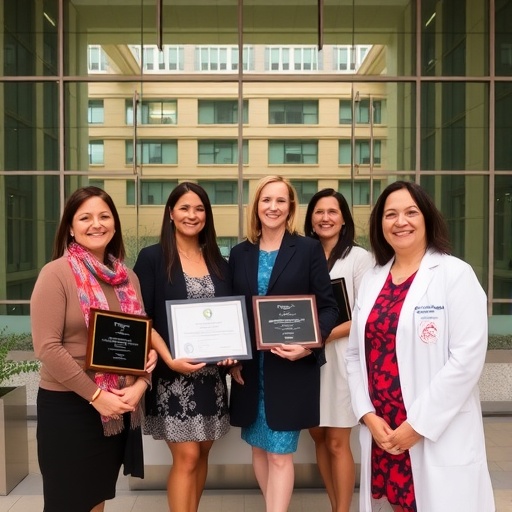
The University of Texas MD Anderson Cancer Center has honored a broad group of scientists, physicians and educators whose work spans the full cancer continuum, from molecular discovery and computational biology to clinical treatment, prevention and patient safety. At its annual Celebration of Faculty Excellence in Houston on Aug. 20, the institution recognized 58 faculty members promoted to professor, six early-career Faculty Scholars and six recipients of Faculty Achievement Awards. The ceremony also highlighted faculty whose research and leadership are helping translate laboratory discoveries into improved diagnosis, treatment and long-term outcomes for patients.
Peter WT Pisters, M.D., president of UT MD Anderson, said the honorees represent the institution’s commitment to excellence in research, patient care, prevention and education. Their work reflects the increasingly integrated nature of modern oncology, in which progress depends not only on developing new drugs, but also on understanding tumor biology, identifying patients most likely to benefit from particular interventions, improving radiation delivery, expanding access to prevention programs and designing safer systems of care. Together, these efforts support MD Anderson’s mission to end cancer and extend the reach of advances to patients and communities worldwide.
The Jack and Beverly Randall Prize for Excellence in Cancer Care, which carries a $100,000 award, was presented this year to Hilary Ma, M.D., a professor in General Oncology. Established in 2011 by Jack and Beverly Randall, the prize recognizes vision and creativity in cancer research and clinical care, alternating annually between researchers and clinicians. The award reflects the growing importance of care models that combine scientific innovation with practical clinical judgment. In oncology, breakthroughs become meaningful only when they can be delivered safely, equitably and efficiently to people facing complex diseases, often alongside surgery, radiation, systemic therapy and supportive care.
Jeffrey Gershenwald, M.D., professor of Surgical Oncology, and Mark Bedford, Ph.D., professor of Epigenetics and Molecular Carcinogenesis, received the R. Lee Clark Prize. The award, established in 2016 through the estate of Jeanne F. Shelby, honors one faculty member in clinical research and one in basic or translational research. Gershenwald’s surgical oncology field focuses on the clinical management of cancer, while Bedford’s discipline investigates epigenetic regulation, the molecular systems that influence how genes are activated or silenced without changing the underlying DNA sequence. Such research can reveal why tumors behave differently and may identify vulnerabilities for future therapies.
The Shirley Stein Scientific Endowed Research Award went to Ethan Lin, M.D., assistant professor of Interventional Radiology, and Hongxia Sun, M.D., Ph.D., associate professor of Anatomic Pathology. The award provides $10,000 for preliminary data generation, a critical stage in the development of clinical research programs. Early data can help investigators test whether a hypothesis is biologically plausible, refine study methods and build the evidence needed to compete for larger federal or institutional grants. Interventional radiology uses image-guided procedures to diagnose or treat disease with minimally invasive techniques, while anatomic pathology examines tissues and cells to establish diagnoses and characterize the biological features of tumors.
Katy Rezvani, M.D., Ph.D., vice president and head of the Institute for Cell Therapy Discovery & Innovation, received the President’s Award for Leadership Excellence. She is also a professor of Stem Cell Transplantation and Cellular Therapy. The award combines the former John Mendelsohn Award for Faculty Leadership and the Charles A. LeMaistre Outstanding Achievement Award in Cancer. Her area of work is part of a rapidly developing branch of oncology in which immune cells are collected, engineered or otherwise prepared to recognize malignant cells. Cellular therapies require close coordination among laboratory scientists, manufacturing specialists, transplant teams and clinical investigators, making institutional leadership essential to moving discoveries from research settings into patient care.
Six faculty members were named Faculty Scholars, a program recognizing assistant and associate professors with exceptional potential in research, education, patient care or prevention. The honorees are Hussein Abbas, M.D., Ph.D., assistant professor of Leukemia; Scherezade Mama, Dr.P.H., associate professor of Health Disparities Research; Amy Moreno, M.D., assistant professor of Radiation Oncology; Van Morris, M.D., associate professor of Gastrointestinal Medical Oncology; Natalie Vokes, M.D., assistant professor of Thoracic Head and Neck Medical Oncology; and Tao Wang, Ph.D., associate professor of Bioinformatics and Computational Biology. Their fields illustrate how cancer medicine increasingly depends on interdisciplinary expertise, including population science, radiation physics, disease-specific treatment and data analysis.
Bioinformatics and computational biology are particularly important as cancer research generates vast quantities of genomic, imaging and clinical information. Computational approaches can help researchers compare tumor samples, identify patterns associated with treatment response and organize complex data into testable biological models. Health disparities research, meanwhile, examines how social, economic, geographic and structural factors influence exposure to risk, access to screening and the likelihood of receiving timely, high-quality care. By recognizing both areas alongside disease-focused specialties, the Faculty Scholar Program reflects a broader view of cancer control that includes biology, technology and the conditions in which patients live.
The Faculty Achievement Awards honored six additional faculty members for original contributions across basic science, prevention, clinical research, education, patient care and translational research. Betty Kim, M.D., Ph.D., professor of Neurosurgery, received the basic science research award. Sanjay Shete, Ph.D., professor of Biostatistics, was recognized for cancer prevention. Rodabe Amaria, M.D., professor of Melanoma Medical Oncology, received the clinical research award, while Phyu Aung, M.D., Ph.D., professor of Anatomic Pathology, was honored for education. Peter Balter, Ph.D., professor of Radiation Physics, received the patient care award, and Tina Cascone, M.D., Ph.D., associate professor of Thoracic Head and Neck Medical Oncology, was recognized for translational research.
The range of disciplines represented by the awards underscores the complex pathway from discovery to medical impact. Basic science can identify mechanisms that drive tumor growth; biostatistics can determine whether an observed result is reliable; prevention research can reduce risk before cancer develops; and clinical trials can establish whether a promising intervention benefits patients. Radiation physics contributes to the precision and safety of treatment planning, while pathology provides the diagnostic and molecular information needed to classify disease. Translational research connects these stages by testing how findings from laboratories, models and early studies can be adapted to real-world clinical practice.
The celebration also recognized faculty excellence in quality improvement and patient safety, research, community engagement, education and mentorship. These areas may receive less public attention than dramatic laboratory discoveries, but they are essential to dependable cancer care. Quality improvement uses systematic measurement to identify weaknesses in clinical processes and test changes that improve outcomes. Patient-safety programs seek to prevent avoidable harm by examining communication, medication use, procedures and institutional workflows. Community engagement and education can strengthen prevention and early detection, while mentorship helps sustain the next generation of investigators and clinicians. Through its awards and promotions, UT MD Anderson presented cancer progress as a collective enterprise in which scientific innovation, clinical expertise and institutional responsibility are inseparable.
News Publication Date: August 20, 2026
Web References: UT MD Anderson Cancer Center; https://www.mdanderson.org/
References: University of Texas MD Anderson Cancer Center, Celebration of Faculty Excellence announcement.
Cite Scienmag News
Courtney Benton. (August 21, 2026). UT MD Anderson Honors Exceptional Faculty With Highest Academic Awards. Scienmag. https://scienmag.com/ut-md-anderson-honors-exceptional-faculty-with-highest-academic-awards/
Courtney Benton. "UT MD Anderson Honors Exceptional Faculty With Highest Academic Awards." Scienmag, 21 August 2026, https://scienmag.com/ut-md-anderson-honors-exceptional-faculty-with-highest-academic-awards/. Accessed 4 September 2026.
Courtney Benton. "UT MD Anderson Honors Exceptional Faculty With Highest Academic Awards." Scienmag. August 21, 2026. https://scienmag.com/ut-md-anderson-honors-exceptional-faculty-with-highest-academic-awards/


