


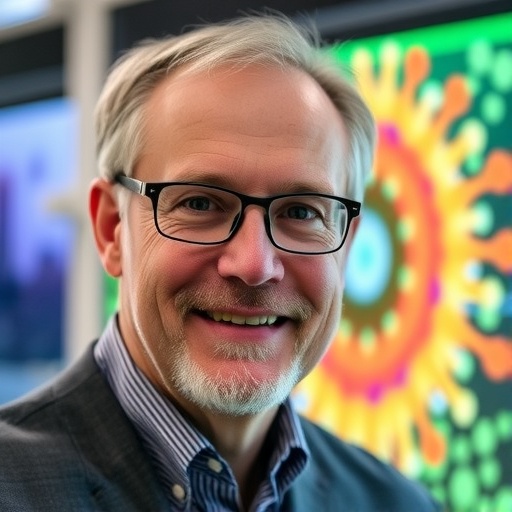
Inherited retinal disorders are among the most devastating genetic diseases affecting human vision. They damage the retina—the light-sensitive tissue at the back of the eye—and can gradually destroy the cells responsible for converting light into electrical signals for the brain. In many patients, the result is severe visual impairment or complete blindness. Professor Uwe Wolfrum of Johannes Gutenberg University Mainz has spent much of his career investigating one particularly complex group of inherited retinal disorders: Usher syndrome. His work has now been recognized by the Institute of Ophthalmology at University College London, where he was honored for major contributions to ophthalmology and vision research.
Usher syndrome is the most common inherited condition that simultaneously causes hearing loss and progressive vision loss. The disorder is genetically heterogeneous, meaning that mutations in several different genes can produce related clinical features. Some patients are born deaf or profoundly hard of hearing, while their visual symptoms emerge later as the retina progressively degenerates. Hearing loss can often be addressed with hearing aids or cochlear implants, but there is currently no approved treatment capable of stopping the loss of sight associated with Usher syndrome. Wolfrum’s research focuses on understanding why defects in Usher-associated proteins cause retinal cells to fail, with the broader goal of converting molecular discoveries into treatments that preserve vision.
The condition is inherited in an autosomal recessive manner, so affected individuals typically receive a defective copy of an associated gene from each parent. At least ten genes linked to Usher syndrome have been identified, and the proteins they encode participate in highly specialized structures within sensory cells. These molecular components help organize cellular membranes, maintain connections between photoreceptors and neighboring cells, and support the transport and signaling processes required for vision. When one of these proteins is absent or dysfunctional, the resulting damage can disrupt the architecture of photoreceptors, the retina’s light-detecting cells. Because different genetic defects can disturb different cellular pathways, patients may experience varying combinations and rates of hearing and visual decline.
Wolfrum’s laboratory at the Institute of Molecular Physiology at Mainz is described as the only research group in Germany currently conducting an integrated, advanced investigation of Usher syndrome using both molecular and cellular approaches. One central objective is to map the interactomes of Usher proteins—the networks of other proteins that bind to them or operate within the same cellular pathways. Identifying these interactions can reveal how a mutation produces disease, even when the altered protein is only one component of a much larger molecular system. Such work may also uncover points at which a damaged pathway can be stabilized, redirected, or repaired before irreversible retinal degeneration occurs.
To recreate the biology of the human eye, the Mainz researchers combine several experimental systems. One is the human retinal organoid, a three-dimensional, retina-like structure generated from patient-specific induced pluripotent stem cells. These cells are reprogrammed from adult tissue and then guided to develop into retinal cell types carrying the patient’s own genetic background. Organoids allow scientists to observe how disease-associated mutations affect human photoreceptors and other retinal cells in a controlled laboratory environment. The group also uses pig models, whose eyes resemble human eyes in size, structure, and function more closely than those of many smaller laboratory animals. Comparing the same disease-related features across human organoids and pigs may help researchers distinguish fundamental mechanisms from species-specific effects.
The scientists examine Usher syndrome at several biological levels. Advanced microscopy is used to identify changes in the shape, organization, and internal structures of retinal cells. Transcriptome analysis measures patterns of RNA molecules, providing a snapshot of which genes are active or suppressed in diseased tissue. Proteome analysis surveys the abundance and modification of proteins, offering complementary information about the functional state of the cells. When combined, these methods can expose disrupted signaling pathways that might not be visible through genetic analysis alone. They can also help identify biomarkers—measurable molecular signs that indicate disease progression or response to treatment—and point toward therapeutic targets capable of modifying the course of degeneration.
A major aim of the work is to move beyond describing the pathology and begin testing interventions. The therapeutic team within Wolfrum’s research group is conducting preclinical studies of gene-based treatments in both retinal organoids and pig models. Depending on the specific mutation, such approaches could involve delivering a functional gene, correcting a defective sequence, or regulating the activity of a harmful genetic variant. Testing candidate therapies in patient-derived organoids can provide an early indication of whether a treatment improves retinal cell survival or restores a disrupted cellular process. Studies in pigs can then address delivery, distribution, dosage, and safety in an eye whose anatomy is more comparable to that of humans. These stages are essential before any strategy can be evaluated in clinical trials.
The research is supported in part by the German Research Foundation through the Priority Program SPP 2127, focused on gene- and cell-based therapies for neuroretinal degeneration, and Research Unit FOR 2149, which investigates the signaling behavior of adhesion-dependent G protein-coupled receptors. Additional funding comes primarily from patient organizations and foundations, including the FAUN Foundation in Nuremberg, USHER2020 in Atlanta, Pro Retina—Foundation for the Prevention of Blindness, and the Foundation Fighting Blindness. The recognition from University College London highlights the importance of linking fundamental cell biology with translational medicine. For people living with Usher syndrome, the research offers a scientifically grounded route toward therapies that could one day preserve sight, while the expanding use of human retinal organoids may also reduce the need for animal studies and, in the longer term, help replace some of them.
Cite Scienmag News
Juliet Wilcox. (August 21, 2026). Mainz cell biologist Uwe Wolfrum honored for major contributions to vision research. Scienmag. https://scienmag.com/mainz-cell-biologist-uwe-wolfrum-honored-for-major-contributions-to-vision-research/
Juliet Wilcox. "Mainz cell biologist Uwe Wolfrum honored for major contributions to vision research." Scienmag, 21 August 2026, https://scienmag.com/mainz-cell-biologist-uwe-wolfrum-honored-for-major-contributions-to-vision-research/. Accessed 4 September 2026.
Juliet Wilcox. "Mainz cell biologist Uwe Wolfrum honored for major contributions to vision research." Scienmag. August 21, 2026. https://scienmag.com/mainz-cell-biologist-uwe-wolfrum-honored-for-major-contributions-to-vision-research/


