


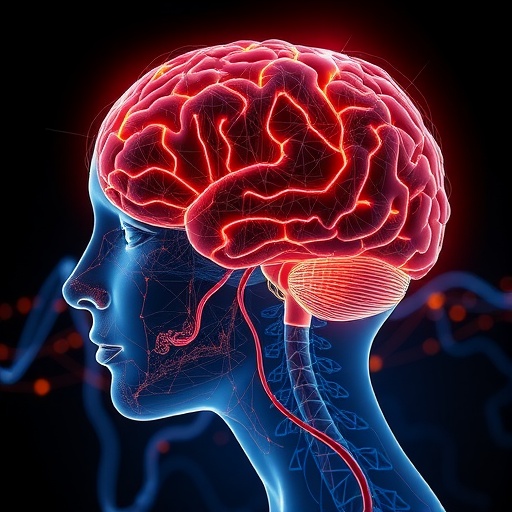
A new study is offering an unusually detailed view of how the human brain keeps a person committed to a course of action long after the initial decision has been made. Published in Nature Human Behaviour, the research by Courellis, Kyzar, Minxha and colleagues identifies neural dynamics that unfold across minutes, revealing that persistence is not simply a brief burst of motivation repeated over and over. Instead, the brain appears to maintain behavior through evolving patterns of activity distributed across neural populations, creating a biological process that can stabilize effort while continuously adapting to changing circumstances.
Persistence is one of the most familiar—and least understood—features of human behavior. People continue working on a difficult problem, wait for a reward, resist an impulse, or keep pursuing a goal even when progress is slow. Traditional neuroscience experiments have often examined these decisions over seconds or milliseconds, focusing on the moment when an individual chooses to continue or stop. The new work addresses a different question: what happens inside the brain during the extended interval between those decisions? By studying neural activity over minute-long periods, the researchers investigated how the brain sustains a behavioral state rather than merely initiating one.
The study relied on high-resolution recordings of human brain activity obtained in a clinical setting, where participants undergoing neurological monitoring provided researchers with an opportunity to observe neural signals directly. Such recordings can capture activity at a level of detail that is difficult to achieve with non-invasive methods such as electroencephalography or functional magnetic resonance imaging. Depending on the recording site and electrode configuration, intracranial measurements can reveal rapid electrical fluctuations across groups of neurons and, in some cases, the activity of individual cells. This temporal precision allowed the team to follow changes in neural representations as behavior continued over extended periods.
The central finding is that persistent behavior was associated with neural activity that did not remain fixed. Rather than maintaining a single, unchanging “persistence signal,” populations of neurons moved through a sequence of coordinated states. In technical terms, the activity could be understood as a trajectory through a high-dimensional neural state space. Each point in that space represents the combined activity of many neurons at a given moment. As participants continued behaving, the population pattern gradually evolved along a structured path, suggesting that persistence is an active dynamical process. The brain was not merely holding a decision in place; it was repeatedly updating and reconstructing the state needed to continue.
This distinction is important because sustained behavior has often been explained through the idea of persistent neural firing. In that model, neurons associated with a goal remain continuously active until the task is completed. While such activity can occur, the new findings support a more flexible mechanism in which information is carried by evolving patterns across neural populations. A dynamic code can preserve the overall meaning of a behavioral state even as the activity of individual neurons changes. This arrangement may make the system more robust, allowing the brain to maintain commitment while incorporating information about time, effort, performance, environmental feedback, and the possibility of success or failure.
The researchers also examined how neural activity related to the moment-to-moment strength of persistence. The brain signals were not simply an on-or-off marker of whether a participant was engaged. Instead, their organization appeared to reflect how behavior unfolded over time, including transitions between stronger and weaker commitment. This suggests that persistence may be represented as a continuously varying internal state. The neural system can support a person’s ongoing effort, but it may also gradually shift toward disengagement when the cost of continuing rises or the expected benefit falls. Such a mechanism would be well suited to real life, where persistence is rarely absolute and decisions to continue are repeatedly renegotiated.
The timescale of the finding is particularly significant. Neural processes that govern perception and movement often unfold in fractions of a second, while many psychological studies measure decisions separated by only a few seconds. Human goals, however, can persist for minutes, hours, or years. A neural mechanism that operates over minutes could provide a bridge between immediate actions and longer-term motivation. It may help explain how the brain links repeated small choices—one more attempt, another minute of effort, another delay of gratification—into a coherent behavioral pattern. The study therefore places persistence in an intermediate temporal window that has received comparatively little direct attention in human neuroscience.
The work may also reshape the search for biological signatures of disorders involving motivation and behavioral control. Difficulties with sustaining effort are reported in depression, attention-deficit/hyperactivity disorder, addiction, obsessive-compulsive disorder, and several neurological conditions. If persistence depends on the stability and trajectory of distributed neural activity, disruptions might arise not only from an abnormally weak motivational signal but also from a failure to maintain the correct sequence of neural states. A system that changes too rapidly could produce distractibility or premature stopping, while one that changes too slowly might contribute to rigid or compulsive behavior. These possibilities remain to be tested, but the new framework offers a more precise way to investigate them.
The findings should not be interpreted as evidence that a single brain region or a single type of neuron is responsible for willpower. Persistence is likely to emerge from interactions among systems involved in valuation, cognitive control, action selection, memory, and bodily regulation. The recorded signals provide a window into these dynamics, but they do not automatically establish that any one neural pattern causes a person to continue. The clinical participants and specialized recording conditions also mean that future studies will need to test how broadly the results apply across healthy populations, different tasks, emotional states, and longer periods of behavior. Even so, the study demonstrates the power of analyzing neural activity as a moving process rather than as a collection of isolated snapshots.
The broader message is that the human brain may sustain commitment not by freezing a decision in place, but by continuously renewing it. Every moment of persistence could involve a subtle recalculation in which neural populations preserve the direction of behavior while adjusting to new information. This dynamic view helps connect laboratory measurements with the lived experience of perseverance: the sensation of continuing is not a single command issued once, but an ongoing biological negotiation between goals, effort, reward, and changing circumstances. By revealing neural patterns that operate on the scale of minutes, the research brings neuroscience closer to the timescale at which meaningful human behavior actually unfolds.
Courellis, H.S., Kyzar, M., Minxha, J. et al. Neural dynamics underlying minute-timescale persistent behaviour in the human brain. Nat Hum Behav (2026). https://doi.org/10.1038/s41562-026-02537-x
Cite Scienmag News
Cassandra Pierce. (August 18, 2026). Brain neural dynamics sustain persistent behavior over minutes. Scienmag. https://scienmag.com/brain-neural-dynamics-sustain-persistent-behavior-over-minutes/
Cassandra Pierce. "Brain neural dynamics sustain persistent behavior over minutes." Scienmag, 18 August 2026, https://scienmag.com/brain-neural-dynamics-sustain-persistent-behavior-over-minutes/. Accessed 4 September 2026.
Cassandra Pierce. "Brain neural dynamics sustain persistent behavior over minutes." Scienmag. August 18, 2026. https://scienmag.com/brain-neural-dynamics-sustain-persistent-behavior-over-minutes/


