


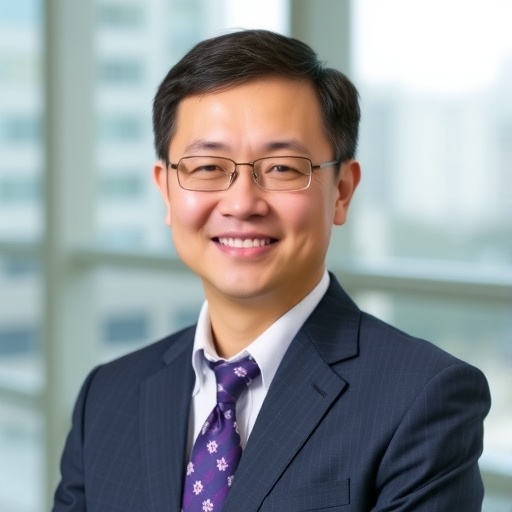
UL Research Institutes has appointed Chao-Yang Wang, Ph.D., one of the world’s most influential battery scientists, as vice president and executive director of its Electrochemical Safety Research Institute. The appointment places a researcher known for transforming battery physics into commercial technology at the center of a global effort to make energy storage safer, more reliable, and more compatible with the rapid electrification of transportation, infrastructure, and industry. Wang joins the institute at a moment when batteries are expanding into electric vehicles, aircraft, grid-scale storage systems, consumer electronics, and emergency power networks, while concerns over thermal runaway, fires, charging failures, and material degradation continue to challenge the sector.
Wang succeeds Judy Jeevarajan, Ph.D., who will remain with UL Research Institutes as vice president and distinguished scientific advisor. In his new role, Wang will direct research strategy and operations at the Electrochemical Safety Research Institute, an organization focused on understanding why electrochemical energy-storage systems fail and how those failures can be prevented. The institute investigates the links between battery chemistry, mechanical design, electrical control, manufacturing quality, and real-world operating conditions. Its work is intended to influence safer products, testing methods, engineering practices, and standards as energy systems become more densely packed and increasingly dependent on rechargeable batteries.
Before joining UL Research Institutes, Wang spent more than three decades at Pennsylvania State University, where he served as the William E. Diefenderfer Chair in Mechanical Engineering, professor of mechanical engineering, chemical engineering, and materials science and engineering, director of the Electrochemical Engine Center, and co-director of the Battery and Energy Storage Technologies Center. His research career has covered the full battery-development chain, from fundamental electrochemical reactions and heat generation to manufacturing, fast charging, system integration, and commercialization. That breadth has made him a prominent figure in a field where the performance of a battery cannot be separated from its thermal behavior, structural integrity, production consistency, and control software.
One of Wang’s most important contributions has been the development of electrochemical-thermal modeling methods for batteries. These models combine the movement of ions and electrons inside a cell with the heat produced by electrochemical reactions, electrical resistance, and transport limitations. As a battery charges or discharges, local variations in current density, temperature, and chemical concentration can create areas of stress that are invisible from the outside. Electrochemical-thermal models allow researchers to predict how these internal conditions evolve, helping engineers design cells and battery packs that operate within safer limits. The approach has influenced battery development across transportation, consumer electronics, defense, and stationary energy storage.
Wang also invented a self-heating, all-climate battery designed to maintain performance in extremely cold conditions. Conventional lithium-ion batteries can lose power at low temperatures because ion transport slows and the internal resistance of the cell rises. Charging a cold battery can be particularly hazardous, as lithium plating may occur on the anode surface instead of lithium ions being safely stored within the electrode structure. Wang’s technology uses the battery’s own electrical energy to generate controlled internal heat, bringing the cell rapidly to an operating temperature at which it can deliver power and accept charge more efficiently. The technology enabled electric buses to operate during the 2022 Winter Olympics and has since been commercialized for transportation, defense, and energy-storage applications.
His work on ultrafast charging also drew international attention after being recognized by The Guardian as one of the world’s leading science stories of 2022. Fast charging is not simply a matter of supplying more electrical current. High charging rates can produce heat, accelerate unwanted chemical reactions, and cause lithium ions to accumulate as metallic deposits on the anode. These deposits can reduce capacity and, in extreme cases, create internal pathways that trigger a short circuit. Wang’s research has explored how electrode architecture, thermal management, charging protocols, and cell chemistry can be coordinated to reduce these risks while shortening the time required to recharge a battery.
More recently, Wang has focused on lithium-metal and solid-state batteries, two technologies widely viewed as possible successors to today’s dominant lithium-ion systems. Lithium-metal anodes can store substantially more charge by replacing conventional graphite, potentially increasing energy density and extending the range of electric vehicles. However, lithium can form needle-like structures known as dendrites during charging. If dendrites penetrate a separator and reach the opposite electrode, they can cause an internal short circuit. Solid-state batteries replace the flammable liquid electrolyte used in many conventional cells with a solid ion-conducting material, but they introduce their own challenges, including interfacial resistance, cracking, contact loss, and mechanical instability. Wang’s research has examined the safety mechanisms behind these emerging systems and contributed to the design of batteries intended to be intrinsically safer rather than merely protected by external controls.
“Dr. Wang is among the world’s foremost authorities on battery technology and electrochemical energy systems,” said James J. Hudgens, Ph.D., president and chief executive officer of UL Research Institutes. Hudgens said Wang’s scientific leadership, entrepreneurial approach, and focus on battery safety made him especially qualified to lead the Electrochemical Safety Research Institute as demand for energy storage accelerates. Wang said batteries are fundamental to the future of transportation, infrastructure, and energy systems, and that he would work with colleagues across UL Research Institutes to advance research that improves the safety, reliability, and sustainability of energy technologies worldwide. His responsibilities will include expanding experimental and computational capabilities and strengthening partnerships with industry, government, universities, and standards-development organizations.
Wang’s appointment also brings an unusually extensive record of invention and technology transfer to a research institute whose findings are intended to inform public safety. He is a fellow of the National Academy of Inventors, the Electrochemical Society, and the American Society of Mechanical Engineers, holds approximately 140 issued patents, and has authored research cited more than 50,000 times. He earned bachelor’s and master’s degrees in mechanical engineering from Zhejiang University and a doctorate in mechanical engineering from the University of Iowa. Throughout his career, he has founded companies and helped move laboratory discoveries into commercial products. At UL Research Institutes, that combination of fundamental science, engineering, and commercialization could help close the gap between promising battery concepts and the safety requirements of technologies deployed at global scale. The institute, part of the nonprofit UL Research Institutes, conducts independent research across electrochemical safety, fire safety, chemical insights, materials discovery, digital safety, and research education, publishing findings openly to support safer standards, policies, products, and communities.
Web References: Chao-Yang Wang, Ph.D.; Electrochemical Safety Research Institute; James J. Hudgens, Ph.D.
Keywords
Battery safety, electrochemical energy storage, lithium-ion batteries, lithium-metal batteries, solid-state batteries, ultrafast charging, thermal runaway, battery research, electric vehicles, energy storage safety
Cite Scienmag News
Denise Maddox. (August 18, 2026). UL Research Institutes names Chao-Yang Wang electrochemical safety institute executive director. Scienmag. https://scienmag.com/ul-research-institutes-names-chao-yang-wang-electrochemical-safety-institute-executive-director/
Denise Maddox. "UL Research Institutes names Chao-Yang Wang electrochemical safety institute executive director." Scienmag, 18 August 2026, https://scienmag.com/ul-research-institutes-names-chao-yang-wang-electrochemical-safety-institute-executive-director/. Accessed 3 September 2026.
Denise Maddox. "UL Research Institutes names Chao-Yang Wang electrochemical safety institute executive director." Scienmag. August 18, 2026. https://scienmag.com/ul-research-institutes-names-chao-yang-wang-electrochemical-safety-institute-executive-director/


